

Last Saturday, you returned from a walk at Haigh Woodland Park and noticed a small, red mark that didn't look like a standard midge bite. We recognise that waiting weeks for a GP appointment feels like an eternity when you're worried about the potential for lyme disease to impact your long-term health. It's natural to feel anxious when you can't tell if a rash is a simple irritation or a sign that requires urgent clinical attention. You deserve clarity without the stress of long NHS wait times or confusing symptoms.
This guide will show you how to identify symptoms early, access private testing for fast-tracked blood results, and secure a clinical treatment plan that protects your vitality. You'll learn exactly how to access the best 2026 healthcare options in Wigan to ensure you're prepared for a swift recovery. We'll explore the specific diagnostic tools and professional care pathways available to help you move from uncertainty to a state of total readiness, ensuring you avoid the complications of late-stage symptoms and maintain your active lifestyle.
Key Takeaways
- Recognise the distinct 'bullseye' rash and understand why tracking secondary symptoms is vital for the 30% of cases where no rash appears.
- Discover why rapid, two-tier blood testing is the gold standard for confirming a lyme disease infection and protecting your long-term vitality.
- Learn practical protection strategies for local outdoor spaces like Haigh Hall, including how to perform a thorough post-walk tick check.
- Understand the clinical treatment pathways available in Wigan and why early antibiotic intervention is essential for a complete recovery.
- Prepare yourself with the knowledge to navigate diagnostic challenges, ensuring you stay proactive and ready for the demands of an active Lancashire lifestyle.
Understanding Lyme Disease: Risks for Wigan and Standish Residents
Your health is your most valuable asset, and being prepared for local environmental risks is part of maintaining your long-term vitality. If you enjoy exploring the green spaces around Wigan, understanding lyme disease is essential for your peace of mind. This bacterial infection is transmitted to humans through the bite of an infected black-legged tick, which acts as a vector for the bacteria.
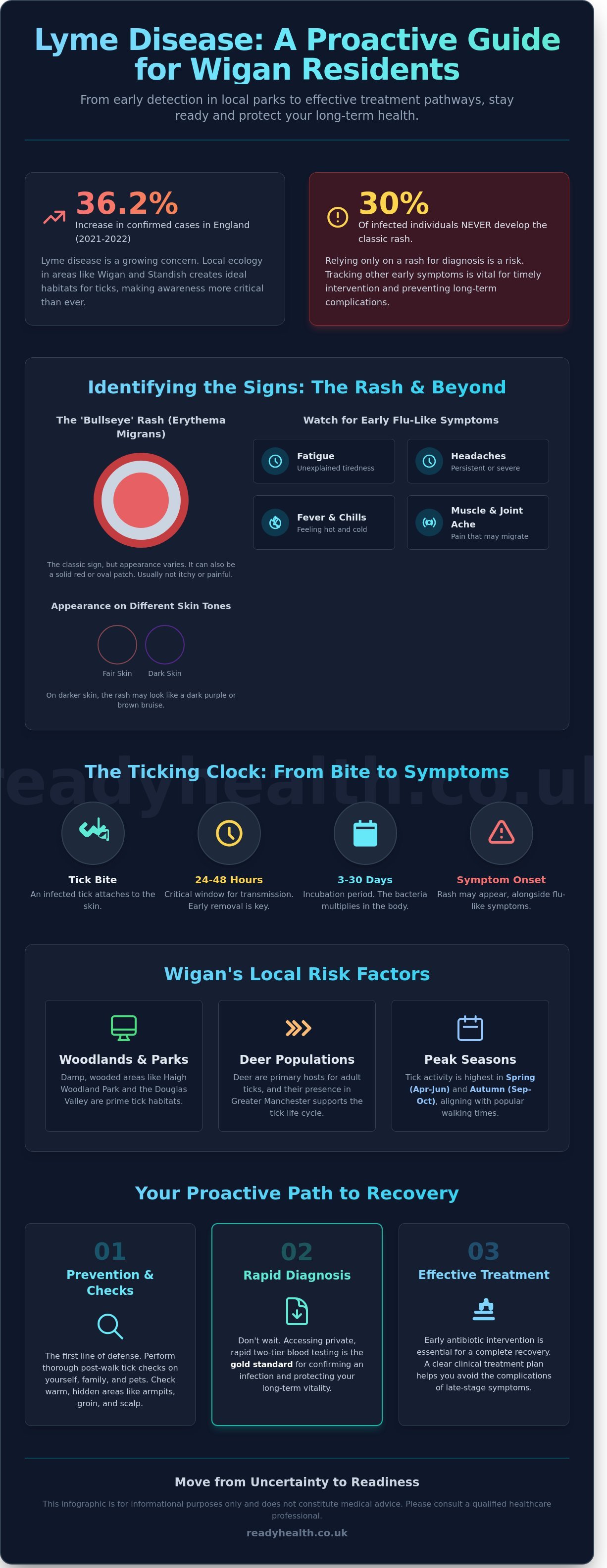
Data from the UK Health Security Agency (UKHSA) indicates that laboratory-confirmed cases in England rose by 36.2% between 2021 and 2022. While not every tick carries the bacteria, early recognition of a bite remains the hallmark of effective management. At Ready Health, we believe that true wellness comes from being proactive; this means having the readiness to act the moment you discover a tick, ensuring you can seek professional advice before symptoms progress.
For those seeking a comprehensive overview of Lyme disease, it's helpful to recognise that the condition was first identified in the 1970s and has since become the most common tick-borne illness in the Northern Hemisphere. Understanding the history and global context helps you appreciate why local vigilance is so important for your family's safety during outdoor excursions.
Why Wigan is a Key Area for Tick Awareness
Wigan's local ecology creates a perfect habitat for ticks to thrive, particularly in the damp, wooded corridors of Lancashire. The deer populations in Greater Manchester play a significant role in the tick life cycle, as these animals act as primary hosts for adult ticks. If you live near the green fringes of Standish or Shevington, your risk of encounter is naturally higher during outdoor activities.
- Deer populations in the Douglas Valley and Haigh area provide a steady host source for tick reproduction.
- The damp Lancashire climate supports tick survival in the leaf litter of local woodlands.
- Peak activity months of May and September align with increased foot traffic in rural Wigan.
Tick activity peaks twice a year, making spring and autumn the highest risk periods for Wigan walkers. Research suggests that between April and June, and again from September to October, ticks are most active as they seek a blood meal to progress their life cycle. We recommend checking your skin thoroughly after visiting Haigh Woodland Park or the Douglas Valley to ensure you stay ahead of any potential infection.
The Clinical Mechanism of Infection
When an infected tick attaches to your skin, the bacteria enter your bloodstream through the tick's saliva during the feeding process. This transmission isn't always immediate; clinical studies suggest the tick often needs to be attached for 24 to 48 hours for the bacteria to move from its gut to your body. Once inside, you may enter an initial incubation period lasting between 3 and 30 days while your immune system attempts to fight the invader.
Borrelia burgdorferi is the primary causative agent in UK Lyme cases. During this early stage, you might not feel any different, which is why visual checks are so critical for residents in Standish and surrounding areas. By identifying a bite early, you give yourself the best chance at an optimal outcome through timely clinical intervention and professional guidance.
This article is for informational purposes only and does not constitute medical advice. Please consult a qualified healthcare professional before making any health decisions.
Identifying the Signs: From the 'Bullseye' Rash to Early Symptoms
Recognising the early indicators of lyme disease is your first line of defence in maintaining long-term vitality. The most distinctive sign is Erythema Migrans, commonly known as the 'bullseye' rash. This mark typically appears at the site of the tick bite within 3 to 30 days. It begins as a small red area and expands gradually, often reaching a diameter of more than 5cm. While the classic appearance features a clear centre surrounded by a red ring, the rash can also be solid red or oval in shape. It is usually not itchy or painful, which means it can be easily missed during your daily ritual if it's in a hard-to-reach area like the back or scalp.
Clinical observations show that the appearance of this rash varies significantly based on your skin's natural pigment. On fairer skin, the redness is usually bright and distinct. On darker skin tones, the rash may not look red at all; instead, it often presents as a dark, dusky purple or deep brown patch that can be mistaken for a bruise. This nuance makes professional inspection essential. According to NHS guidance on Lyme disease, approximately 30% of people who are infected never develop a rash. If you don't see a mark, you must remain vigilant for other physiological changes to stay protected.
Stage 1: Early Localised Infection
The first stage of infection occurs while the bacteria are still concentrated near the site of the bite. During this window, you may experience profound fatigue that doesn't improve with rest, accompanied by persistent muscle aches and joint pain. Swollen lymph nodes are another common indicator that your immune system is responding to a threat. Many patients in Wigan dismiss these symptoms as a 'summer cold' because they so closely mirror common viral infections. However, true summer colds are statistically rare. If you've recently been active in local green spaces like Haigh Woodland Park or the Flashes and feel unusually drained, it's a sign your body needs support. Early detection is a core pillar of health, and you can explore our diagnostic options at readyhealth.co.uk to ensure you're fully prepared for the journey ahead.
Stage 2: Early Disseminated Lyme Disease
If the infection isn't addressed, the bacteria begin to spread through the bloodstream to other parts of the body. This disseminated stage is more serious and can lead to multiple rashes appearing in areas far from the original tick bite. You might also notice more alarming neurological or cardiac signs. These include heart palpitations, dizzy spells, or a sudden drooping on one or both sides of the face, a condition known as Bell’s palsy. These symptoms indicate that the infection is affecting your nervous system or heart tissues. If you experience any irregular heart rhythms or facial muscle weakness, you should book a private GP appointment immediately. Taking proactive steps at this stage is vital to prevent the condition from progressing into a chronic state, ensuring you remain optimised for the demands of modern life.
This article is for informational purposes only and does not constitute medical advice. Please consult a qualified healthcare professional before making any health decisions.
Diagnostic Challenges: Why Rapid Blood Testing in Wigan is Vital
Identifying lyme disease remains a complex task because its early symptoms often mimic common viral infections. You might experience persistent fatigue, muscle aches, or a mild headache, which are easily dismissed as a seasonal flu or general exhaustion. Because these indicators are so non-specific, professional clinical testing becomes the definitive bridge between uncertainty and effective treatment. Relying on a physical rash alone is often insufficient, as the characteristic "bullseye" mark doesn't appear in approximately 30% of confirmed cases.
The standard diagnostic protocol in the UK involves a rigorous two-tier blood testing process. First, an ELISA (Enzyme-Linked Immunosorbent Assay) test screens your blood for specific antibodies produced by the immune system to fight the infection. If this initial screen returns a positive or equivocal result, a more detailed Western Blot test is performed to confirm the findings. This layered approach helps to reduce the risk of false positives, ensuring that your treatment pathway is based on accurate data.
Timing plays a critical role in the success of these diagnostics. Your body requires time to develop a measurable immune response after a tick bite. Testing too early, specifically within the first 4 weeks of exposure, frequently leads to false negatives. During this window, antibody levels may not yet be high enough for detection. If you have been bitten and feel unwell, seeking a professional consultation allows for a strategic testing timeline that maximises accuracy and provides peace of mind.
Private GP Consultations vs. Traditional Wait Times
Wait times in the standard healthcare system can often span several weeks for a non-emergency consultation. When you're concerned about a potential infection, this delay adds unnecessary anxiety and postpones vital intervention. At Ready Health in Standish, we provide 15 to 30 minute focused assessments that allow for a deep dive into your specific symptoms. You won't feel rushed during your appointment. Our same-day appointments ensure you get answers when you need them most, rather than waiting on a list. We also offer comprehensive blood test packages that provide a broader view of your health, helping to rule out other causes of fatigue or joint pain.
Understanding the Accuracy of Lyme Tests
No diagnostic tool is 100% accurate; clinical judgement remains the primary tool for a successful diagnosis. Our clinicians weigh your test results against your physical symptoms and recent history of outdoor activity in high-risk areas. High-quality sample collection is the foundation of a reliable result. Our professional phlebotomy services ensure that every sample is collected with precision and handled with care to maintain its biological integrity. If your symptoms persist despite an initial negative result, we may recommend a follow-up test 4 to 6 weeks later to capture a delayed immune response. Staying informed through resources like the UK tick awareness and prevention guide ensures you remain proactive about your health while living in or visiting rural parts of Greater Manchester.
Choosing private diagnostics means you're prioritising readiness. You're opting for a service that values your time and provides the scientific clarity needed to maintain your long-term vitality. We focus on getting you back to your optimal state of health by removing the barriers of long wait times and hurried consultations. Our goal is to ensure you feel prepared for whatever challenges your health journey presents.
Treatment Pathways: Managing Lyme Disease and Long-Term Recovery
Recovery starts with a targeted clinical strategy. If your diagnostic test confirms an infection, the standard approach for lyme disease involves a 21-day course of oral antibiotics. Doxycycline is the most frequent choice for adults, typically prescribed at a dosage of 100mg twice a day. Amoxicillin serves as a reliable alternative for those who cannot take tetracyclines. It's vital to finish every single tablet in your prescription, even if you feel significantly better after just a few days. Stopping early allows resilient bacteria to survive, which increases the risk of the infection returning or causing systemic complications later.
Our approach focuses on total eradication of the pathogen to protect your long-term wellness. Alongside medication, we encourage a proactive recovery phase. This includes prioritising rest and supporting your immune system with targeted nutrition. Your body requires extra energy to repair tissues affected by the infection, so pushing through fatigue can actually delay your return to full health. We view this period not just as a time for "getting over" an illness, but as a dedicated phase for rebuilding your physical readiness.
What to Expect During Antibiotic Treatment
Antibiotics are powerful tools, but they can cause temporary shifts in your daily comfort. Doxycycline often increases sun sensitivity, so you'll need to wear high-SPF sun cream even on cloudy Wigan days. You might also notice a Jarisch-Herxheimer reaction. This is a short-term spike in symptoms, such as fever or muscle aches, caused by the bacteria releasing toxins as they die off. It usually peaks within the first 24 hours and isn't a sign that the treatment is failing. If your symptoms don't begin to lift after 10 days of the course, contact your clinician to review your progress.
Addressing Chronic Symptoms and Long-Term Vitality
For most people, a single course of treatment resolves the infection entirely. However, around 15% of patients experience Post-Treatment Lyme Disease Syndrome (PTLDS), where fatigue or joint pain lingers for six months or more. Managing these persistent issues requires a coordinated, multidisciplinary plan that looks at your whole health profile. If you're facing cognitive fog or persistent tremors, accessing a neurology consultant can provide the specialised insight needed for complex neurological recovery. Early intervention remains the most effective way to prevent these challenges, as 90% of cases treated in the first month result in a full recovery.
Your body needs specific resources to rebuild after fighting lyme disease. Focus on anti-inflammatory nutrition, such as Omega-3 fatty acids and Vitamin D3, which supports immune function in the UK's lower-light environment. We recommend reducing physical strain for at least 14 days following your antibiotic course to allow cellular repair to take place. By combining clinical intervention with proactive lifestyle choices, you can regain your vitality and return to your daily rituals with confidence. Readiness is about being prepared for life's demands, and a structured recovery plan ensures your body is up to the task.
Prevention and Protection: Staying Tick-Ready in Greater Manchester
Enjoying the trails at Haigh Hall or the scenic paths around Worthington Lakes shouldn't come with anxiety about your health. You can significantly reduce your risk by making a few simple adjustments to your outdoor attire. We recommend wearing light-coloured clothing, which makes the dark, poppy-seed-sized ticks much easier to spot before they reach your skin. Tucking your trousers into your socks might feel unconventional, but it creates a vital physical barrier that prevents ticks from crawling up your legs while you navigate long grass.
Science-backed repellents serve as an essential second line of defence. Research suggests that products containing at least 20% DEET (N,N-Diethyl-meta-toluamide) are highly effective at discouraging ticks from attaching. This chemical compound interferes with the tick's ability to detect human breath and sweat, effectively making you "invisible" to them. For those who prefer a more natural approach, some studies indicate that oil of lemon eucalyptus can offer a degree of protection, though DEET remains the clinical gold standard for high-risk areas.
Once you return home, perform a thorough "tick check" immediately. Ticks often wander for several hours before biting, so a prompt inspection can prevent lyme disease before it starts. Focus on warm, hidden areas such as the back of the knees, the groin, under the arms, and around the hairline. If your active lifestyle takes you beyond Wigan to high-risk regions in Central or Eastern Europe, you should also consider the tick-borne encephalitis (TBE) vaccine. While lyme disease is the primary concern in the UK, TBE is a serious viral infection prevalent in forested areas abroad, and being prepared is the best way to maintain your vitality.
The Correct Way to Remove a Tick
If you find a tick attached to your skin, don't panic. Use fine-tipped tweezers or a dedicated tick removal tool to grasp the tick as close to the skin's surface as possible. Pull upwards with steady, even pressure without twisting or jerking, as this can cause the mouthparts to break off and remain in the skin. You should never attempt to "burn" the tick with a match or "smother" it with petroleum jelly. These outdated methods can cause the tick to regurgitate fluids back into your bloodstream, which may increase the risk of infection.
After the tick is out, clean the bite area and your hands thoroughly with rubbing alcohol or an antiseptic wipe. We advise monitoring the site for at least 30 days. Look for any spreading redness or a "bullseye" rash, and stay alert for flu-like symptoms such as fever, fatigue, or muscle aches. Early intervention is key to a swift recovery, so seeking professional advice at the first sign of trouble is a proactive choice for your long-term health.
Building a Lifestyle of Health Readiness
We view prevention as a daily ritual rather than a seasonal chore. For those who embrace an active, outdoor life in Standish, staying informed is the first step toward a state of total readiness. Our memberships offer a proactive way to manage your health, providing ongoing peace of mind through regular check-ups and expert guidance tailored to your lifestyle. We believe that health is not just the absence of illness, but the confidence to live your life to the fullest without hesitation.
If you have concerns about a recent bite or are experiencing unusual symptoms after spending time outdoors, visit our Standish clinic for a consultation. Our team is here to provide the clinical clarity you need to stay moving. By integrating these simple protective habits into your routine, you ensure that your focus remains on the joy of the journey rather than the risks of the trail.
This article is for informational purposes only and does not constitute medical advice. Please consult a qualified healthcare professional before making any health decisions.
Prioritise Your Health and Readiness
Early intervention remains the most effective tool in managing lyme disease and preventing long-term fatigue. Research from 2024 indicates that starting treatment within the first 72 hours of symptom onset significantly improves recovery outcomes. By recognising early signs like the erythema migrans rash or persistent joint pain, you can take proactive steps to protect your vitality.
Our CQC-regulated clinic in Standish removes the friction of traditional healthcare. We provide expert clinicians and rapid diagnostic testing to ensure you aren't left waiting for answers. Whether you've been hiking in the Douglas Valley or simply enjoy local green spaces, staying ready means having immediate access to professional care when it matters most.
Don't let uncertainty affect your daily ritual or long-term wellbeing. Our team is here to provide the clinical clarity you need to move forward with confidence. Book a same-day private GP consultation in Standish to discuss your symptoms and secure your peace of mind today.
Your journey toward optimal health is a partnership, and we're committed to supporting you every step of the way.
This article is for informational purposes only and does not constitute medical advice. Please consult a qualified healthcare professional before making any health decisions.
Frequently Asked Questions About Lyme Disease
How long does a tick need to be attached to transmit Lyme disease?
A tick typically needs to be attached for 24 to 48 hours to transmit the bacteria that cause Lyme disease. While transmission can occur sooner, the risk remains low if you remove the tick within the first 24 hours. Research from Public Health England indicates that prompt removal is your most effective defence. Always use fine-tipped tweezers to ensure the head is completely removed without squeezing the body. This prevents the tick from regurgitating bacteria into your bloodstream.
Can I get Lyme disease from my dog or cat in Wigan?
You cannot catch Lyme disease directly from your dog or cat. However, your pets can carry infected ticks into your home or garden in Wigan, which may then migrate to you. A 2023 study found that 1 in 3 ticks brought into homes by pets were carrying pathogens. We recommend regular flea and tick treatments for your animals to reduce this specific risk. It’s a simple step to keep your household safe and ready for outdoor life.
What should I do if I find a tick but don't have a rash?
You should monitor your health closely for 30 days even if a rash doesn't appear. Statistics show that approximately 30% of people infected with the bacteria never develop the signature bullseye rash. Keep a record of the date you found the tick and the location of the bite. If you experience flu-like symptoms or unusual fatigue, contact a clinician for a consultation. Early detection is a vital part of maintaining your long-term vitality.
Is Lyme disease contagious between humans?
There is no evidence that the infection is contagious between humans through touching, kissing, or sexual contact. The bacteria are only transmitted through the bite of an infected Ixodes tick. This means you don't need to isolate from family members or partners if you're undergoing treatment. Your focus should remain on your personal recovery and ensuring your immune system is supported. We are here to guide you through every step of that journey.
Are private blood tests for Lyme disease more accurate than NHS ones?
Private blood tests often use the same validated two-tier testing system as the NHS but may offer faster results and more time for clinical discussion. At Ready Health, we ensure our testing protocols align with NICE guidelines while providing a more personalised experience. Some private laboratories also offer expanded panels that look for common co-infections. This comprehensive approach helps us build a clearer picture of your overall health. It ensures you aren't left waiting for answers.
When is the best time to get tested after a tick bite?
The optimal time to get tested is 4 to 6 weeks after the initial tick bite. This window allows your body enough time to produce the antibodies that the blood test detects. Testing too early, such as in the first 14 days, often results in a false negative because the immune response isn't yet measurable. If you're concerned, we can discuss your symptoms and plan a testing schedule that fits your needs. Being proactive is the best way to stay prepared.
Can Lyme disease be cured if it's been in my system for months?
Most cases are successfully treated with a 21-day course of antibiotics, even if the infection has been present for several months. While early intervention is ideal, modern protocols are designed to eliminate the bacteria at various stages of the illness. Some individuals may experience lingering symptoms, often referred to as post-treatment syndrome. We work with you to manage these symptoms and restore your daily balance. We believe in recovery that focuses on your total well-being.
What are the costs for a private GP consultation for Lyme disease in Wigan?
A private GP consultation at our Standish clinic starts from £130 for a 30-minute appointment. This fee covers a thorough clinical assessment, a review of your symptoms, and a bespoke testing or treatment plan. Blood test costs are separate and depend on the specific markers required for your case. We believe in transparent pricing to help you feel prepared and in control of your healthcare journey. It’s about investing in your long-term vitality and peace of mind.
This article is for informational purposes only and does not constitute medical advice. Please consult a qualified healthcare professional before making any health decisions.

Article by
Shamir Patel
Shamir Patel is a UK-based Clinical Pharmacist and Independent Prescriber with a specialist focus on ADHD and weight management.
He is the Registered CQC Manager at Ready Health Medical Clinic, where he leads the development and delivery of safe, patient-centred services across ADHD assessment and treatment, weight loss programmes, and general medical care.
With a career spanning nearly three decades since qualifying in 1995, Shamir brings extensive clinical and operational experience across both community pharmacy and private healthcare.
He also serves as Deputy Superintendent Pharmacist and Lead Prescriber at PillSorted. He oversees high-volume prescribing services. He focuses on GLP-1 weight loss treatments and clinical governance.
Shamir is a SCOPE-accredited obesity specialist and has a strong interest in improving access to evidence-based ADHD care. He is known for his structured, guideline-driven approach, aligning his clinical practice with NICE recommendations and regulatory standards set by the GPhC and CQC.
Alongside his clinical work, Shamir is actively involved in mentoring prescribing pharmacists, developing standard operating procedures, and contributing to service innovation within digital and community healthcare settings. His work reflects a commitment to safe prescribing, patient education, and improving outcomes through practical, accessible care.
Disclaimer
The information on this website is provided for general educational and informational purposes only and is not intended as medical advice, diagnosis, or treatment. Articles reflect general guidance and may not be suitable for your individual circumstances. You should always seek advice from a qualified healthcare professional before starting, stopping, or changing any treatment, medication, or healthcare plan. While we aim to keep our content accurate and up to date, Ready Health makes no guarantees about the completeness, accuracy, or suitability of the information provided. Reliance on any information on this site is entirely at your own risk. If you have concerns about your health, please book an appointment with a suitably qualified clinician. In an emergency, contact 999 or attend your nearest A&E department.


