

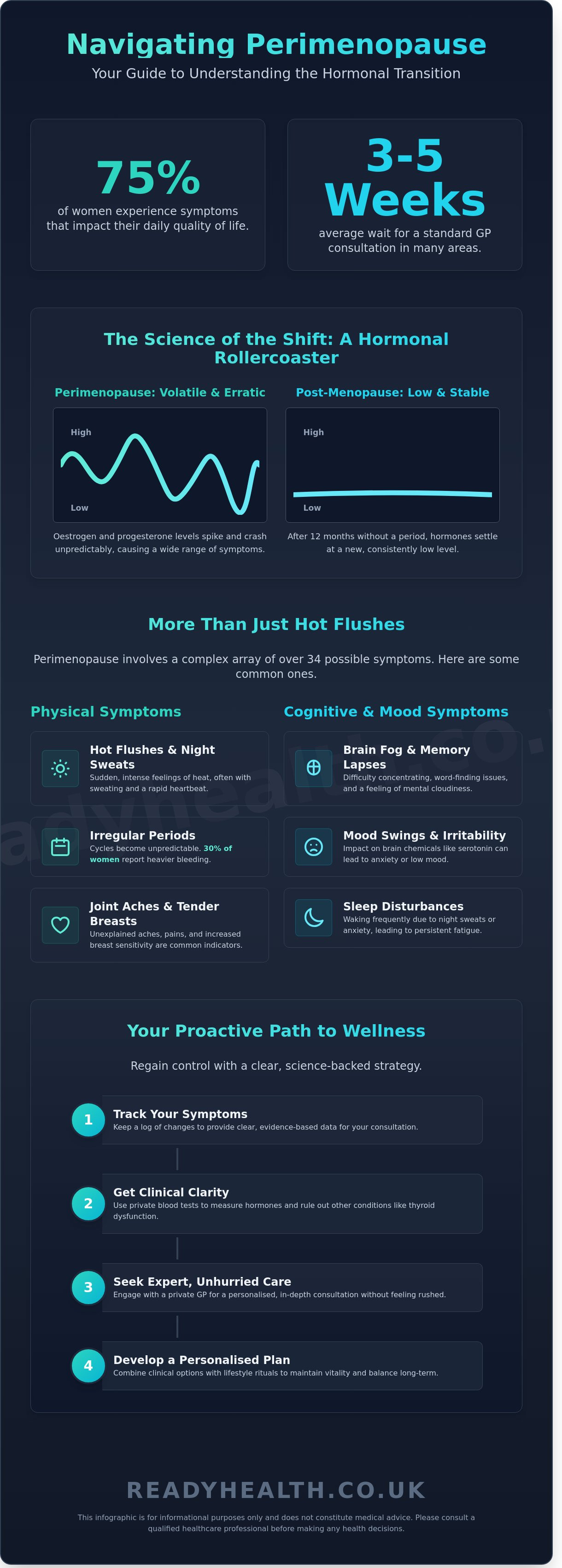
What if that sudden 3 a.m. wakefulness and the uncharacteristic brain fog you're feeling aren't just signs of a busy life, but your body's early signals of perimenopause? Research from the British Menopause Society indicates that over 75% of women experience symptoms that impact their daily quality of life, yet many in Wigan wait an average of 3 to 5 weeks for a standard GP consultation. You've likely noticed your cycle becoming unpredictable or felt frustrated when met with vague advice rather than clinical clarity. It's exhausting to feel dismissed when you simply want to regain your vitality.
We're here to help you understand the science of this transition and how to regain control over your hormonal health with confidence. You deserve a proactive approach to wellness that prioritises long term readiness over quick fixes. This guide explores the physiological changes occurring during this period, how to access private blood tests in Standish to ensure your levels are optimised, and the local support options designed to keep you feeling prepared and empowered.
This article is for informational purposes only and does not constitute medical advice. Please consult a qualified healthcare professional before making any health decisions.
Key Takeaways
- Understand the fluctuating roles of oestrogen and progesterone to better navigate the biological shifts occurring during this transitional phase.
- Recognise why psychological symptoms like "brain fog" and irritability are just as significant as physical changes when identifying the onset of perimenopause.
- Learn how to differentiate between hormonal transitions and other health concerns, such as thyroid dysfunction, to ensure you receive the correct support.
- Discover how a combination of science-backed clinical options and targeted lifestyle rituals can help you maintain optimal vitality and balance.
- Find out how to access unhurried, expert private GP care in Standish to develop a proactive and personalised strategy for your health.
Understanding Perimenopause: The Hormonal Transition for Women in Wigan
You might start noticing subtle shifts in your mood, sleep, or cycle long before you expect them. This period of change is known as perimenopause, the biological transition leading up to your final menstrual period. While many women in Wigan expect these changes in their 50s, the process often begins in the mid-40s, and for some, it starts as early as 35.
Living a busy life in Greater Manchester means you need to stay sharp and energised. Proactive health management is vital when you're balancing family life with a demanding career or a daily commute. Understanding Perimenopause helps you realise that these symptoms aren't just in your head; they're the result of complex chemical shifts that require a tailored approach to wellness.
To better understand this concept, watch this helpful video:
The Science of the Shift: Oestrogen and Progesterone
As you age, your declining egg reserve leads to erratic hormone production. Your ovaries no longer release eggs consistently, which causes levels of oestrogen and progesterone to spike and crash unpredictably. This isn't a steady decline but a period of significant volatility that affects your entire system.
Your hypothalamus, which acts as the control centre for your reproductive cycle, receives mixed signals during this time. This confusion in the brain often triggers the common symptoms of hot flushes or sudden anxiety. Perimenopause is the symptomatic bridge between reproductive years and menopause.
Perimenopause vs. Menopause: Knowing the Difference
It's easy to confuse the two, but they represent different stages of your hormonal journey. Clinical menopause is defined as the point when you've reached 12 consecutive months without a menstrual period. It's a retrospective diagnosis that marks the end of your reproductive years.
Research suggests that perimenopause is often the more symptomatic and challenging phase. This is because your body is reacting to rapidly fluctuating hormones rather than the low, stable levels found in post-menopause. We believe every woman deserves clear, clinical answers during this time. Ready Health’s about us page highlights our commitment to supporting these life transitions with a focus on long-term vitality and science-backed care.
This article is for informational purposes only and does not constitute medical advice. Please consult a qualified healthcare professional before making any health decisions.
Recognising the Symptoms: More Than Just Hot Flushes
Perimenopause is often reduced to a single image of a hot flush, yet the reality involves a complex array of over 34 possible symptoms. You might notice your periods becoming unpredictable; roughly 30% of women report significantly heavier or more frequent bleeding during this phase. Physical discomforts like night sweats, tender breasts, and unexplained joint aches are common indicators that your hormone levels are shifting. Understanding these perimenopause symptoms and treatment options is the first step toward regaining control.
Keeping a detailed log of these changes is essential before you visit a Wigan private GP. Recording the frequency and severity of your symptoms helps your clinician distinguish between temporary lifestyle stress and systemic hormonal shifts. This data ensures your consultation is productive, focused, and evidence-based. It's about being prepared for the conversation so you can secure the right support quickly.
The "Invisible" Symptoms: Mood and Cognition
Fluctuating oestrogen levels directly impact the production of serotonin and dopamine, the chemicals responsible for mood stability and reward. You aren't "just stressed" or failing to cope with modern life; you're experiencing a biological shift in brain chemistry. Many women in Wigan report "brain fog," a cognitive clouding that makes focusing on complex work tasks feel like wading through deep water. Irritability and heightened anxiety can also surface, often peaking in the days before your period begins.
Physical Changes and Vitality
The decline in collagen production during this transition can lead to thinner skin and noticeably finer hair. You might also experience a drop in libido or persistent fatigue that doesn't resolve with a standard night's sleep. Research suggests that targeted vitamin injections may help support energy levels and metabolic health when your body is under hormonal stress. These treatments focus on bioavailability, ensuring your system receives the nutrients it needs to maintain daily vitality.
Distinguishing between normal ageing and perimenopausal shifts can be difficult without professional guidance. If you feel your energy is slipping, it's worth reviewing our blood test packages to get a clear picture of your current health markers. This proactive approach allows you to address deficiencies early rather than waiting for symptoms to escalate further.
Diagnostic Challenges: Is it Perimenopause or Another Condition?
Many women in Wigan visit our Standish clinic with the same nagging doubt: "Am I just exhausted from work, or is my body changing?" It is the most common objection we hear. The symptoms of perimenopause rarely arrive with a clear label. They often blend into the background noise of a busy life, making it difficult to know if you are facing a hormonal shift or a different health hurdle entirely.
Thyroid vs. Hormones: The Great Mimic
Hypothyroidism is a master of disguise. It affects roughly 1 in 50 women in the UK and shares a striking number of symptoms with the menopausal transition. Fatigue, unexpected weight gain, and low mood are hallmarks of both conditions. When your thyroid gland fails to produce enough hormones, your entire system slows down. This creates a state of lethargy that feels identical to perimenopausal exhaustion.
Testing your TSH (Thyroid Stimulating Hormone) and T4 levels is essential for an accurate diagnosis. Without these markers, you might spend months trying to balance your sex hormones while your thyroid remains unsupported. Ready Health offers comprehensive thyroid function testing in Wigan to help you rule out metabolic issues before starting hormone therapy.
The Perimenopause and ADHD Overlap
Oestrogen plays a vital role in brain health by supporting dopamine production. As oestrogen levels fluctuate during perimenopause, many women experience a sudden "unmasking" of ADHD symptoms. You might find that your executive function, your ability to plan, focus, and regulate emotions, begins to falter. This isn't just ageing; it is a physiological response to neurochemical changes.
If you notice significant cognitive shifts that disrupt your daily routine, an online ADHD assessment can be a transformative tool. Seeking a specialist neurology or mental health consultation is advisable if these symptoms persist despite hormonal support. Understanding the intersection of your neurology and your hormones is key to staying sharp and capable.
Securing clinical support for perimenopause requires a foundation of objective data. We recommend a Well Woman Blood Profile as your primary diagnostic tool. This profile screens for nutrient deficiencies, such as low iron or Vitamin B12, which are responsible for nearly 25% of fatigue cases in women over 40. By identifying these gaps early, you ensure your health strategy is built on facts rather than guesswork.
This article is for informational purposes only and does not constitute medical advice. Please consult a qualified healthcare professional before making any health decisions.
Navigating Treatment Options: From Lifestyle to Clinical Support
Managing perimenopause effectively requires a proactive partnership between you and your healthcare provider. At our Standish clinic, we focus on clinical evidence to build a strategy that fits your specific biology. This approach involves a blend of medical intervention and targeted lifestyle shifts to maintain your daily vitality and long-term health.
Hormone Replacement Therapy (HRT) Explained
HRT remains the gold standard for symptom relief for many women. You can choose between synthetic hormones or body-identical options, which are derived from plant sources and match the molecular structure of your own hormones. Research suggests HRT is safe for most women; for instance, a 2017 study published in JAMA followed women for 18 years and found no increase in all-cause mortality for those using HRT.
A private GP consultation allows you to bypass long waiting lists and discuss these options in depth. We focus on tailoring a prescription to your unique hormone profile, ensuring the dosage and delivery method, such as gels, patches, or capsules, suit your lifestyle. This personalised clinical support helps you regain control over your symptoms quickly and safely.
Supporting Your Body Naturally
Your daily habits act as a foundation for hormonal balance. Strength training is particularly vital during this transition, as women can lose up to 8% of their muscle mass per decade starting in their 40s. Aiming for two resistance sessions a week helps maintain metabolic rate and bone density. Sleep hygiene also becomes a priority; keeping your bedroom at a consistent 18°C and reducing blue light exposure 60 minutes before bed can mitigate night sweats and insomnia.
Nutrition and supplementation provide the raw materials your body needs to function. We recommend focusing on these areas:
- Oestrogen Metabolism: Consuming cruciferous vegetables like broccoli and kale supports the liver in processing hormones efficiently.
- Bone Health: Ensuring adequate Vitamin D levels is essential, as the risk of osteoporosis increases when oestrogen levels fluctuate.
- Energy Production: B vitamins are crucial for cognitive function and cellular energy.
If you struggle with persistent perimenopausal fatigue or "brain fog," oral supplements may not always provide the fast-acting support you need. Many of our patients find that Vitamin B12 injections offer a superior route for absorption, bypassing the digestive system to boost energy levels and mental clarity directly.
Take the first step toward a more balanced transition by speaking with our team. Book a private consultation today to explore your treatment options.
Personalised Care at Ready Health: Your Perimenopause Journey in Standish
Managing the symptoms of perimenopause shouldn't feel like a secondary priority or a rushed conversation. At Ready Health in Standish, we provide a clinical environment that's both professional and unhurried. You can often secure a same-day or prompt private GP appointment, ensuring your hormonal health is addressed exactly when you need it. We've designed our Wigan clinic to be a space where clinical authority meets personal comfort, allowing you to speak openly about your transition.
Why Choose Private Care in Wigan?
Standard local wait times can often lead to brief, high-pressure consultations that leave questions unanswered. We offer dedicated 15 or 30-minute appointments, providing significantly more time than the average 9.2-minute UK GP slot to explore your symptoms. Our facility maintains rigorous CQC-regulated standards, ensuring you receive the highest level of clinical safety and care. For residents in Appley Bridge or Shevington who find it difficult to travel, we also offer the convenience of professional home visits.
Choosing private care means you aren't just a number in a system; you're a partner in your own health journey. Our clinicians focus on the nuances of your experience, from sleep disruption to mood changes. This patient-centred approach ensures that every recommendation is tailored to your specific lifestyle and goals.
Starting Your Health MOT
Your journey toward balance begins with a clear understanding of your internal chemistry. Our phlebotomy service provides precise hormone screening to identify shifts in oestrogen, progesterone, and thyroid function. We remove the guesswork by using science-backed data to map out your current health status. Once your results are processed, we move into a seamless clinical review to discuss the findings and potential pathways forward.
We believe in the concept of "readiness" for every stage of life. By identifying hormonal gaps early, we help you prepare for the years ahead with confidence rather than apprehension. After your review, you'll receive a structured plan designed to optimise your vitality and restore a sense of calm control. It's about moving from simply surviving your symptoms to feeling fully prepared for the demands of modern life.
You deserve to feel like yourself again. Take the first step toward clarity and book a consultation with our expert team in Standish today.
This article is for informational purposes only and does not constitute medical advice. Please consult a qualified healthcare professional before making any health decisions.
Taking Control of Your Hormonal Health
Navigating perimenopause requires a proactive approach rather than a "wait and see" strategy. Research from the British Menopause Society indicates that 75% of women experience symptoms that significantly impact their daily quality of life. By recognising these early signs and exploring evidence-based treatments, you can maintain your long-term vitality and focus throughout this transition.
At Ready Health, we provide the clinical framework you need to manage these changes with confidence. Our CQC-regulated clinic in Standish offers a supportive environment where you can speak with expert female health clinicians who specialise in hormonal wellness. We prioritise precision and speed, offering same-day blood test results so you can begin your personalised treatment plan without unnecessary delays.
You don't have to manage these biological shifts alone. We're here to provide the science-backed guidance and clinical care you deserve right here in Wigan. Book a Private GP Consultation in Wigan Today to start your journey toward balance and readiness for the years ahead.
This article is for informational purposes only and does not constitute medical advice. Please consult a qualified healthcare professional before making any health decisions.
Frequently Asked Questions
How do I know if I am in perimenopause or if it is just stress?
You can distinguish perimenopause from stress by tracking the regularity of your menstrual cycle and the specific nature of your symptoms. While stress increases cortisol and can disrupt your sleep, perimenopause involves significant fluctuations in oestrogen that typically cause night sweats, hot flushes, and changes in period frequency. if you're over 45 and notice these physical shifts alongside mood changes, it's likely the hormonal transition rather than lifestyle stress alone.
Can I get a blood test in Wigan to confirm perimenopause?
You can access private hormone testing at our clinic in Standish to help clarify your hormonal status. We often measure Follicle Stimulating Hormone (FSH) levels, which typically rise as your ovaries slow down. It's important to remember that NICE guidelines suggest women over 45 don't always require a blood test for diagnosis, as clinical symptoms are often a more reliable indicator of perimenopause than a single snapshot of fluctuating hormones.
What is the best age to start HRT for perimenopause symptoms?
There isn't a single "perfect" age to begin Hormone Replacement Therapy (HRT), but starting when symptoms first begin to disrupt your daily ritual is often most effective. Research from the British Menopause Society suggests that the benefits for bone and heart health are greatest when HRT is initiated before age 60. You don't need to wait for your periods to stop completely to seek support; addressing the decline in oestrogen early can help maintain your long-term vitality.
Will perimenopause cause me to gain weight around my middle?
Hormonal shifts during this transition often lead to a redistribution of fat, specifically increasing visceral fat around the abdomen. A study published in the journal JCI Insight found that declining oestrogen levels directly change how your body stores fat cells. Approximately 60% of women experience weight gain during this period, so focusing on metabolic health and muscle-preserving nutrition is a proactive way to manage these changes.
Are there natural ways to manage perimenopause symptoms in Wigan?
Natural management involves a science-backed combination of clinical-grade supplements and consistent lifestyle habits. You might find that increasing your intake of Magnesium and Vitamin D3 helps with sleep and bone density, especially since 20% of the UK population has low vitamin levels. Utilising local green spaces like Haigh Woodland Park for resistance walking or yoga can also help regulate your mood and maintain cardiovascular health naturally.
How long does the perimenopause transition typically last?
The perimenopause transition lasts an average of 4 years, though for some women, it can span up to a decade. You'll move through various phases of hormonal change until you've gone a full 12 months without a period, which marks the official start of menopause. Monitoring your symptoms over a 6-month period can help you and your clinician identify where you are in this journey and create an optimal plan for your care.
Can perimenopause affect my existing health conditions like heart health?
The decline in oestrogen during perimenopause can impact your cardiovascular system and may influence existing health markers. The British Heart Foundation notes that oestrogen helps keep blood vessel walls flexible, so its reduction can lead to an increase in cholesterol levels and blood pressure. We recommend regular screenings to ensure your heart health remains a priority as your body moves through these significant biological changes.
This article is for informational purposes only and does not constitute medical advice. Please consult a qualified healthcare professional before making any health decisions.

Article by
Shamir Patel
Shamir Patel is a UK-based Clinical Pharmacist and Independent Prescriber with a specialist focus on ADHD and weight management.
He is the Registered CQC Manager at Ready Health Medical Clinic, where he leads the development and delivery of safe, patient-centred services across ADHD assessment and treatment, weight loss programmes, and general medical care.
With a career spanning nearly three decades since qualifying in 1995, Shamir brings extensive clinical and operational experience across both community pharmacy and private healthcare.
He also serves as Deputy Superintendent Pharmacist and Lead Prescriber at PillSorted. He oversees high-volume prescribing services. He focuses on GLP-1 weight loss treatments and clinical governance.
Shamir is a SCOPE-accredited obesity specialist and has a strong interest in improving access to evidence-based ADHD care. He is known for his structured, guideline-driven approach, aligning his clinical practice with NICE recommendations and regulatory standards set by the GPhC and CQC.
Alongside his clinical work, Shamir is actively involved in mentoring prescribing pharmacists, developing standard operating procedures, and contributing to service innovation within digital and community healthcare settings. His work reflects a commitment to safe prescribing, patient education, and improving outcomes through practical, accessible care.
Disclaimer
The information on this website is provided for general educational and informational purposes only and is not intended as medical advice, diagnosis, or treatment. Articles reflect general guidance and may not be suitable for your individual circumstances. You should always seek advice from a qualified healthcare professional before starting, stopping, or changing any treatment, medication, or healthcare plan. While we aim to keep our content accurate and up to date, Ready Health makes no guarantees about the completeness, accuracy, or suitability of the information provided. Reliance on any information on this site is entirely at your own risk. If you have concerns about your health, please book an appointment with a suitably qualified clinician. In an emergency, contact 999 or attend your nearest A&E department.


