

Restless legs syndrome is more than an urge to fidget. It causes an uncomfortable urge to move your legs, often when you’re resting, with movement bringing temporary relief; symptoms commonly worsen in the evening or at night and can disturb sleep. If you’re looking for restless leg syndrome treatment in Preston, the first step is understanding what you’re feeling and what may be contributing.
That crawling, tingling or pulling sensation can feel unsettling, especially when it makes it hard to settle at bedtime. Learn how restless legs syndrome (RLS) may feel, why iron levels and other health factors can matter, and how a clinician assesses your symptoms.
We explain the questions and checks that can help distinguish RLS from other causes of discomfort. A clearer understanding can help you discuss suitable next steps and make informed decisions about your health.
Key Takeaways
- Notice whether discomfort begins when you’re resting and eases when you move, as this pattern can help identify restless legs syndrome.
- Learn how symptoms can affect sleep and what details about their timing and impact are useful to share during an assessment.
- Understand why a clinician may review your medicines and arrange blood tests to investigate low iron or other contributing factors.
- A private GP consultation can help you discuss your symptoms and understand appropriate next steps.
What is restless legs syndrome?
Restless legs syndrome (RLS) causes an intense urge to move your legs, often with uncomfortable sensations such as crawling, tingling or pulling. Symptoms usually start or worsen while you’re sitting or lying still, ease temporarily with movement, and become more noticeable in the evening or at night. This pattern can interrupt sleep and affect your quality of life. During sleep, periodic limb movements may also make your legs twitch or jerk without you choosing to move them.
A steady sleep routine can help you notice patterns and manage possible triggers. Try keeping similar bed and waking times, reducing caffeine after midday, and avoiding alcohol for at least 2 hours before bed. Gentle stretching or a short walk may ease evening restlessness; regular enjoyable activity can fit into your day, but avoid significant exertion close to bedtime. A sleep diary can record when sensations start, what you were doing, and how often you woke.
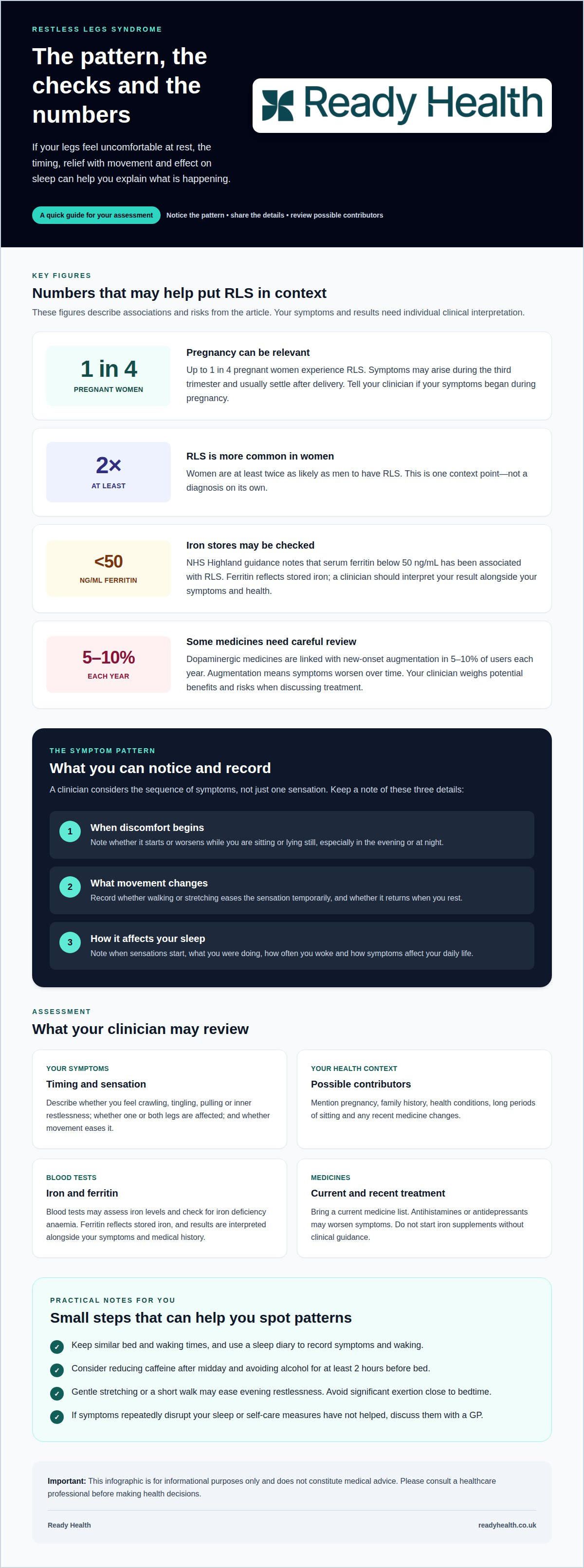
Pregnancy can also be relevant: restless legs symptoms may arise during the third trimester and usually settle after delivery. Up to 1 in 4 pregnant women experience RLS. Note whether symptoms began during pregnancy, after a medicine change, or following long periods of sitting, such as desk work or travelling. These details help a clinician understand possible triggers and the effect on your rest.
Medicines used for RLS in the UK may include gabapentin or pregabalin; co-careldopa or ropinirole may be considered if other medicines have not worked. Risks include augmentation, where symptoms worsen over time, and dopamine agonists can cause impulse control problems; dopaminergic medicines are also linked with new-onset augmentation in 5-10% of users each year. A clinician weighs symptoms and risks before selecting treatment.
Book a GP appointment if restless legs repeatedly disrupt your sleep or self-care measures have not helped. Bring a sleep diary and a current list of medicines, including antihistamines or antidepressants, which may worsen symptoms. If the diagnosis is uncertain or another condition needs investigation, a neurology appointment may help. A sleep specialist may also be involved if your sleep needs further assessment.
Restless legs syndrome symptoms
Symptoms vary between people and may change from one evening to another. Their timing, effect on sleep and response to movement help a doctor assess the pattern. If symptoms affect your rest, understanding this pattern can guide a discussion about restless leg syndrome treatment in Preston.
Common RLS Symptoms
RLS can cause an urge to move alongside uncomfortable sensations in the legs. People may describe crawling, tingling, pulling or inner restlessness rather than visible pain. Symptoms can affect one or both legs and, less commonly, the arms or other areas. If you also experience cramps, note how they feel and when they occur. Sharing these details in a consultation helps explain your symptoms and their effect on daily life.
Symptom Timing and Diagnostic Patterns
The pattern matters: symptoms typically appear during rest, ease with movement and worsen later in the day. Sitting for long periods at a desk or while travelling can bring on discomfort. A doctor considers whether this sequence fits RLS rather than relying on one sensation alone. Record when symptoms start, how movement changes them and whether they return when you rest. This gives you a clearer account to share during an assessment.
For mild symptoms, try a short walk or gentle stretching when discomfort begins. Walking, yoga and stretching may ease symptoms, while regular, moderate activity can support sleep. For those interested in structured physical therapy, resources like movemed.au illustrate how guided exercise physiology and movement therapies can help manage underlying physical discomfort. Keep a consistent bedtime routine and note whether caffeine or alcohol seems to trigger symptoms. These steps can help you spot patterns, but persistent sleep disruption merits a clinical discussion about restless leg syndrome treatment in Preston.
Risk factors include having a first-degree relative with RLS, pregnancy and some health conditions. Women are at least twice as likely as men to have RLS. Symptoms can also follow prolonged sitting, so note whether they occur during travel or desk work. If restless legs affect your sleep, mental health or quality of life, arrange a doctor’s consultation. Bring your symptom notes and describe the impact on work, rest and everyday activities.
Iron deficiency and other nutrient deficiencies
Iron status is one factor clinicians may consider when restless legs disrupt sleep. Blood tests can help assess whether low iron stores may contribute to your discomfort.
Low Iron and Ferritin
Ferritin is a blood protein that reflects stored iron, and low stores may be associated with restless legs. Iron and dopamine, a chemical involved in movement signals, may both be relevant to the urge to move. NHS Highland guidance notes that serum ferritin below 50 ng/mL has been associated with restless legs syndrome. A result within a laboratory’s usual range may still need clinical interpretation in light of your symptoms.
Iron Testing
A clinician may arrange blood tests to assess iron levels and check for iron deficiency anaemia, where low iron affects healthy red blood cells. Ferritin is useful because it reflects your iron stores, not just the iron circulating in your blood. Your symptoms, medical history and test results together help guide whether low iron could be contributing. Mention previous results and any iron supplements at your appointment.
Ferritin levels may be considered when assessing restless legs syndrome and should be interpreted by a clinician alongside your health and test results. These figures need professional interpretation alongside your health and test results. If iron is low, addressing the underlying cause may help; iron replacement may take a few weeks to begin improving symptoms.
Don’t start iron supplements without clinical guidance. Iron can cause side effects, and treatment should follow blood results and a clinician’s advice. The right approach depends on the cause and degree of deficiency, your symptoms and your response to replacement. A clinician can explain whether supplements are suitable and what follow-up you may need.
Iron is the nutrient most directly considered in RLS assessments, but other health issues may also contribute. Pregnancy, kidney disease and some medicines are associated with RLS. If discomfort persists despite addressing low iron, tell your clinician. This helps them consider other possible factors instead of assuming iron explains every symptom.
RLS diagnostic criteria and physician assessment
A clinician assesses your symptoms against five diagnostic criteria and considers possible causes, such as low iron or medicines. See a GP if symptoms keep you from sleeping, affect your mental health or persist despite self-care. An assessment can help guide decisions about restless legs syndrome treatment in Preston.
Physician Assessment and Blood Tests
Your doctor will ask about the sensations, when they occur, whether movement eases them and how they affect your sleep. They may review your medicines because some can worsen symptoms, and arrange blood tests to check for iron deficiency or other underlying issues. Mention medicines such as antihistamines or antidepressants, as well as any recent changes. These details help distinguish RLS from other conditions linked to leg discomfort.
The criteria cited by NHS Highland are the 2012 revised criteria of the International Restless Legs Syndrome Study Group. All five must be met for an RLS diagnosis: an urge to move, symptoms triggered by rest, relief with movement, evening or night worsening, and symptoms not explained solely by another condition. Walking may ease symptoms temporarily, but that response alone cannot confirm RLS. Your doctor considers the whole pattern and other possible explanations.
When to See a GP
Arrange a medical consultation if restless legs regularly disrupt your sleep, affect your mental wellbeing or continue despite self-care. Describe whether symptoms worsen in the evening, ease when walking or stretching, and return when you rest. If the diagnosis is uncertain or another condition needs investigation, NHS Highland guidance says a neurology appointment may help. A referral can support further assessment rather than assuming every leg sensation has the same cause.
Before your appointment, note when symptoms occur, how they disrupt sleep and which medicines you take. If you’re considering restless legs syndrome treatment in Preston, a GP consultation can help you discuss these details and appropriate next steps.
Ready Health: Private GP Consultation (15 Minutes)
Ready Health offers a Private GP Consultation (15 Minutes) to discuss restless legs symptoms and possible next steps. If discomfort is repeatedly disrupting your sleep, bring notes on when it starts, what eases it and any medicines you take. This gives the GP a clearer picture of your experience and concerns.
A consultation can help you discuss whether your symptoms fit the pattern of RLS and whether further assessment is appropriate. You can also ask how factors such as iron levels or medicines may relate to your symptoms. The appointment is a starting point for a considered conversation, not a promise of a particular diagnosis or treatment.
If you’d like to talk through your symptoms, book a GP consultation with Ready Health.
Take a considered next step
Ongoing night-time discomfort can affect your sleep and daily routines. If you’re considering restless legs syndrome treatment in Preston, think about what you most want help with, such as settling at bedtime or feeling more rested during the day. This can make your next conversation more focused.
Ready Health can help you discuss your concerns and consider possible next steps. Contact Ready Health to discuss your symptoms when you’re ready to take that step.
This content is for informational purposes only and does not constitute medical advice. Consult a healthcare professional before making health decisions.
Frequently Asked Questions
Who is at risk?
RLS may be more likely if a close relative has experienced it, or if you’re pregnant or have iron deficiency anaemia or kidney disease. Some medicines can also worsen symptoms, including certain antihistamines, antidepressants and beta blockers. If symptoms begin after a change in medicine, note when they started and discuss this with your GP. Don’t stop prescribed medicine without medical advice.
What are the symptoms and causes of restless legs syndrome (RLS)?
RLS typically involves a strong urge to move your legs alongside sensations such as tingling, crawling or pulling. The cause isn’t always clear; iron levels, dopamine pathways, pregnancy, kidney disease and some medicines may be relevant. Leg cramps or discomfort can have other explanations, so describe the exact sensation and when it occurs. This helps your clinician decide whether the overall pattern fits RLS.
What self-care and lifestyle changes can help relieve restless legs syndrome?
Track possible triggers alongside your bedtime and symptoms, then adjust one habit at a time. For example, reduce caffeine later in the day, keep a regular sleep schedule and try gentle stretching or a short walk when symptoms arise. Heat or cold packs may also reduce symptom intensity for some people. Avoid starting supplements or changing prescribed medicines without discussing it with a clinician.
How is RLS diagnosed and what tests are available on the NHS?
Diagnosis is based mainly on your symptom history and whether it matches the recognised RLS criteria. Your GP may arrange blood tests to check for iron deficiency or other underlying issues. The tests depend on your symptoms and medical history. Tell your GP about sleep disruption, medicines and any other symptoms, so they can decide whether further assessment or a specialist referral is appropriate.
Can iron deficiency cause RLS, and how is it tested and treated?
Low iron stores may contribute to RLS symptoms, so a clinician may request blood tests, including ferritin, which reflects stored iron. If results show low iron, treatment may involve iron replacement and investigating why levels are low. Don’t take iron supplements without clinical guidance, as they can cause side effects and may not suit everyone. Follow-up helps assess your response.
Which GP practices or NHS services in Preston assess and treat RLS?
Your registered NHS GP practice is the usual starting point for assessment in Preston. A GP can review your symptoms and medicines, arrange relevant blood tests and consider whether a neurology referral is appropriate if the diagnosis is unclear or another condition needs investigation. NHS care is separate from private appointments. If sleep loss is affecting your wellbeing, explain this when arranging your appointment.

Article by
Shamir Patel
Shamir Patel is a UK-based Clinical Pharmacist and Independent Prescriber with a specialist focus on ADHD and weight management.
He is the Registered CQC Manager at Ready Health Medical Clinic, where he leads the development and delivery of safe, patient-centred services across ADHD assessment and treatment, weight loss programmes, and general medical care.
With a career spanning nearly three decades since qualifying in 1995, Shamir brings extensive clinical and operational experience across both community pharmacy and private healthcare.
He also serves as Deputy Superintendent Pharmacist and Lead Prescriber at PillSorted. He oversees high-volume prescribing services. He focuses on GLP-1 weight loss treatments and clinical governance.
Shamir is a SCOPE-accredited obesity specialist and has a strong interest in improving access to evidence-based ADHD care. He is known for his structured, guideline-driven approach, aligning his clinical practice with NICE recommendations and regulatory standards set by the GPhC and CQC.
Alongside his clinical work, Shamir is actively involved in mentoring prescribing pharmacists, developing standard operating procedures, and contributing to service innovation within digital and community healthcare settings. His work reflects a commitment to safe prescribing, patient education, and improving outcomes through practical, accessible care.
Disclaimer
The information on this website is provided for general educational and informational purposes only and is not intended as medical advice, diagnosis, or treatment. Articles reflect general guidance and may not be suitable for your individual circumstances. You should always seek advice from a qualified healthcare professional before starting, stopping, or changing any treatment, medication, or healthcare plan. While we aim to keep our content accurate and up to date, Ready Health makes no guarantees about the completeness, accuracy, or suitability of the information provided. Reliance on any information on this site is entirely at your own risk. If you have concerns about your health, please book an appointment with a suitably qualified clinician. In an emergency, contact 999 or attend your nearest A&E department.


