

How often will you need blood tests and reviews while taking testosterone replacement therapy (TRT), and how much might they add to your budget? The cost of private TRT in the UK depends on the treatment, medication, tests and follow-up care, so the initial fee is only part of the total.
It’s sensible to look beyond the initial appointment. Your first monitoring check is usually 6-12 weeks after treatment begins, with further reviews and tests shaping the ongoing cost. NHS care works differently, so the fees and arrangements aren’t directly like-for-like.
This guide explains the main cost factors, how treatment and follow-up arrangements can differ, and what monitoring may involve. It also outlines how private care compares with NHS treatment, helping you understand the likely commitment before discussing your options with a clinician.
Key Takeaways
- Separate initial assessment and blood testing from medication and follow-up costs to build a clearer picture of the overall commitment.
- Compare injection, capsule and gel options, as the treatment format and dose can affect ongoing costs.
- Allow for monitoring and review costs, which may change during treatment adjustments and once your care is stable.
- Compare the NHS prescription charge with the broader costs of private treatment, including testing and reviews.
Typical first- and second-year treatment costs
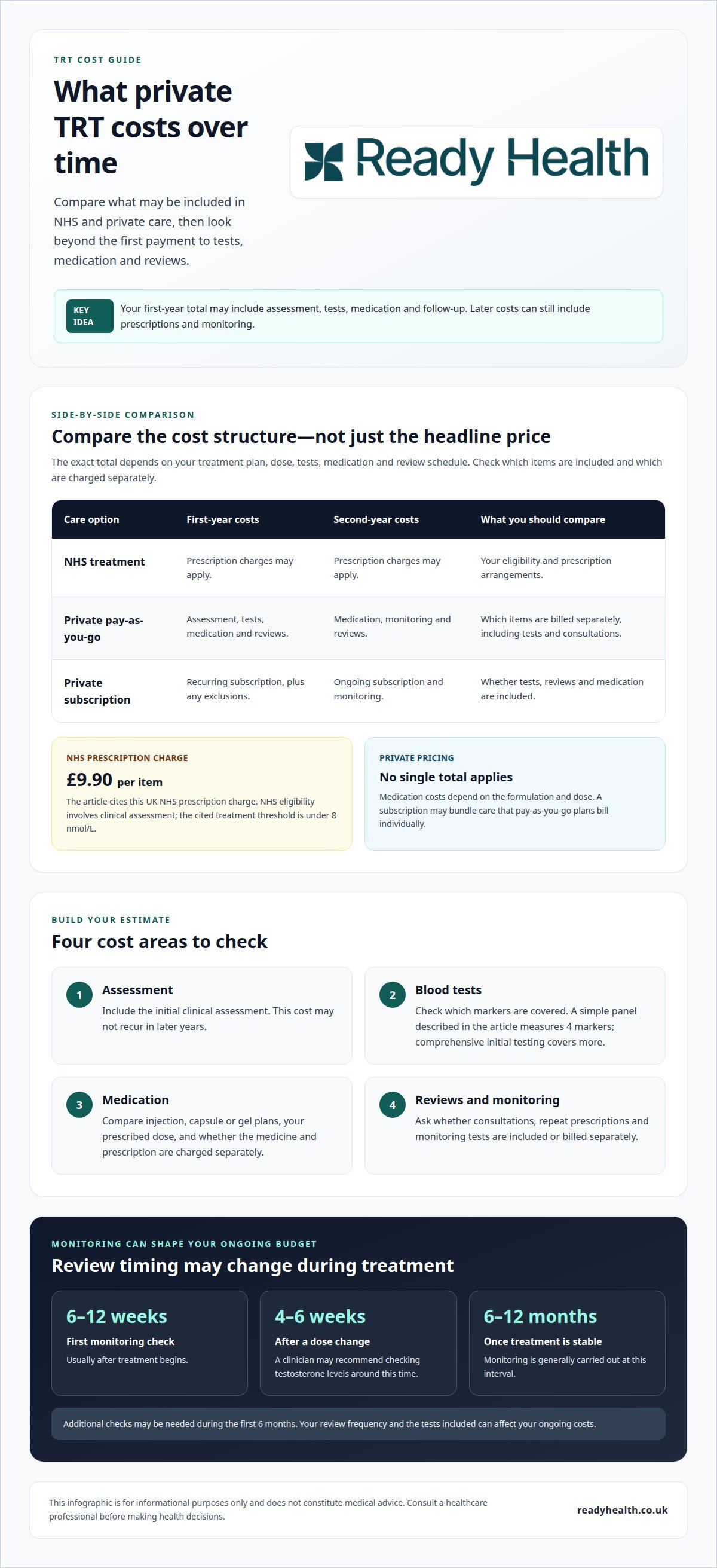
Plan for assessment, blood tests, medication and follow-up in your first-year budget. Initial assessment costs may not recur in later years, but prescriptions and monitoring tests can remain ongoing expenses. The balance depends on the treatment, dose, tests included and review schedule, so compare the full list of inclusions rather than the headline price.
The NHS prescription charge in the UK is £9.90 per item, according to NHS Business Services Authority. NHS eligibility involves clinical assessment; the treatment threshold cited is under 8 nmol/L (nanomoles per litre). A result alone does not describe the full assessment.
A private prescription may be presented to a regular pharmacy for community dispensing, meaning the pharmacy supplies the medication. Medication costs depend on the testosterone formulation and dose, so check whether the prescription and medicine are charged separately. A subscription may bundle costs that pay-as-you-go care bills individually.
Blood test coverage also affects the total. A simple panel described in the market information measures 4 markers, while comprehensive initial testing covers more. Ask what markers a quoted panel includes, and whether monitoring blood tests are charged separately from consultations.
| Option | First-year costs | Second-year costs | What to compare |
|---|---|---|---|
| NHS treatment | Prescription charges may apply | Prescription charges may apply | Eligibility and prescription arrangements |
| Private pay-as-you-go | Assessment, tests, medication and reviews | Medication, monitoring and reviews | Which items are billed separately |
| Private subscription | Recurring subscription plus any exclusions | Ongoing subscription and monitoring | Included tests, reviews and medication |
For a useful comparison, list every included item, then identify separate charges before estimating an annual total. A membership or subscription should be assessed by its monthly payment and the services it includes; compare that with the annual cost of separately billed care, without assuming every test or review is covered. The testosterone replacement therapy service explains the treatment context. Choose the option whose assessment, prescriptions and monitoring arrangements match your needs.
Injection, capsule and gel treatment prices
Testosterone replacement therapy can involve injections, capsules or gel. The formulation affects how medication is supplied and used, while dose and review arrangements also influence the overall charge. A monthly subscription may bundle treatment and care, whereas separate billing can make each element easier to identify. The price depends on your treatment plan, formulation, dose and monitoring needs, and is provided after a quote request.
Online TRT subscriptions use different pricing structures. Some include medication, clinical reviews or blood tests; others charge for these separately. Compare the inclusions, repeat prescription arrangements and any fees for follow-up appointments. A clear breakdown helps you understand ongoing costs, not just the initial payment.
Injection, capsule and gel plans can differ in how treatment is supplied. An injection plan may involve arrangements for administration, while gel or capsules require a supply of that formulation. These details can affect the total cost. A clinician should recommend an option based on assessment, symptoms and your treatment plan, not price alone.
If testosterone and HCG (human chorionic gonadotrophin, a hormone used as a medicine) are both prescribed, consider them as separate parts of the treatment plan. HCG is an additional medicine, so check whether its supply and monitoring are included or charged separately. There is no single HCG price that applies to every plan, as the prescribed treatment and included care affect the total.
To compare plans, list the monthly medication charge, subscription inclusions, prescription arrangements and separate review or testing fees. Then estimate the total over the time you expect to use treatment instead of comparing a single headline price. A lower subscription may exclude services included in another plan, so compare equivalent care.
Additional monitoring and review consultation fees
Follow-up costs may include consultations, repeat prescriptions and blood tests. The schedule can change during treatment, particularly after a dose adjustment.
Follow-up consultations and refills
These fees cover clinical review; medication refills may be charged separately or included in a treatment plan.
After a dose change, a clinician may recommend checking new testosterone levels around 4-6 weeks later. Once treatment is stable, monitoring is generally every 6-12 months, so review frequency affects your ongoing budget.
Clinic consultations and monitoring
Private clinic monitoring combines a review of your treatment plan with checks of relevant health markers. Alongside routine blood panels, many men also track changes in bone density and lean muscle mass using body composition scans from providers such as Dexaslim to evaluate their progress over time.
Additional checks may be needed during the first 6 months. Remote and transfer consultations can involve reviewing your current prescription, results and treatment history; fees depend on the consultation and services included.
Possible side effects include acne or oily skin, hair loss in men already prone to it, increased red blood cell production and reduced fertility. Monitoring helps clinicians assess testosterone levels and safety markers during treatment.
Blood tests and initial consultations
Starting private TRT involves clinical assessment and two early-morning testosterone blood tests, preferably before 11 am. Results and symptoms inform whether treatment is suitable and which markers need monitoring. After starting, the first follow-up test checks treatment response and safety.
How does private TRT compare to the NHS in terms of cost and quality of care?
The main differences are how care is accessed, paid for and reviewed. Your choice affects the initial assessment, treatment adjustments and ongoing follow-up.
An NHS testosterone treatment threshold cited in UK comparisons is under 8 nmol/L (nanomoles per litre, a unit used to measure the concentration of testosterone in your blood). NHS access follows local clinical pathways, so waiting times depend on referral routes and service capacity. Private treatment is self-pay, with appointment timing and monitoring arranged through the chosen clinic.
Insurance cover for TRT depends on your policy. Outpatient consultations, prescribed medicines and blood tests may be covered differently, so check the policy terms to understand which costs are included.
Treatment administration also varies. NHS testosterone injections may be given every few weeks to a few months. Private care may offer different treatment formats and review arrangements, but the appropriate option depends on clinical assessment, hormone levels and your treatment plan.
Further testing can help assess response and safety. A testosterone safety blood test at six weeks checks markers including testosterone levels and PSA (prostate-specific antigen, a protein in the blood that can be linked to prostate health). If results or symptoms lead to a dose adjustment, the doctor may arrange further tests and review the treatment plan.
Payment arrangements affect how you manage ongoing costs. Private care may charge separately for consultations, tests and prescriptions, or combine some services in a package. Before treatment starts, find out which costs recur and what charges end if you stop treatment.
TRT can be long-term, but continuing treatment is not automatic. If you are considering stopping, discuss the decision and follow-up plan with your doctor. Blood tests and a review of symptoms may still be relevant after treatment changes.
For a practical comparison, weigh NHS eligibility and local access against private self-pay costs, appointment arrangements and monitoring. Appropriate assessment and follow-up matter more than whether treatment is NHS or private.
Ready Health
Ready Health is based in Standish, Wigan, and offers private GP consultations to discuss testosterone, symptoms and assessment. Bring any existing test results and explain your concerns so a clinician can consider appropriate next steps with you.
If you are comparing private care with NHS treatment, a Ready Health private GP consultation can help you discuss blood tests, prescriptions and ongoing monitoring. A clinician can explain how these considerations apply to your circumstances without assuming TRT is suitable for everyone.
Make your next step an informed one
Before deciding about testosterone treatment, consider what you want to address and what ongoing care you can accommodate. The cost of private TRT in the UK is one part of the decision; your health priorities and willingness to attend clinical reviews matter too. Speak with a private healthcare professional to discuss your concerns, review your symptoms, and determine the appropriate next steps for your care.
Ready Health offers comprehensive private general practice services alongside specialized assessments and blood profiles to support your health needs. Whether you require an initial discussion or a detailed review of your hormone levels, choosing the right consultation gives you appropriate time to explore your options safely.
Contact Ready Health about TRT to discuss your questions and take a considered next step in your treatment journey.
This content is for informational purposes only and does not constitute medical advice. Consult a healthcare professional before making health decisions.
Frequently Asked Questions
Can I get TRT on the NHS?
Yes, NHS treatment may be an option if your circumstances meet clinical criteria. To make an appointment more useful, note when your symptoms began, how they affect daily life and any relevant health conditions. Bring a list of current medicines and previous test results if available. This gives your GP practical context to consider appropriate assessment and next steps.
Is TRT Available on the NHS?
Yes, the NHS can provide TRT in suitable cases, but it is not a routine option for everyone concerned about testosterone. Access depends on clinical need and the relevant NHS pathway. If you are unsure how to begin, raise your symptoms with your GP and ask which assessment route applies in your area. This helps distinguish NHS provision from private self-pay care.
Is it possible to get TRT without seeing a doctor?
A clinician will usually assess you before prescribing TRT. Taking testosterone without a prescription from a qualified medical professional may be illegal in the UK, so check with a qualified professional about the rules and safe options. An appointment also gives you a chance to discuss medicines, relevant health history and personal priorities, such as fertility plans. Avoid products offered outside a prescribed treatment plan, even if they claim to address similar symptoms.
So is TRT worth it?
That depends on whether the potential benefits align with your health goals and whether you are comfortable with treatment and follow-up. Before deciding, identify the symptoms you most want to address and what would count as a meaningful change. Discuss these aims with a clinician, including how progress would be reviewed. This supports a considered decision rather than one based on broad claims.
What is the typical cost of private TRT in the UK per month and per year?
Private TRT costs vary according to the prescribed treatment and the care included. For budgeting, separate one-off assessment costs from recurring charges, then consider how medication, tests and reviews are billed. A headline subscription price may not reflect your total spend if some items are charged separately. Compare the total cost of the care you expect to receive.
Are follow-up appointments, repeat blood tests and prescriptions included in UK private TRT prices?
Not always. Package terms differ, so a label such as “subscription” can cover different services. Before choosing a plan, find out whether it includes clinical reviews, repeat testing, prescription writing and the medication itself. Also consider how additional checks are charged if your treatment changes. This gives you a clearer picture of costs beyond the advertised recurring fee.
For help discussing your questions, contact Ready Health about a private GP consultation.
This content is for informational purposes only and does not constitute medical advice. Consult a healthcare professional before making health decisions.

Article by
Shamir Patel
Shamir Patel is a UK-based Clinical Pharmacist and Independent Prescriber with a specialist focus on ADHD and weight management.
He is the Registered CQC Manager at Ready Health Medical Clinic, where he leads the development and delivery of safe, patient-centred services across ADHD assessment and treatment, weight loss programmes, and general medical care.
With a career spanning nearly three decades since qualifying in 1995, Shamir brings extensive clinical and operational experience across both community pharmacy and private healthcare.
He also serves as Deputy Superintendent Pharmacist and Lead Prescriber at PillSorted. He oversees high-volume prescribing services. He focuses on GLP-1 weight loss treatments and clinical governance.
Shamir is a SCOPE-accredited obesity specialist and has a strong interest in improving access to evidence-based ADHD care. He is known for his structured, guideline-driven approach, aligning his clinical practice with NICE recommendations and regulatory standards set by the GPhC and CQC.
Alongside his clinical work, Shamir is actively involved in mentoring prescribing pharmacists, developing standard operating procedures, and contributing to service innovation within digital and community healthcare settings. His work reflects a commitment to safe prescribing, patient education, and improving outcomes through practical, accessible care.
Disclaimer
The information on this website is provided for general educational and informational purposes only and is not intended as medical advice, diagnosis, or treatment. Articles reflect general guidance and may not be suitable for your individual circumstances. You should always seek advice from a qualified healthcare professional before starting, stopping, or changing any treatment, medication, or healthcare plan. While we aim to keep our content accurate and up to date, Ready Health makes no guarantees about the completeness, accuracy, or suitability of the information provided. Reliance on any information on this site is entirely at your own risk. If you have concerns about your health, please book an appointment with a suitably qualified clinician. In an emergency, contact 999 or attend your nearest A&E department.


