

A fungal nail infection can make a nail brittle, discoloured or thicker than usual, and treatment may take months because the affected nail has to grow out. According to the NHS, antifungal nail medicines may need to be applied for 6 to 12 months, while antifungal tablets may need to be taken for up to 6 months. If you're considering private treatment for a fungal nail infection in St Helens, understanding how diagnosis works can help you know what to expect.
It’s understandable to want a clear answer when a nail starts to change. Treatment time depends on the approach, and visible improvement can take time because healthy nail has to grow from the base.
This article explains what a fungal nail infection is, which signs to look for and how a nail sample can help guide diagnosis. It also explains how treatment duration relates to nail regrowth, so you can understand the process and when to seek clinical advice.
Key Takeaways
- Recognise the nail changes that can be associated with a fungal infection and consider how they may affect your daily care.
- A nail sample may help identify the infection, giving a clinician useful information when assessing treatment options.
- Understand why completing treatment and seeing a fully healthy nail are different milestones: the damaged nail needs time to grow out.
- Learn which factors can influence the choice between topical medicines and tablets, and when a clinical assessment may be helpful.
What is a fungal nail infection?
A fungal nail infection occurs when fungus grows in or under a nail. It usually affects toenails, but fingernails can also be affected. One nail or several may change. The nail can become brittle, discoloured or thicker than usual. The infection is usually not serious, but changes can persist without suitable treatment.
A clinician may recommend antifungal tablets when other treatment has not worked or the infection needs a different approach. Before prescribing, a GP may take a nail sample to help identify the fungus. In the UK, antifungal tablets for a fungal nail infection may need to be taken for up to 6 months, according to the NHS. Tablets can have side effects, so a clinician considers your health and medicines before recommending them.
A pharmacist can advise you about antifungal nail medicines, including paints or lacquers. Depending on the product, you may need to apply it daily or weekly for several months. Topical treatment may suit an infection affecting less than half the nail that has not reached the cuticle, the skin at its base. Over-the-counter antifungal creams are not the same as nail paints, so ask a pharmacist which type is suitable for the affected nail.
For a lower-cost starting point in St Helens, ask a pharmacist about suitable over-the-counter nail medicine or seek advice through NHS care. A private GP referral is not always required for private nail treatment, as booking arrangements depend on the service. If you need a clinical review, a private GP consultation can help.
For private podiatry, look for a practitioner registered with the Health and Care Professions Council (HCPC). Costs depend on your case and the proposed assessment, testing and treatment plan. Understanding what care involves can help you decide how to proceed.
Fungal nail infection symptoms
Fungal changes can affect one or several toenails and may develop gradually. Noting where a change began and how it has progressed can help you describe it clearly during an assessment.
Recognising infection symptoms
A fungal nail infection may make a nail brittle, discoloured or thicker than usual. The location and progression of these changes can help distinguish a possible infection from an isolated mark. Check whether the change affects the nail, the surrounding skin or both. Athlete’s foot is a fungal skin infection, so mention any changes between your toes when describing your symptoms.
Changes to the nail
Look for changes in colour, texture or thickness rather than relying on one sign alone. The affected nail may become uneven or crumbly, and the altered area may gradually become more noticeable. Toenails are often affected, but fingernails can also change. Tell a clinician which nail changed first and whether others changed afterwards.
Warm, damp feet can support fungal growth. Sweaty footwear or socks that remain wet may create these conditions, so keeping your feet clean and dry can help reduce the chance of spread. Athlete’s foot can also affect the skin, so note any itching or peeling alongside nail changes. These signs do not confirm that fungus is present in the nail.
Other causes can also alter a nail, so its appearance alone cannot confirm a diagnosis. Don’t apply antifungal medicine simply because a nail looks unusual; ask a pharmacist whether a product is suitable. If you have diabetes or a weakened immune system, seek GP advice about foot or nail changes. A blood test does not identify visible symptoms, although it may be considered separately if oral treatment is prescribed.
Treatment duration and nail regrowth
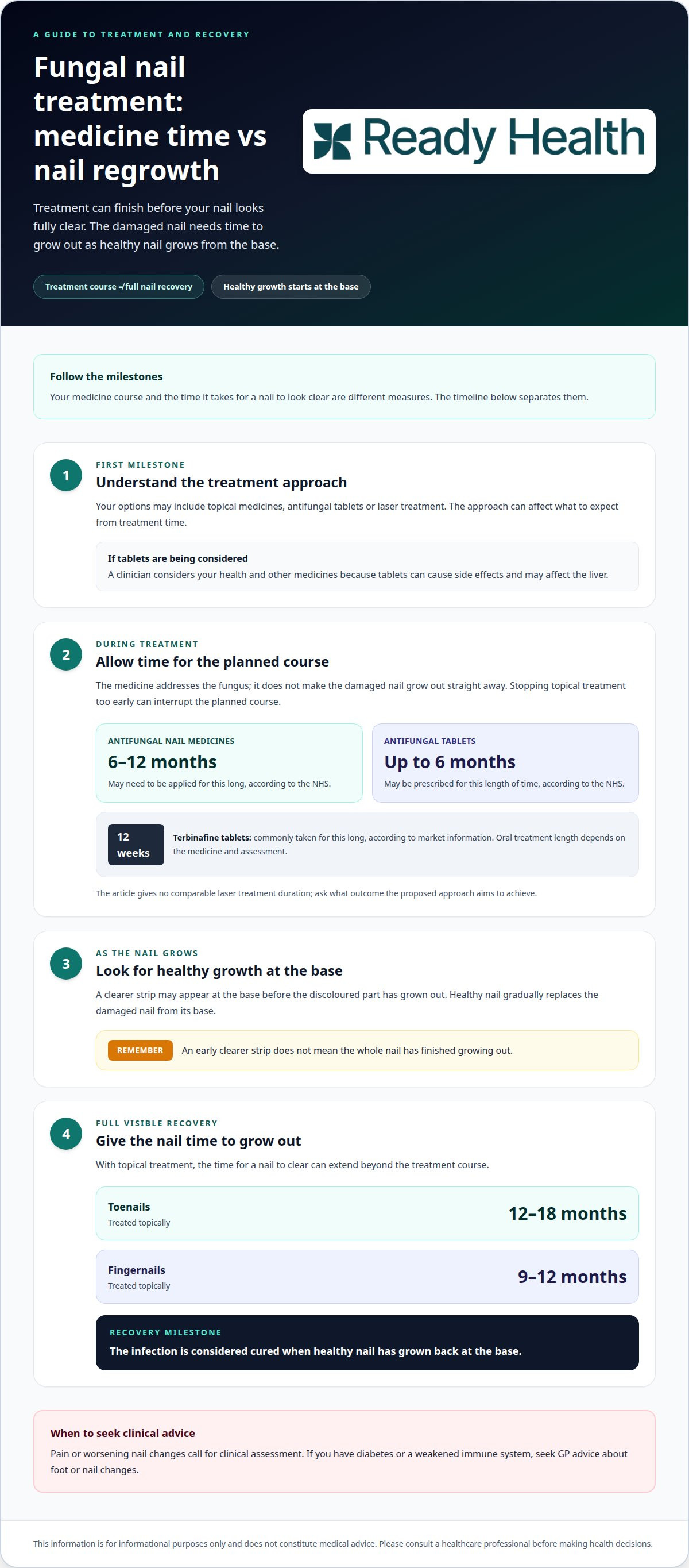
Treatment time and visible recovery are different milestones. Medicine addresses the fungus, while the damaged nail has to grow out.
Topical medicines, oral antifungal tablets and laser treatment are different approaches. According to the NHS, antifungal nail medicines may need applying for 6 to 12 months. Tablets may be prescribed for up to 6 months. The available information gives no comparable laser duration, so ask what outcome the proposed approach aims to achieve.
Treatment duration
Treatment duration means how long you use a medicine or undergo an approach. It matters because stopping topical medicine too early can interrupt the planned course. The NHS advises that antifungal nail medicines may need applying for 6 to 12 months. Oral treatment length depends on the medicine and assessment; terbinafine tablets are commonly taken for 12 weeks according to market information.
Nail regrowth
Nail regrowth is the gradual replacement of damaged nail with healthy nail from its base. A clearer strip at the base can appear before the discoloured area has grown out. Toenails treated topically may take 12 to 18 months to clear, while fingernails may take 9 to 12 months. The infection is considered cured when healthy nail grows back at the base.
Side effects are also important when comparing tablets with topical treatment. Antifungal tablets can cause nausea, diarrhoea or an itchy rash, and may affect the liver. A clinician considers these risks and your health before prescribing, particularly if the infection is severe or you take other medicines.
Resin nail overlays do not treat fungus or speed up nail growth. If you wear one, discuss its care with a clinician, especially if the nail is painful or changing. Don’t treat a painful nail as only a cosmetic concern; pain or worsening changes call for clinical assessment.
Fungal nail infection diagnosis
A yellow or thickened nail can suggest fungus, but appearance alone cannot confirm the cause. If you’re considering private treatment for a fungal nail infection in St Helens, diagnosis is an important first step. A clinician considers which nails have changed, how the changes developed and whether the surrounding skin is affected. Fingernails and toenails can both be involved, while other conditions may also alter nail colour or texture.
Before prescribing antifungal tablets, a GP may take a nail sample to test for fungus. Laboratory results can take several weeks, so treatment decisions may need to account for the wait. Some podiatrists use rapid tests that can identify an infection on the day or within a day, where available. Testing can help guide treatment instead of relying only on the nail’s appearance.
Test results can help determine whether topical medicine, applied directly to the nail, or prescription tablets are appropriate. Topical treatment may suit an infection affecting less than half the nail that has not reached the cuticle, the skin at its base. Before considering tablets, a clinician also reviews your health and current medicines. Liver or kidney disease can affect their suitability, and blood tests may be needed to assess liver function before and during treatment.
Tell the clinician if you have diabetes or a weakened immune system, including during chemotherapy or after an organ transplant. These details can shape how the nail and surrounding foot are assessed. If you’re seeking private treatment for a fungal nail infection in St Helens, a private GP consultation can provide a clinical review and discussion of appropriate next steps. Book a private GP consultation to discuss your concern.
Ready Health: Procedures & Treatments Vitamin B12 Injections, Joint Injections, Ear Wax Extraction, Skin Lesion Removal, Hayfever Treatments, Weight Loss Injections (Mounjaro/Wegovy/Semaglutide)
Ready Health offers private GP consultations to discuss nail changes and possible next steps. A GP can review your symptoms and medical history, then advise whether further assessment or a referral may be appropriate.
A consultation can be a useful starting point if a nail is changing, treatment has not helped, or a health condition affects your foot-care needs. Note when the change began, which nails are affected and any medicines you use. These details can support a focused discussion about diagnosis and treatment options.
Ready Health does not list fungal nail treatment among the procedures described here, so this consultation is for discussing your concern and appropriate care, not a promise of antifungal treatment. If you’d like to talk through your symptoms, contact Ready Health to arrange a private GP consultation.
Choose a clear next step for your nail health
Deciding what to do next can start with a conversation about your symptoms, health history and concerns. If you’re considering private treatment for a fungal nail infection in St Helens, a GP consultation can help you discuss whether clinical assessment or another route is appropriate. Ready Health offers private GP consultations, but does not provide fungal nail treatment itself.
Use that discussion to explain what has changed and what you hope to clarify. You can then make a more informed decision about seeking diagnosis and care suited to your circumstances. Contact Ready Health to discuss your concern.
This content is for informational purposes only and does not constitute medical advice. Consult a healthcare professional before making health decisions.
Frequently Asked Questions
Are there any side effects from the treatments?
Side effects depend on the medicine and how it is used. Oral antifungal medicines can cause headache, stomach ache, nausea, diarrhoea or an itchy rash. Topical products are applied to the nail, so follow the instructions and ask a pharmacist about any concerns before starting. If you notice a reaction while using any treatment, stop and seek advice from a healthcare professional.
What are the symptoms of fungal nails?
Fungal nail changes can include brittleness, unusual colour or increased thickness. A new mark after an injury may look different from a change that gradually spreads, so note when you first noticed it and which nail is involved. Appearance alone cannot confirm fungus. If a change persists or concerns you, a clinician can assess it and consider other explanations.
How long does fungal nail treatment take, and what are typical success rates?
There isn’t one success rate that applies to every nail or treatment. The NHS says antifungal nail medicines may need applying for 6 to 12 months, while the damaged nail continues growing out. Progress is judged by healthy nail replacing the affected area. The treatment chosen, how much nail is affected and consistent use all matter when assessing improvement.
What are the risks and side effects of oral antifungal treatment?
Oral antifungal tablets can cause nausea, diarrhoea, stomach ache, headache or an itchy rash, and may affect liver function. Before prescribing, a clinician considers your health conditions and other medicines, as interactions or liver concerns can affect suitability. Tell them about your medicines and any history of liver or kidney disease. They may arrange blood tests to monitor liver function.
What should I expect at a private fungal nail consultation in St Helens?
At Ready Health, a private GP consultation is a clinical review, not a fungal nail treatment or podiatry procedure. Describe the nail changes, when they began and any relevant health conditions or medicines. The GP can discuss whether further assessment or a referral may be appropriate. Bring a list of your current medicines and details of previous treatment to support the conversation.
Which private clinics in St Helens treat fungal nail infections?
Ready Health offers private GP consultations to discuss nail changes and possible next steps.

Article by
Shamir Patel
Shamir Patel is a UK-based Clinical Pharmacist and Independent Prescriber with a specialist focus on ADHD and weight management.
He is the Registered CQC Manager at Ready Health Medical Clinic, where he leads the development and delivery of safe, patient-centred services across ADHD assessment and treatment, weight loss programmes, and general medical care.
With a career spanning nearly three decades since qualifying in 1995, Shamir brings extensive clinical and operational experience across both community pharmacy and private healthcare.
He also serves as Deputy Superintendent Pharmacist and Lead Prescriber at PillSorted. He oversees high-volume prescribing services. He focuses on GLP-1 weight loss treatments and clinical governance.
Shamir is a SCOPE-accredited obesity specialist and has a strong interest in improving access to evidence-based ADHD care. He is known for his structured, guideline-driven approach, aligning his clinical practice with NICE recommendations and regulatory standards set by the GPhC and CQC.
Alongside his clinical work, Shamir is actively involved in mentoring prescribing pharmacists, developing standard operating procedures, and contributing to service innovation within digital and community healthcare settings. His work reflects a commitment to safe prescribing, patient education, and improving outcomes through practical, accessible care.
Disclaimer
The information on this website is provided for general educational and informational purposes only and is not intended as medical advice, diagnosis, or treatment. Articles reflect general guidance and may not be suitable for your individual circumstances. You should always seek advice from a qualified healthcare professional before starting, stopping, or changing any treatment, medication, or healthcare plan. While we aim to keep our content accurate and up to date, Ready Health makes no guarantees about the completeness, accuracy, or suitability of the information provided. Reliance on any information on this site is entirely at your own risk. If you have concerns about your health, please book an appointment with a suitably qualified clinician. In an emergency, contact 999 or attend your nearest A&E department.


