

Persistent constipation deserves more than another guess at a laxative. Getting help for chronic constipation in Chorley can help you explore possible causes and decide on a suitable next step.
Learn how diet, fluids, activity and medicines may affect bowel habits, when to seek medical advice, and what a clinical assessment may involve.
Key Takeaways
- Review possible causes, including medicines and changes in routine, before deciding what may help.
- Learn how gradual changes to fibre, fluids and activity can support bowel habits.
- Recognise when persistent symptoms or warning signs call for medical advice.
- Understand how a clinician may use your medical history and an examination to assess constipation.
Common causes of constipation
Constipation can be linked to low-fibre meals, too little fluid, inactivity or changes to your routine. Ignoring the urge to open your bowels may also affect bowel habits. You might notice hard stools, straining or abdominal discomfort as stool moves slowly through the bowel.
Constipation itself can cause abdominal pain, bloating, and cramps. Pain may ease after passing stool, but abdominal pain can also have other causes. If pain is sudden, severe, or persistent, seek medical advice or call 999. A clinician can consider your symptoms and history before making a diagnosis.
Some prescribed medicines can cause constipation. Don’t stop a prescribed medicine without speaking to your GP first. If you suspect a medicine is causing symptoms, tell the clinician its name and when you started taking it. Stimulant laxatives often take 6 to 12 hours to work, according to the NHS. The right laxative depends on your symptoms and health circumstances.
There isn’t one cost for constipation medicines in the UK. The price depends on the medicine and whether you buy it over the counter or receive it on prescription. Some medicines may be available on an NHS prescription when clinically appropriate. Ask your GP or pharmacist about your options and any applicable charges.
For NHS help with constipation in Chorley, start with your GP or speak to a community pharmacist about self-care and suitable laxatives. If symptoms persist despite simple measures, contact your GP for an assessment. Chorley and South Ribble Hospital is not necessarily the first step: your GP can advise whether further assessment is needed. If symptoms are severe or urgent, seek prompt medical help.
If you think a prescribed medicine may be involved, talk to your GP before stopping it so you can discuss any changes first.
Dietary fibre, fluids and exercise
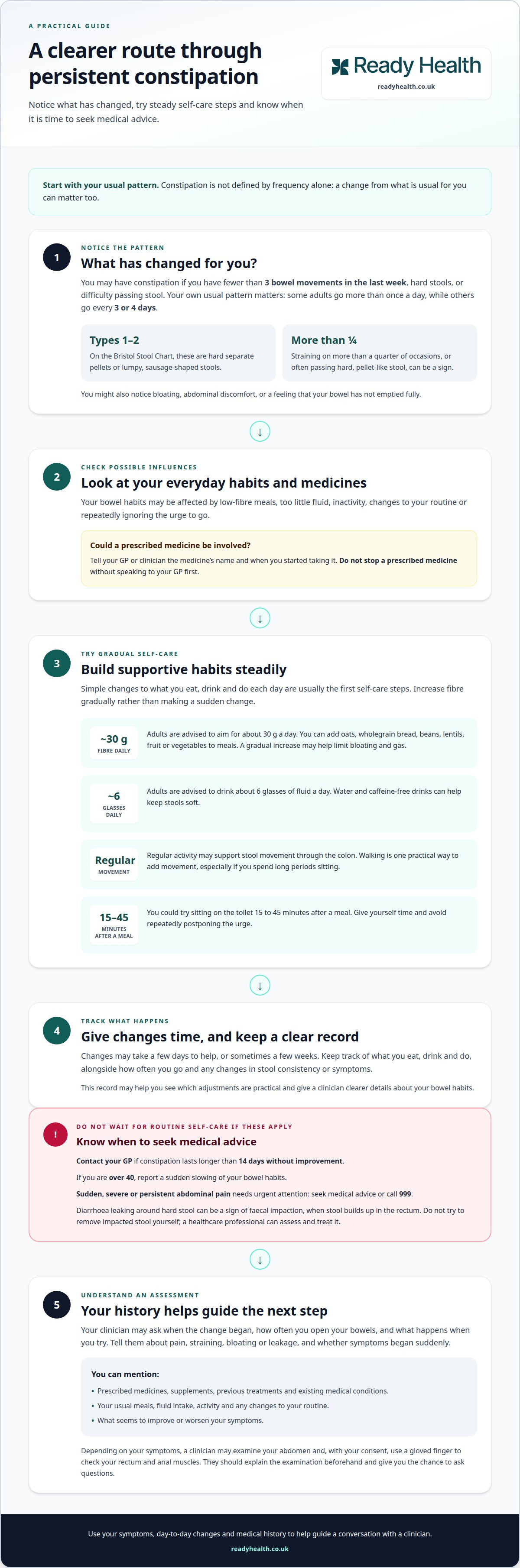
Simple lifestyle changes are usually the first self-care steps for constipation. Adjusting what you eat, drink and do each day may help stool move through your bowel.
Dietary changes and fibre
Fibre is the part of plant foods that adds bulk to stool and supports regular bowel movements. Adults are advised to aim for about 30 g daily to help prevent constipation. Increase fibre gradually, rather than making a sudden change, to help limit bloating and gas. Add oats, wholegrain bread, beans, lentils, fruit or vegetables to meals. A steady increase is easier to maintain than a sudden overhaul of your eating habits.
Fluids and exercise
Drinking enough fluid and moving regularly are lifestyle changes that may support softer stools and bowel movement. Adults are advised to drink about 6 glasses of fluid a day; water and caffeine-free drinks can help keep stools soft. Regular activity may also improve stool movement through the colon. Walking is one practical way to build movement into your day, especially if you spend long periods sitting.
Combine these habits with a regular toilet routine. You could try sitting on the toilet 15 to 45 minutes after a meal, when bowel activity may encourage a movement. Give yourself time and avoid repeatedly postponing the urge. If you’re taking laxatives, ask a pharmacist for advice when diet and lifestyle changes aren’t helping, rather than relying on them as your only approach.
Changes may take a few days to help, or sometimes a few weeks. Keep track of what you eat, drink and do, along with changes in your bowel habits. This can help you see which adjustments are practical and whether symptoms are changing. If incontinence or other new symptoms accompany constipation, ask a clinician for guidance.
Constipation symptoms and warning signs
Constipation isn’t defined by one bowel pattern alone. Some adults pass stool more than once daily, while others go every 3 or 4 days. For you, a change from your usual habits can matter as much as frequency. In adults, symptoms can include fewer than 3 bowel movements during the last week, hard stools, or difficulty passing stool.
The Bristol Stool Chart describes stool types from hard pellets to watery stool. Constipation is generally linked with type 1 or type 2 stools, which are separate hard lumps or lumpy, sausage-shaped stools. Straining to open your bowels on more than a quarter of occasions, or passing hard, pellet-like stool that often, can also indicate constipation. You may feel that your bowel hasn’t emptied fully after using the toilet.
Symptoms vary. You might notice abdominal discomfort, bloating or pain when passing stool. Some people strain as their bowel habits change; others find it difficult to relax the muscles around the back passage. Track changes, including stool consistency and how often you go. This record can help a clinician understand how symptoms affect you.
Speak to your GP if constipation lasts longer than 14 days without improvement. If you’re over 40, report a sudden slowing of your bowel habits. Long-term constipation can cause faecal impaction, when stool builds up in the rectum. Diarrhoea leaking around this hard stool is a key symptom, not necessarily ordinary diarrhoea. Don’t try to remove impacted stool yourself; a healthcare professional can assess and treat it.
Sudden, severe, or persistent abdominal pain needs urgent attention. Seek medical advice or call 999 for these symptoms. Persistent changes, worsening discomfort, or leakage also deserve assessment, particularly when they differ from your usual pattern. Clear details about timing, stool changes, and straining can help your clinician decide what investigation or support is appropriate.
Clinical examination and medical history
A clinical assessment considers your bowel symptoms alongside your wider health. Your doctor will ask when the change began, how often you open your bowels and what happens when you try. Describe any pain, straining, bloating or leakage, and whether symptoms began suddenly. These details help distinguish a short-term change from a persistent pattern.
Your medical history can help identify possible causes and guide the next step. Tell the clinician about prescribed medicines, supplements, previous treatments and any existing medical conditions. They may ask about your usual meals, including fibre-rich foods such as vegetables, your fluid intake, activity and changes to your routine. Mention what has helped or worsened symptoms, even if the effect seems small.
An examination depends on your symptoms and the information you share. A clinician may examine your abdomen and, with your consent, use a gloved finger to check your rectum and anal muscles. This can help assess whether stool is present and how the muscles respond. The clinician should explain the examination beforehand, including what it involves, and give you the chance to ask questions.
What tests might a GP arrange for chronic constipation? A GP may consider a rectal examination or a colonoscopy, which uses a camera to examine the rectum and entire colon. The choice depends on your symptoms, examination findings and medical history.
Further assessment depends on what the first consultation finds. A sudden change, persistent symptoms or examination findings may affect whether another test or specialist assessment is appropriate. Keep a note of symptom changes and bring a list of your medicines. Clear information helps your doctor explain why a particular examination or investigation is being considered.
If you’d like to discuss persistent bowel symptoms with a clinician, book a GP consultation.
Ready Health
Ready Health offers private GP consultations in Standish, Wigan, where you can discuss persistent constipation and its effect on daily life. Explain your symptoms, bowel changes, medicines and what you’ve already tried. Your clinician can consider your concerns and discuss appropriate next steps, including whether further assessment or a referral may be needed.
Consider an assessment if constipation continues despite self-care, keeps returning or affects your comfort and routine. Bring a clear account of when symptoms began and how they have changed. This context can make the conversation more focused and help you understand the options discussed.
If you’d like to discuss your symptoms, contact Ready Health to arrange a consultation.
Choose a clear next step for your bowel health
If you’re considering getting help for chronic constipation in Chorley, use your appointment to focus on what matters most to you. Think about how symptoms affect work, sleep, meals or confidence when leaving home. Sharing your priorities helps keep the conversation practical and centred on your wellbeing.
Ready Health offers private GP consultations in 15-minute and 30-minute appointments. You can choose a consultation to discuss ongoing symptoms and possible next steps with a clinician. The aim is to help you feel better informed about how to move forward, without relying on guesswork or continuing a self-care approach that isn’t working for you.
For a calm, focused conversation about your concerns, contact Ready Health. Taking that step can help you approach your health with greater clarity.
This content is for informational purposes only and does not constitute medical advice. Consult a healthcare professional before making health decisions.
Frequently Asked Questions
Should I take laxatives and are they safe?
Laxatives may suit short-term relief, but the right type depends on your symptoms and health. Follow the product instructions, and ask a pharmacist for advice if you’re unsure or lifestyle changes haven’t helped. Most laxatives are intended for short-term use. If you need them regularly, symptoms continue or you take prescribed medicines, discuss this with a clinician rather than extending use yourself.
How can constipation affect you?
Constipation can disrupt everyday routines, including eating out, travelling or concentrating at work. You may feel bloated or worry about finding a toilet, especially if bowel movements have become unpredictable. Note which activities are affected and tell your clinician. This context can show the impact beyond stool frequency and guide a discussion about support that fits your daily life.
How do you know if you have constipation?
A noticeable change in your usual bowel pattern, particularly with hard stools or straining, may indicate constipation. Frequency alone doesn’t tell the whole story: consider whether passing stool feels difficult or incomplete. For example, someone who usually opens their bowels daily may notice a meaningful change before going several days without a movement. A clinician can assess the pattern alongside other symptoms.
What should you ask your doctor?
Ask what might be contributing to your symptoms, which treatment options suit your health and when to arrange follow-up. You could also ask whether a medicine you take might affect bowel movements and what signs mean you need urgent assessment. Before your appointment, note when symptoms began and what you’ve tried. This helps you make the most of the conversation and leave with a clear plan.
Why does constipation occur?
Constipation can have several contributing factors rather than one clear cause. It’s more common in people over 65, and pregnancy can also affect bowel habits: around 2 in every 5 women experience constipation during pregnancy, mostly in the early stages. Medicines, changes in routine, diet and activity may also play a part. Consider what changed around the time your symptoms began, and discuss possible links with a clinician.
Where can you get help for chronic constipation in Chorley?
For NHS support in Chorley, contact your GP practice or speak with a community pharmacist about suitable options. Ready Health also offers private GP consultations where you can discuss persistent symptoms and possible next steps. If you’d like to arrange a private appointment, book a consultation with Ready Health and bring a clear account of your symptoms and treatments so far.

Article by
Shamir Patel
Shamir Patel is a UK-based Clinical Pharmacist and Independent Prescriber with a specialist focus on ADHD and weight management.
He is the Registered CQC Manager at Ready Health Medical Clinic, where he leads the development and delivery of safe, patient-centred services across ADHD assessment and treatment, weight loss programmes, and general medical care.
With a career spanning nearly three decades since qualifying in 1995, Shamir brings extensive clinical and operational experience across both community pharmacy and private healthcare.
He also serves as Deputy Superintendent Pharmacist and Lead Prescriber at PillSorted. He oversees high-volume prescribing services. He focuses on GLP-1 weight loss treatments and clinical governance.
Shamir is a SCOPE-accredited obesity specialist and has a strong interest in improving access to evidence-based ADHD care. He is known for his structured, guideline-driven approach, aligning his clinical practice with NICE recommendations and regulatory standards set by the GPhC and CQC.
Alongside his clinical work, Shamir is actively involved in mentoring prescribing pharmacists, developing standard operating procedures, and contributing to service innovation within digital and community healthcare settings. His work reflects a commitment to safe prescribing, patient education, and improving outcomes through practical, accessible care.
Disclaimer
The information on this website is provided for general educational and informational purposes only and is not intended as medical advice, diagnosis, or treatment. Articles reflect general guidance and may not be suitable for your individual circumstances. You should always seek advice from a qualified healthcare professional before starting, stopping, or changing any treatment, medication, or healthcare plan. While we aim to keep our content accurate and up to date, Ready Health makes no guarantees about the completeness, accuracy, or suitability of the information provided. Reliance on any information on this site is entirely at your own risk. If you have concerns about your health, please book an appointment with a suitably qualified clinician. In an emergency, contact 999 or attend your nearest A&E department.


