

What if managing severe seasonal allergies didn't mean sacrificing your daily energy to drowsy antihistamines? If you battle relentless sinus pressure, itchy eyes, and persistent brain fog each year, you already understand how thoroughly exhausting peak pollen counts across Lancashire can feel. When standard remedies fail and routine NHS pathways offer limited solutions, finding a professional hay fever injection clinic Wigan patients can trust is often the essential first step toward reclaiming your vitality.
Relying on high-dose over-the-counter medication that leaves you fatigued is deeply frustrating when all you want is clear, dependable symptom control. Discover how a clinician-led hay fever injection can provide lasting seasonal relief when traditional therapies fall short. In this guide, we explore how comprehensive clinical screening transforms therapeutic allergy care into a safe, measured medical intervention, detailing what to expect from an appointment in Standish and helping you decide whether this pathway aligns with your health needs.
Key Takeaways
- Understand why elevated pollen counts across Lancashire often overwhelm standard oral antihistamines, leaving you with persistent brain fog and fatigue.
- Discover how a clinician-administered therapeutic injection works systemically to calm severe allergic responses, and learn the clinical criteria required for treatment.
- Evaluate the practical differences between daily over-the-counter remedies and long-acting clinical interventions to see which approach best supports your routine.
- Find out what to expect from an in-depth assessment at a reputable hay fever injection clinic Wigan patients visit in nearby Standish.
- Recognise why choosing a CQC-regulated medical facility ensures your allergy care meets rigorous clinical safety and governance standards.
Why Severe Seasonal Allergies Require Clinical Intervention in Wigan
Living in Wigan exposes your immune system to unique environmental pressures each spring and summer. High pollen counts rolling off rural Lancashire borders frequently overpower standard pharmacy remedies, leaving your system in a state of constant reactivity. When severe allergic rhinitis takes hold, it triggers disruptive systemic issues like chronic daytime fatigue, impaired concentration, and restless, interrupted sleep. For a foundational medical perspective on this condition, understanding allergic rhinitis helps clarify why systemic inflammation can feel so completely draining.
To explore how targeted seasonal allergy care can help you regain control, watch this brief overview:
Wigan Pollen Patterns and Rural Exposure
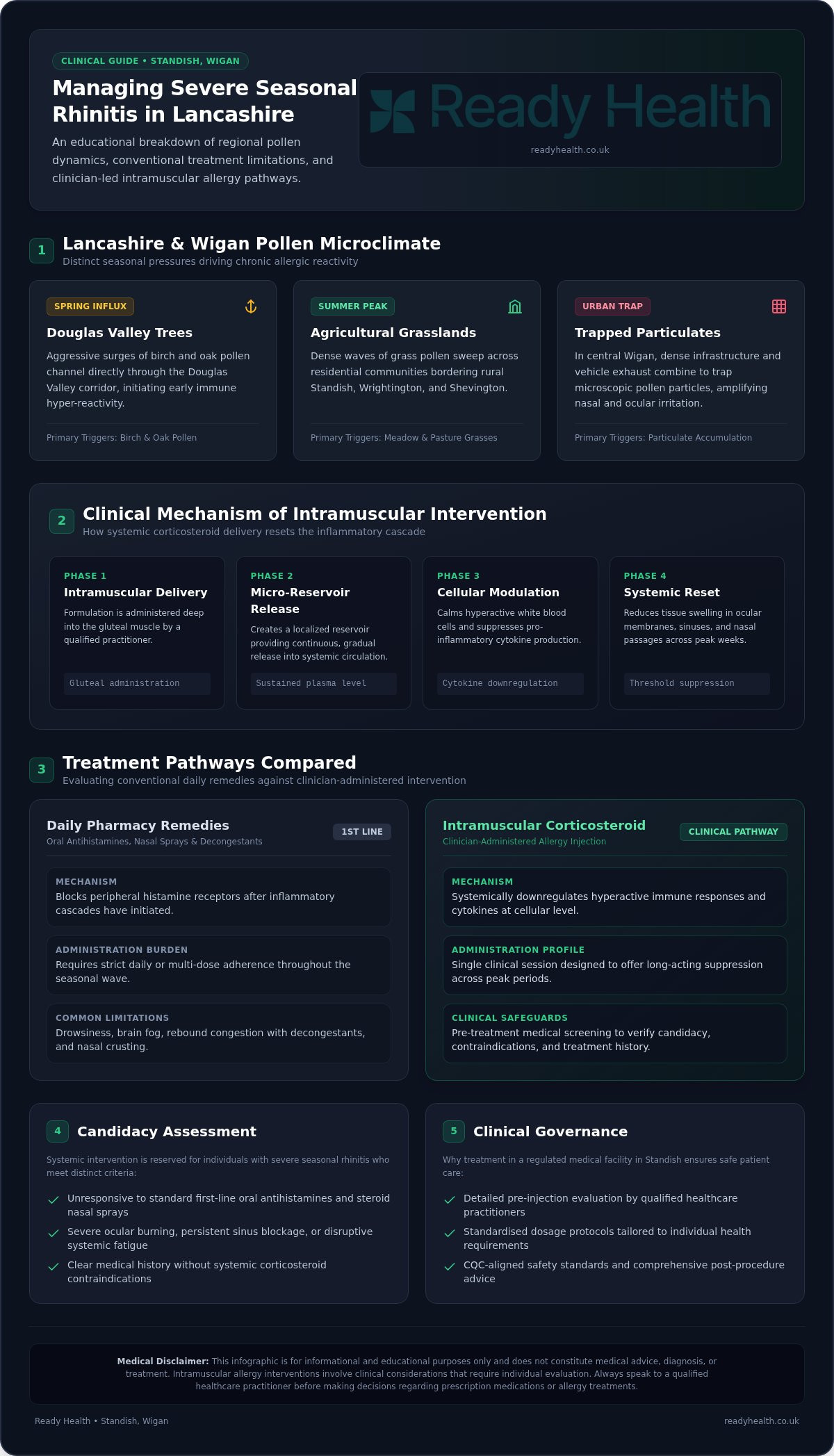
Spring brings an aggressive surge of birch and oak pollen funnelling directly through the Douglas Valley. As summer arrives, expansive agricultural grasslands bordering Standish, Wrightington, and Shevington release dense waves of grass pollen across residential areas. In central Wigan, vehicle exhaust and dense infrastructure can trap these microscopic particles, creating a concentrated microclimate. Daily commuters face a relentless cycle of rural exposure and trapped urban air that keeps airways and eyes irritated for months on end.
When Over-the-Counter Treatments Stop Working
Most people start the season using daily antihistamines like cetirizine, loratadine, or fexofenadine. While oral tablets may manage mild sneezes, they often fail to control acute ocular inflammation, burning sensations, and profound sinus pressure. Over-the-counter decongestants provide brief relief, but prolonged use carries the risk of rebound congestion. Similarly, steroid nasal sprays demand strict, uninterrupted daily compliance and can cause unpleasant nasal crusting or local irritation.
When daily pharmacy options no longer keep pace with Lancashire's pollen waves, your body is likely experiencing persistent immune over-activation. Visiting a dedicated hay fever injection clinic Wigan residents trust allows a clinician to evaluate your broader medical history. A comprehensive allergy assessment helps determine whether your persistent symptoms represent complex seasonal rhinitis, opening the door to safe, targeted clinical solutions.
Understanding the Hay Fever Injection: Clinical Mechanism and Candidate Criteria
A therapeutic allergy jab isn't simply an amplified antihistamine; it represents an entirely different class of pharmacological intervention. Rather than blocking histamine receptors locally after inflammation starts, an intramuscular corticosteroid works systemically to downregulate your body's overarching immune cascade. When administered by an experienced practitioner at a reputable hay fever injection clinic Wigan patients attend, this treatment acts as a long-acting brake on severe allergic pathways, offering symptom suppression that may last for weeks or months across the peak summer period.
How Intramuscular Corticosteroids Work
The formulation is delivered deep into the gluteal muscle, establishing a microscopic reservoir that releases the medication gradually into the systemic circulation. By calming hyperactive white blood cells and inhibiting pro-inflammatory cytokines, it significantly reduces tissue swelling in the nasal passages, sinuses, and ocular membranes. Intramuscular allergy suppression delivers sustained, whole-body therapeutic relief by clinically resetting the inflammatory threshold that triggers seasonal rhinitis.
Who Is an Ideal Candidate for Treatment?
Because systemic corticosteroids alter whole-body immune responses, clinicians reserve this option for specific clinical presentations rather than mild seasonal sniffles. Reviewing the standard NHS treatment guidelines for hay fever confirms that systemic interventions are only considered after multi-step pharmacy remedies prove ineffective. Suitable candidates typically include:
- Outdoor professionals, transport drivers, and landscape workers facing severe occupational disruption from debilitating symptoms.
- Students and professionals sitting pivotal summer examinations who cannot risk the severe sedative effects of strong oral tablets.
- Individuals with documented treatment failures across high-dose oral antihistamines, combination steroid nasal sprays, and prescription eye drops.
Key Safety Considerations and Clinical Exclusions
Rigorous pre-treatment screening forms the backbone of ethical private healthcare. Your clinician must record baseline vital signs, check resting blood pressure, and thoroughly examine your medical history to exclude significant contraindications. Active systemic infections, poorly managed diabetes, glaucoma, and uncontrolled cardiovascular disease strictly rule out steroid treatment, as do pregnancy and breastfeeding.
Every prospective patient deserves transparent guidance regarding potential adverse effects. Transient hormonal fluctuations, mild localised tissue changes at the injection site, or minor sleep disturbances can occasionally occur. When considering whether an intramuscular option aligns safely with your seasonal health goals, you can book a private GP consultation with an experienced clinician in Standish to explore your personal suitability before proceeding.
Comparing Hay Fever Treatments: Daily Remedies vs Clinical Injections
Managing seasonal allergic rhinitis effectively requires understanding where each therapeutic option fits along your care journey. Standard self-care and retail treatments serve as sensible starting points, but escalating symptoms often demand a clearer hierarchy of care. Consulting the official NHS guidance on hay fever outlines the conventional step-up model, transitioning from simple barrier balms to targeted pharmaceutical interventions. Selecting the right path depends on how significantly your symptoms disrupt your routine and how your body tolerates daily medicines.
Efficacy and Speed of Action
Oral antihistamines offer quick relief by dampening acute allergic flares within hours, but their protective effects fade just as fast. Steroid nasal sprays target local inflammation directly, yet they demand consecutive days of use before reaching therapeutic tissue concentrations. In contrast, therapeutic injections begin circulating systemically within 24 to 72 hours. This provides sustained anti-inflammatory coverage across your nasal passages, throat, and eyes without daily drop-offs in efficacy.
Convenience, Lifestyle Impact, and Compliance
Juggling eye drops, steroid sprays, and multiple daily tablets quickly becomes exhausting. Missed doses often trigger immediate symptom relapses, leaving you scrambling for quick fixes mid-afternoon. Consolidating your allergy management into a single clinical treatment frees up mental bandwidth and removes daily medication friction. Alongside targeted allergy management, many proactive patients explore supportive options like vitamin injections to maintain broader vitality and nutrient balance throughout taxing summer schedules.
Evaluating Clinical Risk Profiles
Every medical pathway balances distinct benefits against predictable clinical considerations. Understanding these trade-offs ensures you make fully informed choices regarding your health:
- Daily Pharmacy Regimens: Non-invasive with low systemic absorption, though oral sedating agents often impair concentration and topical sprays can cause local mucosal irritation.
- Sublingual Immunotherapy (SLIT): Clinically desensitises your immune system to specific allergens over time, yet requires up to three years of strict daily oral dosing.
- Intramuscular Therapeutic Injections: Offer deep, whole-body symptom suppression from a single administration, but introduce systemic corticosteroid exposure that necessitates professional oversight.
Because systemic therapies carry whole-body implications, visiting an accredited hay fever injection clinic Wigan patients rely on guarantees a thorough risk-to-benefit evaluation before any medication is administered.
What to Expect During Your Hay Fever Consultation in Standish
Attending a private medical practice for allergy care should feel calm, transparent, and unhurried. When you visit a clinical setting rather than a retail counter, the entire appointment is structured around your individual physiological profile. Choosing a dedicated hay fever injection clinic Wigan patients recommend means your care begins with a comprehensive medical dialogue rather than an immediate prescription.
Your appointment follows a structured, patient-centred pathway designed to ensure clinical safety and peace of mind:
- Step 1: Clinical History and Baseline Vitals: Your practitioner reviews your comprehensive health background and measures resting vital signs, including blood pressure.
- Step 2: Treatment and Lifestyle Review: You and your clinician discuss past allergy remedies, symptom severity, occupational demands, and personal wellness goals.
- Step 3: Informed Consent: Your clinician explains the exact pharmacological mechanism, potential side effects, and expected recovery timeline so you can make a fully informed choice.
- Step 4: Intramuscular Administration: The injection is delivered swiftly and safely within a sterile, clinical treatment room.
- Step 5: Post-Treatment Monitoring: You receive tailored aftercare instructions and direct contact channels should you have any subsequent clinical questions.
Pre-Treatment Medical Evaluation
Safety always precedes treatment. Your clinician carefully reviews your concurrent prescriptions, checking for potential interactions and confirming you have no underlying cardiovascular or metabolic contraindications. If non-allergic factors or complex immune triggers are suspected, patients can integrate diagnostic private blood tests in Standish to obtain clear baseline insights before proceeding with systemic therapies.
The Administration Process and Aftercare
Once your suitability is established, the medication is administered into the gluteal muscle using sterile technique. Intramuscular delivery ensures proper therapeutic uptake while minimising local discomfort. The actual injection takes only moments, allowing you to return to your normal daily schedule without extended downtime.
Following your treatment, your practitioner provides practical aftercare instructions. You will learn what subtle injection site sensations are normal and which rare symptoms warrant prompt clinical attention. Ready to discuss your seasonal allergy options in a comfortable, clinician-led setting? You can book your private consultation online to speak with our Standish healthcare team today.
Choosing a Regulated Medical Clinic in Wigan for Allergy Care
Seeking systemic allergy relief requires more than just picking the nearest treatment provider. Prescription injectable medications demand clinical governance that non-medical aesthetic salons simply cannot deliver. When you visit a dedicated hay fever injection clinic Wigan patients trust, your treatment takes place inside an accredited healthcare setting where patient safety, clinical ethics, and continuity of care come first.
The Importance of CQC Regulation and Qualified Clinicians
Care Quality Commission (CQC) registration serves as the primary benchmark for legitimate medical care in England. This independent regulation confirms our facility adheres to stringent hygiene protocols, certified clinical governance standards, and comprehensive emergency readiness. Unlike cosmetic venues that may treat systemic injections as quick retail add-ons, a registered clinic ensures every prescription follows a legitimate prescriber consultation. Temperature-controlled cold-chain medicine storage and sterile administration techniques protect the integrity of your treatment at every stage.
Convenient Access Across Wigan and Surrounding Districts
Located in the heart of Standish, Ready Health provides accessible, calm private healthcare close to home. Our modern clinic offers convenient access for patients travelling from Chorley, Shevington, Orrell, and central Wigan. Flexible appointment times help you avoid the frustration of routine NHS backlogs while fitting seamlessly around demanding work and family commitments. You can learn more about us to see how our clinical team champions proactive health management throughout Lancashire.
Next Steps to Reclaim Your Spring and Summer
Severe seasonal allergies do not have to disrupt your sleep, impair your work focus, or keep you trapped indoors. Exploring a clinician-led therapeutic pathway gives you an evidence-based strategy tailored directly to your health profile. If standard over-the-counter tablets have left you exhausted and congested, you can book your private consultation online today to discuss your symptoms with an experienced practitioner in Standish.
Take Control of Your Allergy Health This Season
Living with debilitating seasonal allergies shouldn't be an inevitable part of spring and summer. When daily pharmacy remedies fall short, choosing an accredited hay fever injection clinic Wigan patients trust provides a measured, medically supervised pathway toward lasting symptom relief. Comprehensive pre-treatment screening ensures that any therapeutic intervention is clinically appropriate, safe, and aligned with your individual physiological needs.
At Ready Health, our CQC-regulated independent medical clinic delivers prompt appointments with minimal waiting times in Standish. Consultations led by experienced medical clinicians provide the time, clinical clarity, and dedicated attention you need to make confident choices about your health. You don't have to spend another sunny afternoon battling persistent brain fog, sinus headaches, and fatigue.
Book your private clinical consultation in Standish today and take the proactive step toward enjoying clear, comfortable days all season long.
Disclaimer: This content is for informational purposes only and does not constitute medical advice. Always consult a qualified clinician before making any decisions regarding your healthcare or beginning new medical treatments.
Frequently Asked Questions
Is a hay fever injection available on the NHS in Wigan?
No, the steroid injection for hay fever is not available on the NHS. Routine public healthcare guidelines discontinued this treatment because potential systemic side effects were deemed disproportionate for a non-life-threatening condition. Patients across Wigan, Standish, and surrounding Lancashire areas seeking this therapy must access it through a private, CQC-regulated clinic where a qualified clinician takes individual prescribing responsibility after a full medical assessment.
How quickly does a hay fever injection start working?
Most patients begin to notice meaningful symptom relief within 24 to 72 hours following treatment. Because the therapeutic solution is absorbed gradually from deep muscle tissue into your circulation, it doesn't offer instantaneous zero-minute relief like a chemical nasal decongestant spray. Instead, the anti-inflammatory action steadily accumulates, noticeably easing ocular itching, persistent sneezing, and sinus pressure over the first few days.
How long do the benefits of a hay fever injection typically last?
A single therapeutic dose typically provides symptom suppression for several weeks, often covering an entire seasonal peak. For many individuals visiting our hay fever injection clinic Wigan residents rely on, one well-timed appointment sustains them through the most intense grass or tree pollen waves. However, the exact duration varies based on your metabolic rate, individual immune sensitivity, and shifting local weather conditions across Lancashire.
Can anyone receive a hay fever injection at your Standish clinic?
No, treatment is strictly reserved for adult candidates who meet rigorous clinical safety criteria. You cannot receive an injection without undergoing a comprehensive face-to-face consultation first. Our clinicians assess your medical history to rule out contraindications such as uncontrolled high blood pressure, diabetes, active infections, glaucoma, pregnancy, or breastfeeding. Treatment is only considered when severe symptoms resist standard pharmacy treatments.
What are the common side effects associated with hay fever injections?
Common side effects are generally mild, though systemic considerations must always be evaluated beforehand. You might experience localized muscle tenderness, temporary redness, or minor tissue dimpling at the injection site. Less commonly, patients report transient headaches, mild fluid retention, or subtle menstrual cycle variations. Your practitioner discusses every potential reaction in complete detail during your consultation so you feel fully informed.
What happens if my allergy symptoms return later in the summer?
If symptoms recur later in the season, you should attend a clinical review rather than expecting a repeat injection. Administering multiple systemic corticosteroid doses close together significantly increases the risk of adverse hormonal suppression. Our medical team focuses on your long-term wellness, re-evaluating your symptoms and adjusting complementary barrier or topical therapies to maintain your comfort safely without unnecessary steroid exposure.
How does an injection compare to taking daily antihistamine tablets?
Oral antihistamines only temporarily block histamine receptors and frequently cause daytime lethargy or cognitive brain fog. In contrast, attending an established hay fever injection clinic Wigan patients choose for resistant symptoms provides systemic anti-inflammatory suppression of your entire allergic cascade. It eliminates the daily burden of taking multiple tablets, nasal rinses, and drops, providing continuous background protection throughout demanding workweeks.

Article by
Shamir Patel
Shamir Patel is a UK-based Clinical Pharmacist and Independent Prescriber with a specialist focus on ADHD and weight management.
He is the Registered CQC Manager at Ready Health Medical Clinic, where he leads the development and delivery of safe, patient-centred services across ADHD assessment and treatment, weight loss programmes, and general medical care.
With a career spanning nearly three decades since qualifying in 1995, Shamir brings extensive clinical and operational experience across both community pharmacy and private healthcare.
He also serves as Deputy Superintendent Pharmacist and Lead Prescriber at PillSorted. He oversees high-volume prescribing services. He focuses on GLP-1 weight loss treatments and clinical governance.
Shamir is a SCOPE-accredited obesity specialist and has a strong interest in improving access to evidence-based ADHD care. He is known for his structured, guideline-driven approach, aligning his clinical practice with NICE recommendations and regulatory standards set by the GPhC and CQC.
Alongside his clinical work, Shamir is actively involved in mentoring prescribing pharmacists, developing standard operating procedures, and contributing to service innovation within digital and community healthcare settings. His work reflects a commitment to safe prescribing, patient education, and improving outcomes through practical, accessible care.
Disclaimer
The information on this website is provided for general educational and informational purposes only and is not intended as medical advice, diagnosis, or treatment. Articles reflect general guidance and may not be suitable for your individual circumstances. You should always seek advice from a qualified healthcare professional before starting, stopping, or changing any treatment, medication, or healthcare plan. While we aim to keep our content accurate and up to date, Ready Health makes no guarantees about the completeness, accuracy, or suitability of the information provided. Reliance on any information on this site is entirely at your own risk. If you have concerns about your health, please book an appointment with a suitably qualified clinician. In an emergency, contact 999 or attend your nearest A&E department.


