

What if the most important appointment in your calendar isn't a business meeting, but a proactive look at your own physiology? It's natural to feel confused by shifting NHS eligibility rules or frustrated by long wait times when you simply want to verify your internal health. You likely recognise that staying ahead of potential issues is far more effective than reacting to them, yet finding a definitive answer on how often should I get a health check up can be difficult when you currently feel healthy.
We believe that true health is about being fully prepared for the demands of a busy life, rather than just waiting for a symptom to appear. This guide will help you discover the ideal frequency for your screenings based on your unique risk factors, age, and lifestyle. We will outline a clear schedule for monitoring your heart and metabolic health, providing the clinical data you need to maintain your vitality with total peace of mind and professional clarity.
Key Takeaways
- Understand the clinical difference between standard five-year NHS screenings and proactive assessments designed to maintain peak vitality.
- Learn why establishing a diagnostic baseline in your 20s and 30s is essential for monitoring your systemic harmony as you age.
- Discover how comprehensive blood profiles offer a deeper analysis of your metabolic health and nutritional status than basic cardiovascular checks.
- Identify the "red flag" symptoms, such as persistent fatigue, that indicate you should speak to a clinician immediately rather than waiting for a scheduled visit.
- Get a clear, personalised schedule to answer the question of how often should I get a health check up based on your unique risk factors and lifestyle.
Understanding Health Check Frequency: How Often Is Enough?
A health check-up is more than just a ticking-box exercise; it's a comprehensive, proactive assessment of your physical and mental well-being. While many people only visit a doctor when something feels wrong, a routine physical allows us to establish a clear picture of your systemic harmony while you're healthy. This baseline is vital for spotting subtle deviations before they develop into more serious conditions.
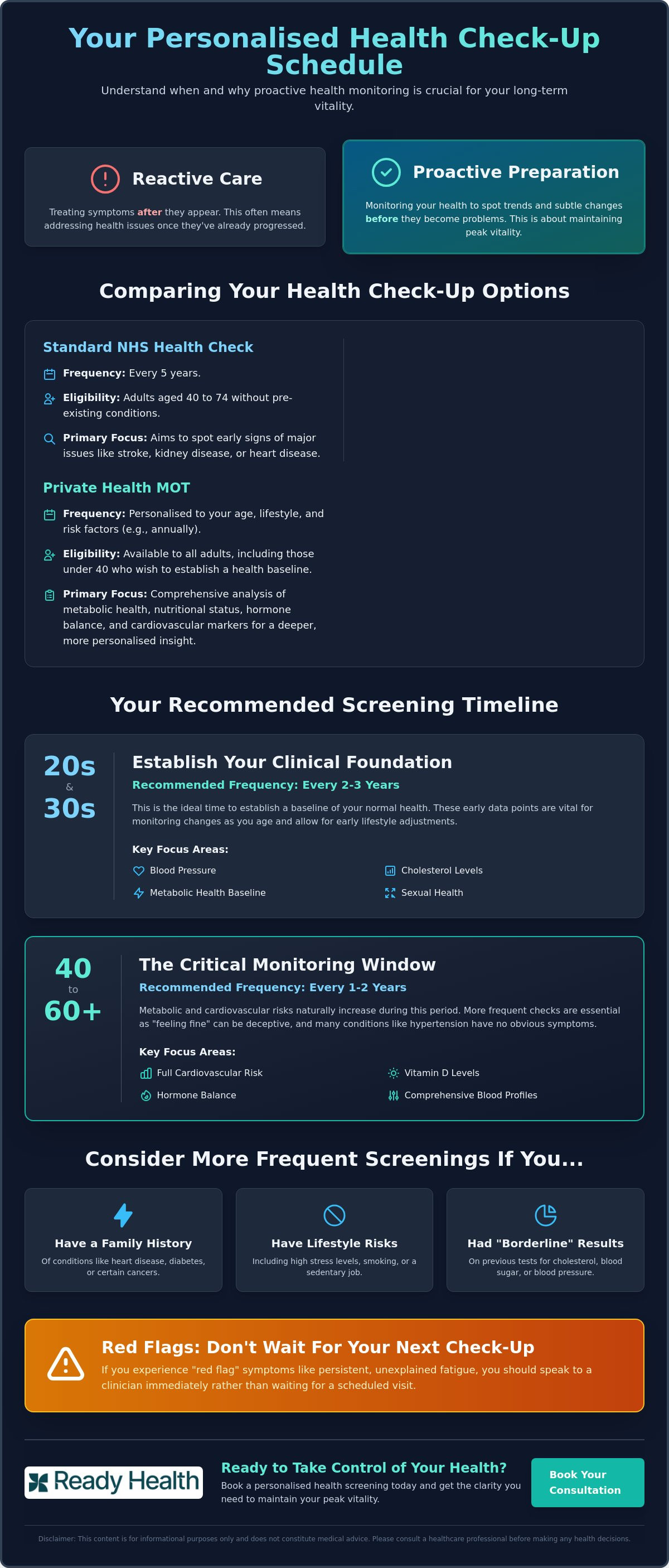
You might be asking, "how often should I get a health check up?" and the answer isn't a one-size-fits-all number. Standard NHS guidelines suggest a screening every five years for adults aged 40 to 74 who don't have pre-existing conditions. This national programme is estimated to save 650 lives annually by spotting early signs of stroke or kidney disease. However, this broad approach often overlooks younger adults or those with specific lifestyle concerns who may benefit from more frequent, detailed monitoring.
To better understand this concept, watch this helpful video:
The Philosophy of Proactive Preparation
At Ready Health, we view health as a state of being "ready" for whatever life demands of you. Reactive medicine focuses on treating illness after it appears, but preventative clinical care aims to keep you at your peak. By collecting regular data points through comprehensive blood test packages, we can spot trends in your heart health or metabolic markers that might otherwise go unnoticed. It's about being equipped with information so you can make informed lifestyle adjustments today. Consistent monitoring helps us understand your unique "normal" rather than comparing you to a generic population average.
Factors That Increase Your Screening Frequency
Your personal history and daily habits significantly influence how often you should see a clinician. If you have a family history of heart disease, diabetes, or cancer, we often recommend more regular screenings to catch early warning signs. Lifestyle choices also play a major role. High stress levels, smoking, or a sedentary job can increase your risk profile, making annual checks more appropriate. Additionally, if previous tests showed "borderline" results for cholesterol or glucose, we'll likely suggest a follow-up sooner to ensure those levels are moving in the right direction. We don't want to wait five years to see if a small issue has become a chronic problem.
Age-Based Screening Guidelines: When to Schedule Your Check-Up
Your biological needs evolve as you move through different life stages, meaning the answer to how often should I get a health check up changes over time. While the NHS focuses its screening programme on those over 40, clinical data suggests that establishing a baseline much earlier is essential for long-term vitality. By understanding what is normal for your body in your younger years, you and your clinician can more accurately identify subtle shifts in your systemic harmony as you age.
Screening in Your 20s and 30s
During your 20s and 30s, the primary goal is to establish a clinical foundation. While you may feel invincible, this is the ideal time to monitor blood pressure, cholesterol levels, and sexual health. These early data points are not just about catching current issues; they serve as a vital comparison for your future self. Accessing private blood tests Standish allows you to bypass long wait times and gain immediate insights into your internal health. We generally recommend a check-up every two to three years during this phase, unless specific lifestyle factors or family history suggest a more frequent schedule.
The Critical 40 to 60 Window
Entering your 40s marks a significant physiological transition where metabolic and cardiovascular risks begin to rise. This is the stage where "feeling fine" can be a deceptive metric, as many conditions like hypertension or high cholesterol don't present obvious symptoms. Following established Age-Based Screening Guidelines, you should consider increasing your vigilance with checks every one to two years. This period is also crucial for monitoring hormone balance and vitamin D levels, which play a major role in energy and bone health. Proactive monitoring ensures you stay ahead of diabetes and heart disease before they require intensive management.
Optimising Health After 60
For those over 60, the clinical focus shifts towards preserving mobility, cognitive function, and cardiovascular integrity. We recommend moving to an annual comprehensive "MOT" style assessment to ensure every system is functioning optimally. These checks should include bone density reviews, prostate health monitoring for men, and regular heart screenings. Integrating specialised cardiology services into your routine can help manage age-related changes in heart rhythm or blood flow. Staying prepared in your senior years means you can continue to enjoy an active, independent lifestyle without the anxiety of undiagnosed conditions. If you haven't had a check-up recently, considering our comprehensive blood profiles is an excellent way to regain control of your health journey.
NHS Health Check vs. Private Health MOTs in Wigan
The NHS Health Check is a vital public health initiative designed to spot early signs of stroke, kidney disease, and type 2 diabetes. It serves as an excellent foundational tool for cardiovascular screening, particularly for those aged 40 to 74. However, this programme operates on a strict five-year cycle, which can feel like a significant gap for individuals who prefer a more frequent and detailed understanding of their internal health. When you're deciding how often should I get a health check up, the standard NHS timeline might not provide the agility required for a truly proactive lifestyle.
Private health MOTs in Standish offer a more expansive perspective on your systemic harmony. Unlike the targeted cardiovascular focus of the NHS, private assessments often include same-day availability and a wider range of diagnostic tests. This allows you to monitor your health on your own terms, rather than waiting years for an invitation. By choosing a private route, you gain access to comprehensive data that helps you stay prepared for life's challenges without the frustration of long GP wait times.
What a Comprehensive Blood Profile Includes
Standard screenings often focus on blood pressure and basic cholesterol, but a comprehensive blood profile goes much deeper. We analyse liver and kidney function to ensure your body is processing nutrients and filtering waste efficiently. These tests also look for specific deficiencies that often cause persistent fatigue, such as low levels of Vitamin D or B12. Understanding these markers is a cornerstone of our Well Man Check in Wigan, providing a full health MOT that identifies issues long before they become symptomatic. This level of detail ensures your nutritional status supports your daily energy demands and long-term vitality.
The Benefit of Longer Clinical Consultations
Time is a critical component of effective clinical care. While traditional appointments are often rushed, our 15 or 30-minute private consultations allow for a thorough lifestyle review. This extra time enables your clinician to understand your unique health journey, family history, and personal goals. It's a collaborative partnership where you can ask questions and receive clear, actionable advice. To make proactive care even simpler, Ready Health memberships integrate annual health checks into your routine. This ensures you have regular, dedicated time with a professional who knows your clinical history, making it easier to spot subtle trends over time and maintain peak performance.
Red Flags: Signs You Should Not Wait for a Scheduled Check-Up
While establishing a routine answers the question of how often should I get a health check up, your body may occasionally require an unscheduled intervention. Proactive preparation involves recognising when a physiological signal moves from a temporary annoyance to a clinical red flag. You shouldn't ignore persistent changes just because your next routine assessment is months away.
Unexplained weight changes, sudden shifts in bowel habits, or persistent changes in mood are all indicators that your systemic harmony is under strain. These symptoms often serve as early diagnostic clues for metabolic or gastrointestinal issues. Given that cardiovascular diseases affect more than 4 million people in the UK, listening to your intuition is a powerful tool; if something feels fundamentally different, it warrants a professional conversation.
Physical Symptoms That Require Investigation
New moles, unusual lumps, or skin lesions that refuse to heal are high-priority concerns that require a professional review. Similarly, sudden drops in sleep quality or a dramatic shift in your daily energy levels shouldn't be dismissed as a simple byproduct of a busy life. If you find yourself tired all the time, it may suggest an underlying deficiency or hormonal imbalance that needs immediate analysis.
Proactive screening is most effective when it addresses these changes early. Waiting for a scheduled five-year check could allow a minor issue to become a chronic condition. Fast-access care ensures you remain equipped for the demands of modern life without unnecessary anxiety, providing the diagnostic insights needed to regain your vitality.
Mental Health and Cognitive Readiness
Your mental health is just as critical to your overall readiness as your physical markers. Persistent brain fog, low mood, or a noticeable decline in cognitive performance can often be linked to physical health factors like thyroid function or vitamin levels. When these symptoms interfere with your daily equilibrium, a mental health assessment can provide the clarity needed to regain your focus.
Proactive mental health checks help you maintain the resilience needed for a high-performance lifestyle. By addressing cognitive readiness alongside physical screenings, you ensure every aspect of your well-being is optimised. If you're experiencing any of these red flags, don't wait for your next routine visit; book a private GP consultation at Ready Health to address your concerns today.
Personalised Health Screening at Ready Health Standish
Finding the right balance for your clinical monitoring shouldn't be a source of stress. While general guidelines provide a helpful framework, the final answer to how often should I get a health check up is ultimately a decision made between you and your clinician. At Ready Health, we specialise in bridging the gap between standard public health screenings and the high-performance, personalised data you need to thrive.
Our facility is CQC-regulated, which means our clinical standards are independently verified for safety and effectiveness. This provides you with the peace of mind that your diagnostic journey is handled with the highest level of professional integrity. We move away from the "one size fits all" approach, instead offering bespoke blood test packages that target your specific health concerns and lifestyle risks.
Our Standish Clinic and Local Care
We've designed our clinic to be a hub of clinical excellence for residents in Wigan, Chorley, and the surrounding Lancashire areas. You don't need to travel to a major city to access premium diagnostic tools or expert advice. Our Standish location offers a warm, professional environment where you can discuss your health without feeling rushed or intimidated. We recognise that your schedule is demanding, so we provide a variety of ways to connect with our team.
If you prefer a face-to-face discussion, our in-clinic appointments provide a traditional diagnostic setting. For those with limited mobility or busy workdays, we offer virtual GP consultations and home visit GP consultations. This flexibility ensures that proactive care remains integrated into your daily routine, rather than becoming another chore on your to-do list. Every interaction is focused on providing compassionate advice that empowers you to take control of your long-term vitality.
Booking Your Health Check-Up Today
Taking the first step towards a proactive health plan is straightforward. We offer transparent pricing for all our services, from laboratory testing fees to specialist consultant reviews, so you always know what to expect. You can select either a 15-minute or 30-minute private GP consultation depending on the depth of the review you require. This time is yours to explore your family history, discuss current symptoms, or simply establish that essential clinical baseline we've discussed throughout this guide.
Our online booking system allows you to secure an appointment at a time that suits you, often with significantly shorter wait times than traditional routes. We believe that being "ready" for life means having a clear understanding of your internal health today. Don't leave your vitality to chance or wait years for a generic invitation. Book your comprehensive health check at Ready Health today and experience a partnership-oriented approach to your well-being.
Take Control of Your Long-Term Vitality
Staying proactive about your health is the most effective way to ensure you're equipped for life's challenges. We've explored how establishing a clinical baseline and choosing frequent, detailed screenings can provide a level of systemic harmony that generic programmes might miss. Whether you're in your 20s or over 60, the answer to how often should I get a health check up depends on your unique risk factors and personal commitment to wellness.
Our CQC-regulated private clinic in Standish prioritises your journey by offering same-day or next-day appointments. With comprehensive blood profiles and expert clinical advice, you don't have to wait for an invitation to understand your body's needs. You deserve the peace of mind that comes from being prepared and fully optimised for your daily demands.
Book Your Private Health Check-Up in Wigan at Ready Health today and begin your journey towards sustained vitality.
Disclaimer: This content is for informational purposes only and does not constitute medical advice. Please consult a professional before making any health decisions.
Frequently Asked Questions
Am I eligible for a free NHS health check if I am under 40?
No, the NHS Health Check is currently only offered to adults in England aged 40 to 74 who do not have pre-existing conditions. If you are under 40, you won't typically receive an invitation for this specific cardiovascular screening. This is why many younger individuals choose private options to establish a clinical baseline and monitor their health proactively before symptoms arise.
What is the difference between a standard GP appointment and a health MOT?
A standard GP appointment usually addresses a specific, current illness, while a health MOT is a proactive assessment of your overall well-being. Standard consultations are often limited to 10 minutes, but a private health MOT provides longer clinical time for a thorough lifestyle review. It focuses on preparation and prevention rather than just reacting to an existing medical problem.
Do I need to fast before my health check blood tests?
You will likely need to fast for approximately 10 to 12 hours before your blood tests to ensure the most accurate results. Consuming food or drink other than water can temporarily alter your blood sugar and lipid levels. Your practitioner will provide specific instructions based on the tests included in your profile to ensure your data is precise and reliable.
How long does it take to receive results from a private health check in Wigan?
You can typically expect to receive your results within 24 to 48 hours of your appointment at our Standish clinic. This rapid turnaround allows you and your clinician to quickly analyse the data and discuss any necessary lifestyle adjustments. These insights help us determine how often should I get a health check up based on your specific biomarkers.
Can I get a health check-up if I already have a pre-existing condition?
Yes, having a pre-existing condition doesn't prevent you from having a comprehensive health screening. While the NHS programme targets those without known issues, a private check can provide valuable additional data on your systemic harmony. It may help you and your clinician monitor how your condition or medications are impacting other areas of your physical health.
What happens if my health check results show a potential issue?
If your results show a potential issue, your clinician will explain the findings clearly and discuss the next steps for your care. We can provide private referral letters to specialists or suggest further diagnostic investigations, such as ultrasounds or MRI scans. Our goal is to ensure you feel supported and have a clear, actionable plan to address any concerns.
Does a private health check include mental health support?
We recognise that mental well-being is essential for physical readiness, so our services include options for mental health assessments and counselling. You can discuss mood, stress, or cognitive concerns during your consultation. If required, we provide specialist support for conditions like depression, anxiety, or ADHD, ensuring every aspect of your health is proactively managed and fully optimised.
How much does a private health check-up cost at Ready Health?
Our health check-up costs vary depending on the depth of the blood profiles and the length of the consultation you select. We believe in transparent pricing, so all diagnostic and laboratory fees are clearly outlined before your visit. You can choose a package that aligns with your specific health goals, ensuring your investment in your vitality is both practical and effective.
This content is for informational purposes only and does not constitute medical advice. Please consult a professional before making any health decisions.

Article by
Shamir Patel
Shamir Patel is a UK-based Clinical Pharmacist and Independent Prescriber with a specialist focus on ADHD and weight management.
He is the Registered CQC Manager at Ready Health Medical Clinic, where he leads the development and delivery of safe, patient-centred services across ADHD assessment and treatment, weight loss programmes, and general medical care.
With a career spanning nearly three decades since qualifying in 1995, Shamir brings extensive clinical and operational experience across both community pharmacy and private healthcare.
He also serves as Deputy Superintendent Pharmacist and Lead Prescriber at PillSorted. He oversees high-volume prescribing services. He focuses on GLP-1 weight loss treatments and clinical governance.
Shamir is a SCOPE-accredited obesity specialist and has a strong interest in improving access to evidence-based ADHD care. He is known for his structured, guideline-driven approach, aligning his clinical practice with NICE recommendations and regulatory standards set by the GPhC and CQC.
Alongside his clinical work, Shamir is actively involved in mentoring prescribing pharmacists, developing standard operating procedures, and contributing to service innovation within digital and community healthcare settings. His work reflects a commitment to safe prescribing, patient education, and improving outcomes through practical, accessible care.
Disclaimer
The information on this website is provided for general educational and informational purposes only and is not intended as medical advice, diagnosis, or treatment. Articles reflect general guidance and may not be suitable for your individual circumstances. You should always seek advice from a qualified healthcare professional before starting, stopping, or changing any treatment, medication, or healthcare plan. While we aim to keep our content accurate and up to date, Ready Health makes no guarantees about the completeness, accuracy, or suitability of the information provided. Reliance on any information on this site is entirely at your own risk. If you have concerns about your health, please book an appointment with a suitably qualified clinician. In an emergency, contact 999 or attend your nearest A&E department.


