

What if the symptoms prompting you to consider testosterone have another explanation? If you’re exploring low testosterone treatment Bolton, a careful clinical assessment can help clarify the possibilities before treatment is discussed. This guide explains what assessment may involve, what to ask about testing and follow-up, and how to explore Ready Health’s private men’s health service near Bolton, based in Standish, Wigan.
Meta description: Understand low testosterone assessment, TRT discussions and questions to ask, plus how to explore private men’s health care near Bolton with Ready Health.
URL slug: low-testosterone-treatment-bolton
Key Takeaways
- Symptoms can have different causes, so discuss your health and history with a clinician before drawing conclusions about testosterone.
- Learn how a clinician may decide whether testing is appropriate and explain what your results mean.
- One symptom or test result alone doesn’t mean TRT is the right option. Ask about potential benefits, risks and alternatives.
- Clarify who will be involved in your care, what the service includes, any applicable costs and how follow-up works.
- If you’re exploring low testosterone treatment Bolton, Ready Health is based in Standish, Wigan. Confirm which appointment options are available for this service.
Low testosterone treatment in Bolton: when should you seek an assessment?
Changes in energy, mood or sexual health can prompt questions about testosterone, but they can have several possible explanations. If you’re looking into low testosterone treatment Bolton, a clinical assessment can help explore what may be contributing, rather than relying on symptoms or online checklists alone.
Testosterone is a hormone involved in aspects of sexual health and physical development. “Low testosterone” means the level in your blood is lower than expected, but a result needs to be considered alongside your health and symptoms. The medical term for testosterone deficiency is hypogonadism; you can read more in this overview of understanding hypogonadism.
This section is for adults seeking non-emergency care near Bolton. It isn’t a substitute for an individual assessment and can’t determine whether you have low testosterone or whether treatment is suitable.
What symptoms might lead you to ask about low testosterone?
You might notice changes in energy, mood, sexual health or physical wellbeing. These concerns can sometimes occur alongside low testosterone, but they’re non-specific. Other health conditions, life circumstances or factors may also explain them.
Before speaking with a clinician, note when the changes began, whether they’re persistent or come and go, and how they affect everyday life. Include other changes you’ve noticed and questions you want answered. This helps focus the conversation without assuming the cause.
Does having symptoms mean you need testosterone treatment?
No. Symptoms alone can’t confirm low testosterone or establish that testosterone replacement therapy (TRT) is appropriate. A clinician can discuss your concerns, consider your relevant health history and decide whether testing may help. Results need to be interpreted in context, not treated as an automatic route to medication.
If you’re considering testosterone replacement therapy, use an appointment to ask how suitability is assessed and what other explanations may need consideration. Ready Health provides men’s health services and TRT at its clinic in Standish, Wigan. If you’re in Bolton, confirm which appointment options apply to this service.
This guide covers planned assessment, not urgent care. If you have severe or rapidly worsening symptoms, seek appropriate medical attention. For an immediate emergency, contact emergency services.
How low testosterone is assessed before treatment
A testosterone assessment involves a clinical discussion, not a decision based on one symptom or a test result viewed in isolation. If you’re researching low testosterone treatment Bolton, understanding the process can help you prepare questions and know what to expect.
What happens during a testosterone assessment?
A clinician may ask about your symptoms, when they started and how they affect you. They’ll also review relevant medical history and current medicines, then consider whether other health factors could be contributing. Share what you’ve noticed openly, including changes you may feel uncomfortable discussing.
An assessment helps explore the cause of your concerns; it isn’t an automatic recommendation for treatment.
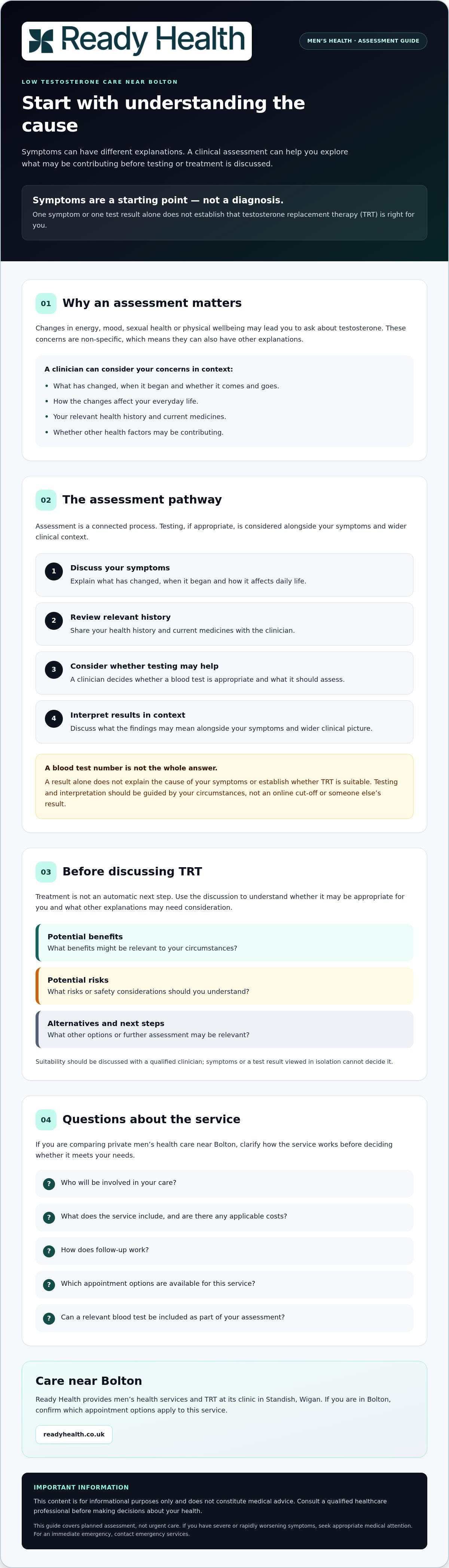
The process can be thought of as four connected steps:
- Discuss symptoms: Explain what has changed and how it affects daily life.
- Review relevant history: Tell the clinician about your health and medicines.
- Consider testing: A clinician decides whether a blood test is appropriate and what it should assess.
- Interpret results: Discuss the findings alongside your symptoms and wider clinical context.
Why blood test results need clinical interpretation
A blood test can provide useful information, but the number alone doesn’t explain what is causing your symptoms or establish whether TRT is suitable. A clinician can interpret the result in context and explain whether further assessment may be needed. Testing decisions and interpretation should be guided by your circumstances, rather than an online cut-off or someone else’s results.
For general background on private blood testing, read this guide to private blood tests and what to consider. Ready Health offers blood test packages for general testing; check with the clinic whether a relevant test is available as part of your assessment.
You can also consult the FDA information on testosterone therapy for additional safety context. The FDA is a US regulator, so its material isn’t UK-specific guidance. Use it as supplementary reading and discuss treatment questions with a qualified clinician.
If you’d like to understand the private service and ask how assessment is handled, explore Ready Health’s testosterone replacement therapy service.
Is testosterone replacement therapy the right option for you?
TRT isn’t automatically appropriate because you have a particular symptom or one test result outside a reference range. A clinician needs to consider the full assessment, including how you feel, your health history and what the results may mean. If you’re exploring low testosterone treatment Bolton, the aim should be an informed decision based on your circumstances, not a promise of a quick fix.
If TRT is being considered, ask what the proposed treatment is intended to address and what changes you might reasonably expect. Potential benefits and limitations can vary, and treatment can carry risks. The benefits and risks of testosterone therapy are worth discussing with a clinician, including whether TRT could affect your fertility plans.
What should you discuss before starting TRT?
Bring a clear picture of your health to the conversation. Share your medical history and current medicines, and ask questions such as:
- What is the aim of treatment in my situation?
- What potential benefits and limitations should I understand?
- What risks or side effects should I consider, including any effect on fertility?
- Are there alternatives or further assessments to consider?
- How would we review whether treatment is helping and remains suitable?
There’s no need to decide on the spot. A clinician should explain relevant options in language you understand and give you space to weigh them. Starting TRT should follow an individual clinical discussion, with your preferences and health needs taken into account.
When might a clinician discuss options other than TRT?
The next step depends on what the assessment suggests may be causing your symptoms. A clinician may recommend further investigation, discuss another form of care or explain why TRT may not be suitable. This is part of finding an appropriate way forward, not a dismissal of what you’re experiencing.
If persistent tiredness is one of your concerns, it may help to read this guide to feeling tired all the time. It can help you consider why fatigue deserves a broader conversation rather than assuming testosterone is the cause.
Choosing low testosterone care near Bolton: questions to ask
Before booking, check how the service works in practice. A clear explanation of who assesses you, how tests are handled and what follow-up may involve can help you decide whether the care fits your needs. If you’re comparing options for low testosterone treatment Bolton, ask about the full service rather than focusing only on whether TRT is offered.
Questions to ask a private testosterone provider
Use these questions to understand what to expect and who will guide your care:
- Who will review my symptoms and health history? Ask who interprets any test results and explains the options to you.
- What testing may be considered? Check who decides whether testing is appropriate and how the findings will be discussed.
- What does the service include? Confirm which appointments, tests and clinical discussions are part of the service, and ask which costs apply.
- How is follow-up handled? Ask what happens if TRT is considered, or if symptoms continue after an assessment.
- What appointment formats are available? Check whether the relevant consultation is in person or virtual, and whether it suits your circumstances.
These questions can help you judge whether a provider offers the clinical explanation and ongoing support you’re looking for. Services may differ in their assessments and follow-up arrangements, so confirm the scope before booking.
How to prepare for an appointment
A few notes can make your appointment more useful. Write down your symptoms, when they began and how they affect your daily life. Include relevant health history and a list of your current medicines. Prepare questions about testing, possible benefits and risks, alternatives and next steps.
Keep taking prescribed medicines as directed unless a qualified clinician advises you otherwise. If you’re weighing up in-person and remote private consultations, this guide to private GP appointments offers general context. Check which format applies to a testosterone assessment.
Ready Health is based in Standish, Wigan. Its local setting may be relevant to people in Standish, Wigan, Shevington, Standish Lower Ground, Boar's Head, Wrightington, Appley Bridge, Chorley, Skelmersdale, Orrell, Ashton-in-Makerfield, Bolton, Leigh, Preston, Southport and St Helens. If you’re travelling from Bolton, contact the clinic to confirm whether you can access this service and which appointment options are available. To review the service details, explore Ready Health’s TRT service.
Explore Ready Health testosterone care near Bolton
Ready Health offers men’s health services, including testosterone replacement therapy (TRT), through its private clinic in Standish, Wigan. A consultation gives you an opportunity to discuss your concerns with a clinician, but it doesn’t mean TRT will automatically be recommended. Suitability and next steps depend on your individual assessment.
If you’re considering low testosterone treatment Bolton, review the testosterone replacement therapy service before deciding whether to enquire. The clinic’s location and appointment arrangements matter too, so confirm whether the service is accessible to you from Bolton and whether an in-clinic or virtual appointment is available for TRT.
What to expect from an initial conversation
You can use an initial conversation to explain the symptoms you’ve noticed, when they began and how they affect your daily life. Be ready to discuss relevant health history and current medicines, and raise questions about assessment, testing and possible options.
The clinician can explain what may happen next based on your circumstances. Further assessment or treatment may be discussed where appropriate, but a diagnosis, prescription or particular outcome can’t be guaranteed in advance. Ask for anything you’re unsure about to be explained before deciding how to proceed.
How to take the next step from Bolton
Before booking, contact Ready Health to check practical details. Ask about travel to Standish, Wigan, the appointment format available for this service, what the consultation includes and current availability. You can also clarify how testing and follow-up are handled, rather than assuming they’re included.
You don’t need to have every answer before making an enquiry. Asking questions first can help you decide whether the service fits your needs. If you’d like to discuss your concerns with a clinician, you can book a consultation with Ready Health.
Disclaimer: This content is for informational purposes only and does not constitute medical advice. Consult a healthcare professional before making decisions about your health.
Take an informed next step towards better health
Low testosterone symptoms can have different causes, so an assessment is a more useful starting point than self-diagnosis. A clinician can consider your symptoms and health history, decide whether testing may be appropriate, and explain what the results mean. One symptom or test result alone doesn’t determine whether TRT is right for you.
If you’re exploring low testosterone treatment Bolton, Ready Health is a CQC-regulated private clinic in Standish, Wigan, offering men’s health services including testosterone replacement therapy. Confirm which appointment options are available for this service and whether they suit you before booking.
You can ask questions about assessment, possible treatment options and follow-up before deciding how to proceed. Book a consultation to discuss your concerns with Ready Health and take a considered next step towards understanding your health.
This content is for informational purposes only and does not constitute medical advice. Consult a healthcare professional before making decisions about your health.
Frequently Asked Questions
Can I get low testosterone treatment in Bolton?
Ready Health offers testosterone replacement therapy (TRT) at its private clinic in Standish, Wigan, but Bolton-specific appointment arrangements aren’t confirmed. Contact the clinic to check where appointments take place, which formats are available, what the service includes and whether it’s currently accessible to you. A consultation doesn’t guarantee a diagnosis or treatment. A clinician must assess your individual circumstances before discussing appropriate next steps.
How do I know if I have low testosterone?
Symptoms alone can’t confirm low testosterone, as changes in energy, mood or sexual health may have other causes. A clinician can discuss what you’ve noticed, review your medical history and decide whether testing or another assessment may be appropriate. If your symptoms concern you or persist, seek professional advice rather than relying on an online checklist or trying to diagnose yourself.
Do I need a blood test before testosterone treatment?
Testing may be part of an assessment, but the right approach depends on a clinician’s judgement and your circumstances. Results should be interpreted alongside your symptoms and relevant medical history, not in isolation. Ask the provider what assessment is included, who will review any results and how they’ll explain what the findings may mean for you.
Does low testosterone always need treatment?
No. A low test result or a set of symptoms doesn’t automatically mean testosterone treatment is appropriate. A clinician considers your overall health, possible causes and options before advising on next steps. Don’t start testosterone medicines or supplements for suspected low testosterone without professional advice. A clinical discussion can help you understand what may be suitable for your situation.
What should I ask before starting testosterone replacement therapy?
Ask what treatment is intended to address, what benefits and risks may apply to you, and whether alternatives are worth considering. Find out how follow-up works and how concerns or progress will be reviewed. Share your relevant health history and current medicines so the discussion reflects your circumstances. Treatment can’t be guaranteed to resolve symptoms, and advice should be specific to your clinical assessment.
Can I book a private testosterone consultation near Bolton?
Ready Health offers private men’s health services, including TRT, at its clinic in Standish, Wigan. Contact the clinic to check whether the service may be suitable for you, where an appointment would take place, available formats and current availability for patients travelling from Bolton. You can review the testosterone replacement therapy service and booking options. Treatment isn’t guaranteed and depends on clinical assessment.
This content is for informational purposes only and does not constitute medical advice. Consult a healthcare professional before making decisions about your health.
Contact Ready Health to discuss your concerns and ask about booking a consultation.

Article by
Shamir Patel
Shamir Patel is a UK-based Clinical Pharmacist and Independent Prescriber with a specialist focus on ADHD and weight management.
He is the Registered CQC Manager at Ready Health Medical Clinic, where he leads the development and delivery of safe, patient-centred services across ADHD assessment and treatment, weight loss programmes, and general medical care.
With a career spanning nearly three decades since qualifying in 1995, Shamir brings extensive clinical and operational experience across both community pharmacy and private healthcare.
He also serves as Deputy Superintendent Pharmacist and Lead Prescriber at PillSorted. He oversees high-volume prescribing services. He focuses on GLP-1 weight loss treatments and clinical governance.
Shamir is a SCOPE-accredited obesity specialist and has a strong interest in improving access to evidence-based ADHD care. He is known for his structured, guideline-driven approach, aligning his clinical practice with NICE recommendations and regulatory standards set by the GPhC and CQC.
Alongside his clinical work, Shamir is actively involved in mentoring prescribing pharmacists, developing standard operating procedures, and contributing to service innovation within digital and community healthcare settings. His work reflects a commitment to safe prescribing, patient education, and improving outcomes through practical, accessible care.
Disclaimer
The information on this website is provided for general educational and informational purposes only and is not intended as medical advice, diagnosis, or treatment. Articles reflect general guidance and may not be suitable for your individual circumstances. You should always seek advice from a qualified healthcare professional before starting, stopping, or changing any treatment, medication, or healthcare plan. While we aim to keep our content accurate and up to date, Ready Health makes no guarantees about the completeness, accuracy, or suitability of the information provided. Reliance on any information on this site is entirely at your own risk. If you have concerns about your health, please book an appointment with a suitably qualified clinician. In an emergency, contact 999 or attend your nearest A&E department.


