

Why does your energy often plummet days or even weeks before your next scheduled appointment? It's a frustrating reality for many that "the crash" arrives while clinical blood tests suggest everything is within a normal range. Effectively managing B12 injection schedule is about more than just following a calendar; it's about aligning your treatment with your body's unique metabolic demands.
We recognise that feeling unheard by practitioners can be just as draining as the fatigue itself. You deserve a strategy that prioritises your neurological health and daily function over rigid, one-size-fits-all protocols. This guide provides the clarity you need to structure your treatment for long-term vitality and consistent mental clarity.
We will break down the essential transition from the loading phase to personalised maintenance. You will also learn how specific cofactors support B12 efficacy, ensuring you have the tools to maintain peak performance without the fear of your symptoms returning early.
Key Takeaways
- Understand why B12 injections require a specific cadence to saturate your receptors and ensure your liver stores the nutrient effectively for sustained energy.
- Discover how to distinguish between the intensive loading phase and the long-term maintenance phase to prevent the common "crash" between doses.
- Learn why "normal" blood test results don't always reflect how you feel and how managing B12 injection schedule involves listening to your body’s symptoms.
- Identify the essential cofactors, such as folate and ferritin, that work alongside B12 to support DNA synthesis and healthy red blood cell production.
- Explore how a personalised, symptom-led approach can provide the flexibility and clinical support that standard protocols often lack.
The Fundamentals of a Vitamin B12 Injection Schedule
Vitamin B12 is far more than a simple supplement; it's a vital enzyme cofactor essential for DNA synthesis and the health of your nervous system. In the UK, clinicians primarily use Hydroxocobalamin for injections because it binds more effectively to blood proteins than other forms. This allows your body to retain the nutrient for longer, creating a reservoir in the liver that should, in theory, provide a steady supply of energy and neurological support.
A solid grasp of The Fundamentals of Vitamin B12 helps clarify why injections are often the only effective route for those with absorption issues. While some people suffer from a simple dietary lack, many face malabsorption caused by conditions like Pernicious Anaemia, where the body cannot process B12 through the gut. In these cases, bypassing the digestive system is the only way to ensure the nutrient reaches your cells.
To better understand how these injections work within your body, watch this helpful clinical overview:
Why Clinical Timing Matters
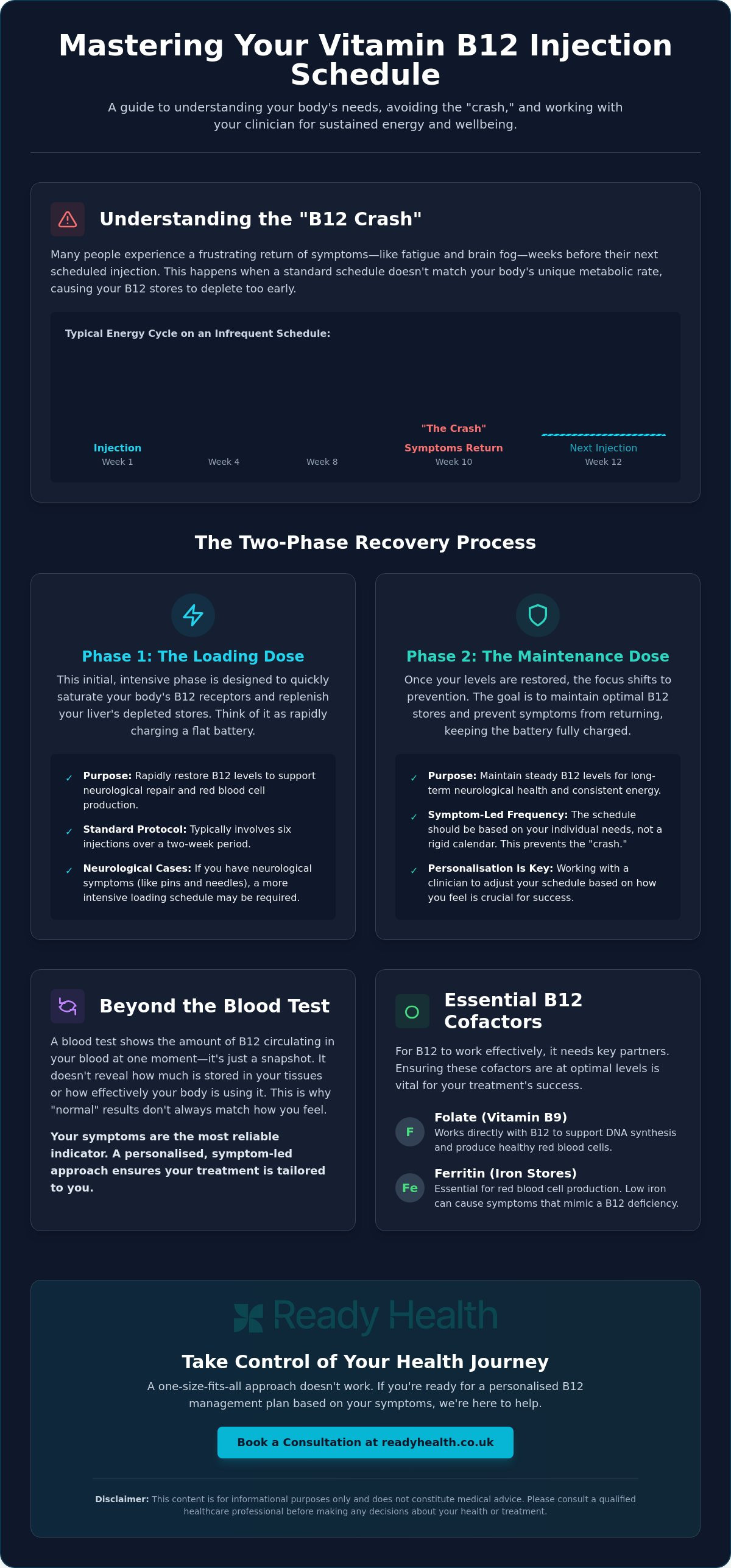
The liver acts as a storage tank for B12, but it isn't an infinite resource. Hydroxocobalamin has a specific half-life, meaning the amount available in your system naturally declines over several weeks. Research suggests that the standard 12-week protocol often used in general practice may be too infrequent for many patients, leading to a depletion of stores before the next dose is due. A serum B12 blood test is merely a snapshot of the vitamin circulating in your blood at one moment; it doesn't reflect the total amount stored in your tissues or how well your body is utilising it.
Recognising the Signs of a "B12 Crash"
Successfully managing B12 injection schedule requires you to become an expert on your own symptoms. Many patients report a "crash" where brain fog, profound lethargy, and paresthesia, often described as "pins and needles," return well before their next appointment. This dip doesn't just affect your physical energy; the psychological impact of fluctuating vitality can be significant, leading to anxiety about when the next wave of fatigue will hit. By tracking these symptoms, you can identify your personal threshold and work with a clinician to adjust your frequency. If you're struggling to find a rhythm that works for you, exploring our Vitamin B12 services can help you regain control over your health journey.
Loading Doses vs. Maintenance: Finding Your Rhythm
Your journey to recovery follows a distinct two-stage process. Think of your body as a depleted battery that requires a rapid, high-voltage charge before it can hold a steady current. This initial phase, known as the loading dose, is designed to saturate your cellular receptors and replenish the liver stores we discussed earlier. Without this concentrated start, your tissues may never reach the concentration required to trigger systemic repair.
Successfully managing B12 injection schedule involves recognising the transition from this intensive recovery period to long-term maintenance. While the loading phase is about intervention, the maintenance phase focuses on prevention. It's a delicate balance. If you move to maintenance too early, or skip the loading phase entirely, you risk a protracted recovery where symptoms linger for months rather than weeks.
The Standard Loading Protocol
For most cases of general deficiency, the widely accepted approach involves six injections administered over a fortnight. When following Standard B12 Injection Schedules, this intensive 14-day window provides the necessary surge to kickstart red blood cell production. During these first two weeks, it's common to feel a rapid shift in energy, though you should monitor for minor side effects. Some patients experience mild skin breakouts or a temporary drop in potassium levels, known as hypokalaemia, which your clinician can help you manage through simple dietary adjustments.
The Neurological Pathway
If your deficiency has progressed to include balance issues, memory lapses, or persistent numbness in your hands and feet, a standard protocol is often insufficient. These "neurological involvements" suggest that the protective coating of your nerves, the myelin sheath, requires urgent repair. In these instances, research suggests an alternate-day injection schedule is necessary. This intensive rhythm continues until your symptoms plateau, ensuring you have the best possible chance of preventing permanent nerve damage.
Private clinical care offers the flexibility to adapt these schedules to your specific neurological response, rather than sticking to a rigid calendar. If you are concerned about recurring symptoms between doses, you might find it helpful to discuss a bespoke plan for Vitamin B12 management with a professional who understands these nuances. This proactive approach ensures you remain in the "maintenance" zone of vitality rather than falling back into a state of deficiency.
When the Standard Schedule Isn’t Enough: Managing Symptom Recurrence
It's a common experience to be told your blood results are perfectly normal, yet you still feel the return of crushing fatigue and cognitive dullness. If you find yourself tired all the time despite following NHS B12 deficiency treatment guidelines, you aren't alone. This disconnect often happens because the standard protocols don't account for individual variations in how quickly your body uses its B12 stores.
Effectively managing B12 injection schedule involves more than just sticking to a 12-week appointment. If your symptoms consistently return at the 8-week mark, your body is sending a clear signal that its metabolic demand is higher than the current supply. Advocating for a more frequent schedule is a proactive step toward maintaining your long-term vitality.
The "Normal Range" Trap
Clinical blood tests measure serum B12, which is the total amount of the vitamin circulating in your blood at one moment. However, once you start injections, this number becomes a snapshot that can be highly misleading. Serum levels can remain high for months after a dose, even if the vitamin isn't effectively moving from your bloodstream into your cells where it's needed for repair.
There is a vital clinical distinction between being "within range" and being at an "optimal" level for your specific needs. For many, the lower end of the normal range is simply not enough to maintain neurological health or prevent the return of "pins and needles." We recommend keeping a symptom diary to track your energy levels, as this subjective data is often more reflective of your actual health than a single laboratory value.
Adjusting Your Maintenance Interval
When a 12-week schedule fails to prevent a crash, moving to an 8-week or 4-week maintenance interval is a common clinical adjustment. Because Vitamin B12 is water-soluble, your kidneys naturally filter out any excess that your body cannot use. This means the vitamin has an excellent safety profile, and research suggests there's very little risk of toxicity from frequent injections.
Choosing a private clinic in Wigan allows for a more flexible, patient-centred approach to these intervals. Instead of waiting for a calendar date, you can work with a clinician to tailor your doses to your life's demands. This proactive strategy ensures that your neurological health remains a priority, allowing you to maintain peak performance without the fear of your energy levels bottoming out.
Optimising Results with Folate, Ferritin, and Lifestyle
Achieving long-term vitality requires more than just the vitamin itself; it requires the synergy of several key nutrients. When you are managing B12 injection schedule, you must ensure your body has the necessary cofactors to actually use the cobalamin you're receiving. Without these supporting elements, your recovery may stall even if your B12 levels appear high on paper.
We view health as a state of proactive preparation. This means ensuring your biological systems have every tool they need to function at a high level. By understanding how B12 interacts with other vitamins, you can prevent the "plateau" effect where your progress seems to stop despite regular treatment.
The Role of Folate and Ferritin
Folate, also known as Vitamin B9, is the primary partner for B12 in the production of healthy red blood cells and DNA synthesis. It's common for an intensive B12 treatment to "unmask" a hidden folate deficiency, as your body rapidly consumes its B9 stores to keep up with new cell growth. The methylation cycle is a series of chemical reactions in your cells that act like a master switch to regulate energy production, mood, and nerve repair. Research suggests that keeping your folate in the upper third of the clinical range may help maintain this cycle's efficiency.
Ferritin, which represents your body's iron stores, provides the raw materials needed for energy. If your ferritin levels are low, your body cannot produce the new red blood cells that B12 is trying to stimulate. To ensure your treatment is as effective as possible, we recommend regular Private Blood Tests in Standish to monitor these cofactors alongside your B12. This local access to fast diagnostic insights allows us to adjust your plan based on real-time data rather than guesswork.
Lifestyle Factors That Deplete B12
External factors can significantly impact how quickly you deplete your vitamin stores between appointments. High levels of chronic stress and regular alcohol consumption are known to increase your body's demand for B-vitamins. Additionally, certain long-term medications, such as Metformin for diabetes or proton pump inhibitors for acid reflux, can interfere with how your body processes these nutrients. Effectively managing B12 injection schedule involves looking at your health through a wide-angle lens that includes these daily habits.
During the loading phase, focus on maintaining optimal hydration and adequate potassium intake to support the surge in new cell production. Including potassium-rich foods like bananas, spinach, or coconut water may help manage the mild side effects some people experience. By making these small dietary adjustments, you create a stable environment for your nervous system to heal. If you're ready to take a proactive step toward your health goals, you can book a comprehensive blood profile to check your nutrient levels today.
Personalised B12 Management at Ready Health in Wigan
Wigan and the surrounding Greater Manchester area often face high demand for primary care services, which can lead to long wait times for routine appointments. When you're managing B12 injection schedule, even a short delay can trigger a return of the fatigue or brain fog you've worked so hard to eliminate. We believe that your treatment should be as dynamic as your lifestyle, adapting to your needs rather than forcing you to wait for a specific date on a calendar.
By choosing a private clinical setting, you move from being a passive patient to an active partner in your own wellness journey. We integrate our diagnostic expertise with your personal symptom tracking to create a plan that actually works. This collaborative approach ensures that your neurological health is always the priority, backed by the calm confidence of professional clinical support.
Why Choose Ready Health for Your Injections?
Our clinic in Standish provides a sophisticated environment where clinical excellence meets patient convenience. We are a CQC-regulated provider, meaning our services meet rigorous national standards for safety and quality. You don't have to navigate the frustration of local primary care backlogs; instead, you can access the care you need when you need it most.
We offer the following benefits for our local community:
- Same-day availability: We often have appointments available on short notice to prevent a symptom crash.
- Home visit consultations: For those who prefer the comfort of their own space, our clinicians can visit you in Standish and the wider Wigan area.
- Integrated diagnostics: We can perform follow-up blood tests during your injection appointment to monitor your folate and ferritin levels.
Reclaiming your energy shouldn't be a logistical challenge. You can easily manage your appointments through our streamlined booking system at readyhealth.co.uk/book.
Your Next Steps to Reclaiming Vitality
If you're ready to take control of your health, the first step is a consultation to discuss your history and current symptoms. Whether you're just starting your loading phase or looking for a more flexible maintenance plan, we are here to guide you. When you book your Vitamin B12 Injection, please bring any recent blood test results you have, as this helps us build a more accurate picture of your needs.
Preparation is the core pillar of long-term health. By effectively managing B12 injection schedule, you aren't just treating a deficiency; you're equipping your body for the demands of modern life. We invite you to experience a higher standard of care that prioritises your long-term vitality and personal equilibrium.
Take Control of Your Vitality and Neurological Health
Successfully managing B12 injection schedule involves a shift from being a passive recipient of care to an active participant in your recovery. You've learned that "normal" blood levels don't always mean you're at your best, and that addressing cofactors like folate is essential for systemic harmony. By tracking your symptoms and adjusting your intervals, you can finally break the cycle of the crash and maintain the energy you deserve.
Our CQC-regulated clinic in Standish provides same-day appointments administered by qualified clinical professionals. We are committed to being your reliable wellness partner, offering a practical, high-performance tool for your busy life. We prioritise your long-term vitality over quick fixes, ensuring you feel empowered and prepared for the demands of modern life.
Book Your Private B12 Consultation at Ready Health Wigan. We look forward to helping you build a sustainable routine that keeps you fully prepared for everything life brings your way.
Disclaimer: This content is for informational purposes only and does not constitute medical advice. Please consult a professional before making health decisions.
Frequently Asked Questions
How often can I have a B12 injection if my symptoms return early?
Managing B12 injection schedule should be symptom-led. If your fatigue returns weeks before your next dose, you can move to an 8-week or 4-week interval. We don't believe in a rigid 12-week rule if it leaves you feeling unwell. By tracking your energy dips, we can find a rhythm that keeps your levels optimal and prevents the recurring crash that many patients experience.
Can I have too much Vitamin B12? Is there a risk of toxicity?
You cannot realistically have too much Vitamin B12 as it's a water-soluble nutrient. Your body is highly efficient at filtering out any excess through your kidneys and excreting it in your urine. This means there is no established risk of toxicity or "overdosing" from injections. We focus on finding the right frequency to maintain your energy rather than worrying about upper limits.
What is the difference between Hydroxocobalamin and Cyanocobalamin?
Hydroxocobalamin is the natural form preferred in the UK because it stays in your system much longer than Cyanocobalamin. Cyanocobalamin is a synthetic version that your body must work to convert before it can be used. Because Hydroxocobalamin binds better to blood proteins, it's more effective for managing B12 injection schedule over long periods, allowing for fewer appointments while maintaining peak health.
Why do I feel more tired immediately after my B12 injection?
It's quite common to feel a temporary wave of tiredness after your dose as your body begins the intensive work of repair. This happens because B12 triggers the rapid production of new red blood cells, which requires a lot of energy and other nutrients. This "start-up" fatigue is usually a sign that the vitamin is working and typically resolves within a day or two.
Do I need a blood test before every B12 injection?
You don't need a blood test before every dose because the results can be misleading once treatment has begun. Injections keep your blood levels artificially high for months, which doesn't always show how much B12 is actually reaching your cells. We prioritise monitoring your symptoms and checking your ferritin and folate levels to ensure your body has the raw materials it needs to thrive.
How long does it take for B12 injections to start working?
You may feel an improvement in your energy and mental clarity within just a few days of your first injection. While the boost to your metabolism is fast, repairing damaged nerves is a much slower biological process. If you have neurological symptoms, it may take several months of regular treatment before you notice a significant and lasting improvement in those specific areas.

Article by
Shamir Patel
Shamir Patel is a UK-based Clinical Pharmacist and Independent Prescriber with a specialist focus on ADHD and weight management.
He is the Registered CQC Manager at Ready Health Medical Clinic, where he leads the development and delivery of safe, patient-centred services across ADHD assessment and treatment, weight loss programmes, and general medical care.
With a career spanning nearly three decades since qualifying in 1995, Shamir brings extensive clinical and operational experience across both community pharmacy and private healthcare.
He also serves as Deputy Superintendent Pharmacist and Lead Prescriber at PillSorted. He oversees high-volume prescribing services. He focuses on GLP-1 weight loss treatments and clinical governance.
Shamir is a SCOPE-accredited obesity specialist and has a strong interest in improving access to evidence-based ADHD care. He is known for his structured, guideline-driven approach, aligning his clinical practice with NICE recommendations and regulatory standards set by the GPhC and CQC.
Alongside his clinical work, Shamir is actively involved in mentoring prescribing pharmacists, developing standard operating procedures, and contributing to service innovation within digital and community healthcare settings. His work reflects a commitment to safe prescribing, patient education, and improving outcomes through practical, accessible care.
Disclaimer
The information on this website is provided for general educational and informational purposes only and is not intended as medical advice, diagnosis, or treatment. Articles reflect general guidance and may not be suitable for your individual circumstances. You should always seek advice from a qualified healthcare professional before starting, stopping, or changing any treatment, medication, or healthcare plan. While we aim to keep our content accurate and up to date, Ready Health makes no guarantees about the completeness, accuracy, or suitability of the information provided. Reliance on any information on this site is entirely at your own risk. If you have concerns about your health, please book an appointment with a suitably qualified clinician. In an emergency, contact 999 or attend your nearest A&E department.


