

Heel pain needs more than a guess at the cause. Private treatment for plantar fasciitis in Wigan can start with a review of your symptoms and medical history, followed by an assessment of your foot movement and how pressure shifts when you stand or walk. This information can help guide practical options, including advice about footwear or insoles.
If pain affects your first steps in the morning or makes everyday walking harder, it’s understandable to want a clear explanation and a plan suited to you. The right approach depends on what is contributing to your symptoms, so understanding the diagnosis and how your foot moves is an important starting point.
This article explains what an assessment may involve, how your medical history and foot mechanics can inform care, and where specialist footwear and insoles may fit. You’ll also learn what to consider when seeking private care in Wigan, so you can decide on a practical next step.
Key Takeaways
- Notice how your symptoms change with walking, rest and footwear to help describe the problem clearly during an assessment.
- Learn how foot movement and pressure may influence advice about supportive shoes or insoles.
- Understand how your medical history and examination help guide diagnosis and treatment options.
- Know what to consider when comparing private care, including appointment availability and the type of assessment offered.
- Explore why the possible benefits and risks of treatments such as steroid injections or shockwave therapy need careful discussion.
Biomechanics, specialist shoes and insoles
Your foot mechanics affect how weight moves through your heel and arch as you walk. The plantar fascia is a strong band of tissue beneath the foot, extending from the heel towards the toes. As your foot meets the ground and moves forward, it helps support the arch. A podiatry assessment considers this movement alongside where you feel pain.
For example, a clinician may observe how your heel, arch and toes move while you stand and walk. They can compare both feet and check for uneven wear on your shoes. These observations help build a clearer picture of the forces acting on your foot and distinguish a footwear issue from other factors that may need assessment.
For further UK physiotherapy-led context, watch Will Harlow explain plantar fasciitis management and rehabilitation exercises.
Footwear is one practical factor in managing daily pressure on your foot. Bring the shoes you wear most often to your next appointment, including work or walking shoes. A practitioner can assess their fit and support. For example, a loose heel or a sole worn more on one side can affect how your foot feels over repeated steps.
Useful features to discuss include a secure fastening, a stable heel and enough room for your toes. Supportive shoes should feel comfortable when you stand and walk, without pressing on painful areas. The best choice depends on your foot shape, activity and symptoms. Shoes that suit a short commute may feel different during a full day on your feet.
Insoles, also called orthoses, sit inside your shoes and change how pressure is distributed. A clinician may discuss a prefabricated insole or a device shaped for your foot. The right option depends on your footwear, comfort and assessment findings. An insole should fit without crowding your toes or lifting your heel out of place.
- Bring your usual shoes to the assessment, including the pair worn at work.
- Describe which activities increase discomfort, such as standing or walking uphill.
- Try any recommended footwear indoors first and notice pressure or rubbing.
- Review how an insole fits inside each shoe before using it regularly.
These steps give a podiatry professional specific information to guide their advice. A registered practitioner can explain how your walking pattern and footwear relate to your symptoms. Surgery is a separate treatment decision, not a footwear adjustment; any discussion should take your diagnosis, previous care and daily needs into account. For insights into advanced clinical management and surgical options, specialist resources such as footanklesurgeonohio.com outline how complex foot conditions are addressed. A brief note of which shoes feel comfortable can also make follow-up conversations more useful.
Biomechanics does not mean that one foot shape automatically explains heel pain. An assessment brings together your symptoms, movement, shoe fit and pressure patterns. This helps explain why a particular footwear change or insole is being considered, rather than choosing support based on appearance alone.
Medical history and diagnosis
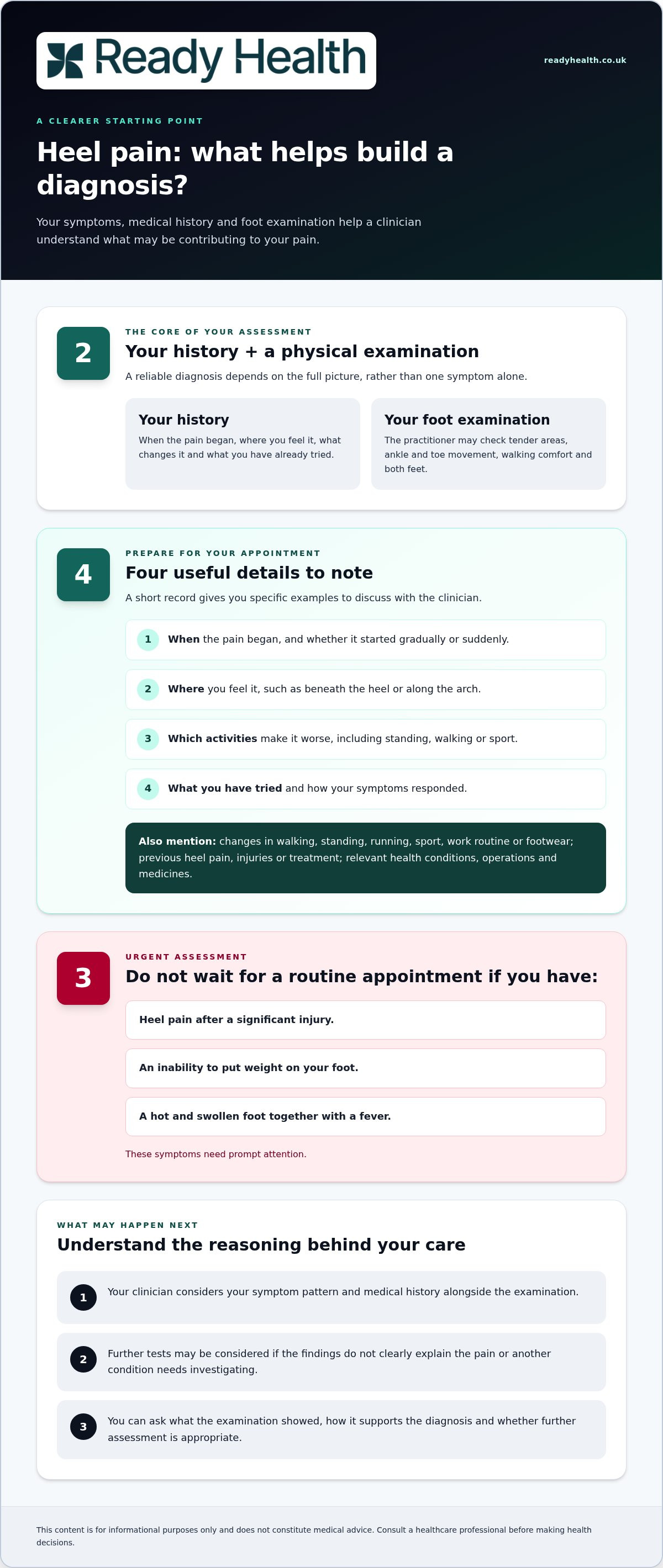
Seek urgent assessment if heel pain follows a significant injury, you cannot put weight on your foot, or your foot is hot and swollen and you have a fever. These symptoms need prompt attention, not a routine appointment.
For other heel pain, a clinician will consider your symptom pattern and medical history. Be ready to describe when the discomfort began, where it is strongest and what changes it. For example, explain whether your first steps after resting feel different from the pain you experience after a long walk.
Your history can reveal changes that affect pressure on your foot. Mention any recent increase in walking, standing, running or sport, as well as changes to your work routine or footwear. Describe previous heel pain, foot injuries or treatment, including whether they changed your symptoms. These details help the clinician consider how your current activities relate to the problem.
A clinic assessment may include questions about your general health and medicines, followed by a foot examination. The practitioner may check where pressure causes discomfort, how your ankle and toes move, and whether you can walk comfortably. They may compare both feet to assess whether your symptoms fit plantar fasciitis or suggest another cause.
Share relevant medical conditions, previous operations and any medicines you take. Bring notes from earlier appointments or summarise the advice you received. A qualified practitioner can consider this information alongside the examination, rather than relying on one symptom alone. A reliable diagnosis depends on the full picture.
Diagnosis often starts with your history and a physical examination. Further tests may be considered if the findings do not clearly explain the pain or another condition needs investigating. Ask what the examination showed and how it supports the diagnosis. Understand the reasoning before deciding on treatment, including whether further assessment is appropriate.
Before your appointment, make a short record of the following:
- When the pain began and whether it developed gradually or suddenly.
- Where you feel it, such as beneath the heel or along the arch.
- Which activities make it worse, including standing, walking or sports.
- What you have already tried and how your symptoms responded.
This record gives the clinician specific examples to discuss. If your pain changes quickly, limits ordinary movement or follows an injury, explain that clearly when arranging an assessment. A careful history and examination help guide the next step, whether that is advice, treatment or further investigation.
Which private clinics in Wigan treat plantar fasciitis?
Private foot pain care in Wigan may involve podiatry, physiotherapy or a GP consultation. Ready Health offers private GP consultations and physiotherapy. If you’re considering private treatment for plantar fasciitis in Wigan, choose your starting point based on whether you need an initial medical discussion or movement-focused care.
A Ready Health GP consultation gives you the opportunity to discuss heel pain and your concerns. Ready Health also offers private physiotherapy, which may suit a discussion about movement or activity. These are separate appointment types, so consider what you want help with before booking.
Review the service description and the practitioner’s role. Look for information about the appointment’s purpose, the assessment involved and possible follow-up. A general GP consultation and a physiotherapy appointment have different focuses. The service description can help you decide which better suits your needs.
Before choosing, decide what you want from the visit. You may want to discuss a new symptom, understand how pain affects your routine or explore care after receiving a diagnosis. Being clear about your aim can help you choose an appropriate appointment and make the conversation more useful.
Use these points to compare local options:
- Appointment type: check whether it is with a GP or physiotherapist.
- Purpose: see whether the consultation suits your question or stage of care.
- Format: confirm whether the appointment is in person or virtual.
- Next steps: understand how the practitioner discusses further care when needed.
For example, if you’re unsure what may be causing heel pain, a GP discussion can be a starting point. If you want help with movement or activity, physiotherapy may be more relevant. Each appointment has a different focus, so consider what you need assessed when choosing.
Ready Health offers private GP consultations and physiotherapy as different ways to discuss your concerns. Consider the type of support you need, then choose the appointment that best matches it. Previous clinical notes can provide useful context and help you avoid relying on memory for every detail.
When comparing podiatry services, check the clinic’s stated experience and professional registration alongside the appointment information. The clinic advertises 15+ years of experience and says its team is HCPC-registered. The Wigan clinic says no referral is needed to access its services, which may help clarify how to arrange an appointment. Ask what the visit covers and whether the service is intended to address your particular concern, rather than assuming all podiatry appointments have the same scope.
Check what the appointment covers and whether its focus matches your needs. Routine foot care and assessment for heel pain are not the same service, so consider the purpose of the appointment when choosing. Ready Health’s clinic is in Standish, Wigan, serving people across the local area, including Shevington, Standish Lower Ground, Boar’s Head, Wrightington, Appley Bridge, Chorley, Skelmersdale, Orrell, Ashton-in-Makerfield, Bolton, Leigh, Preston, Southport and St Helens.
Do private Wigan clinics offer same-week plantar fasciitis appointments?
A Wigan clinic advertises same-week appointments for plantar fasciitis. This gives you a route to seek assessment without waiting for a later appointment slot. Availability can depend on the appointment type and the clinician’s schedule, so plan around the assessment you need.
First, decide what you want from the appointment. If you need an initial review, a GP can discuss your symptoms and medical history. If you want your foot mechanics assessed, choose a service that specifically involves podiatry or physiotherapy. These appointments address different questions, so the service description matters.
Next, gather details that will make the consultation useful. Note when the pain began, which activities affect it and whether anything has changed. For example, mention if discomfort started after a new walking routine or more time standing at work. Bring a list of previous treatments and medicines.
Before booking, check the practical details of the appointment. Confirm the date, whether it is in person or virtual, and what the consultation covers. A virtual discussion can review your history, but assessing your foot while you stand or walk generally requires an in-person appointment.
Use this simple sequence to prepare:
- Choose whether you need a GP review or foot-focused assessment.
- Write down your symptoms and the activities that affect them.
- Gather details of previous care and medicines.
- Check the appointment format and what the clinician will assess.
A same-week appointment means you can discuss your concerns sooner; it does not mean every assessment or treatment happens at the first visit. A clinician may need to examine your foot, discuss the likely cause and explain suitable next steps. If further investigation is appropriate, that may involve a separate appointment.
Keep your expectations specific. For example, use the first consultation to discuss whether your symptoms fit plantar fasciitis and what factors may be affecting them. Ask how the proposed plan relates to your diagnosis, daily activities and previous treatment. This helps clarify the purpose of each recommended step.
If your symptoms follow a significant injury, stop you bearing weight or occur alongside a hot, swollen foot and fever, seek urgent assessment rather than waiting for a routine appointment. For other heel pain, a same-week appointment can help you discuss the problem sooner. Prepare notes about your symptoms so the conversation can focus on the questions that matter to you.
What are the risks and side effects of plantar fasciitis treatments such as steroid injections or shockwave therapy?
Steroid injections and shockwave therapy are different treatments, and their risks should be discussed separately. An injection delivers medicine near the painful area, while shockwave therapy applies sound waves through a handheld treatment head. Neither option should be chosen without considering your diagnosis, symptoms and health history.
For a steroid injection, ask what medicine is proposed, where it will be injected and what effects to expect afterwards. Discuss pain during or after the procedure, bruising, skin changes and infection as specific risks. Tell the clinician about allergies, medicines and previous injections so they can assess whether the procedure suits your circumstances.
Shockwave therapy does not involve an injection, but it can feel uncomfortable. Ask how the device will be used, what sensations to expect and which symptoms should prompt follow-up. The practitioner should explain how the treatment plan fits your diagnosis, including what to do if discomfort increases during a session.
Before either treatment, make sure the clinician has reviewed your symptoms and examined the area. A clear explanation should cover the intended benefit, possible side effects, alternatives and follow-up. Ask how the clinician will decide whether treatment is appropriate and whether other causes of heel pain need consideration first.
Use these questions to guide the conversation:
- What is the reason for recommending this treatment for my symptoms?
- What side effects should I expect during or after the procedure?
- Which symptoms need prompt review, and whom should I contact?
- What alternatives are suitable, including changes to activity or footwear?
- How will we review progress and decide on the next step?
Your health history matters. Tell the practitioner about previous treatment, medicines, allergies and relevant health conditions. If you have had an injection before, describe your response. For shockwave therapy, explain which activities currently aggravate your heel and how the pain affects walking or work.
Take time to understand consent before proceeding. You should be able to describe the proposed treatment in your own words and know what follow-up involves. If the risks, expected sensations or alternatives are unclear, ask for a simpler explanation before making a decision.
For a private consultation in Wigan, you can book an appointment to discuss your symptoms and treatment questions. A focused conversation can help you understand the options, relevant cautions and appropriate next steps for your situation.
Ready Health: Private GP Consultation (15 Minutes)
Ready Health offers a Private GP Consultation (15 Minutes) to discuss your heel pain, symptoms and medical history. It can be a practical starting point if you’re unsure what assessment to seek or want to talk through your symptoms with a GP.
Use the appointment to explain when the pain began, what affects it and any previous treatment. Your GP can review this information and discuss appropriate next steps, which may include further assessment. A GP consultation is not a podiatry assessment of your walking mechanics, so say if you specifically need your foot movement assessed.
Bring a short summary of your symptoms and details of any medicines or relevant health conditions. This helps you use the consultation to focus on your concerns and questions.
If you’d like to discuss your symptoms with Ready Health, visit the booking page.
Take the next step towards clearer care
Heel pain can make everyday plans harder. Turn what you’ve noticed into a clear conversation about your symptoms and the care that may suit you. If you’re considering private treatment for plantar fasciitis in Wigan, find out what assessment can address your concerns and which options may follow.
Ready Health can discuss your concerns in a private GP consultation. Explain what you’ve tried, what affects your heel and what you hope to understand. Your circumstances and assessment findings will guide appropriate next steps.
Contact Ready Health to discuss care and take a considered step towards understanding your heel pain. You can move forward with a clearer plan and informed questions.
Frequently Asked Questions
What private treatment options are available for plantar fasciitis in Wigan?
The right option depends on what you need assessed. Ready Health offers GP consultations and physiotherapy, but a GP consultation is not a podiatry assessment. If you’re unsure which appointment suits your concern, explain whether you want a general discussion about symptoms or a focus on movement and activity. Ready Health’s services have distinct purposes to help you choose.
How do I book a private plantar fasciitis appointment in Wigan, and do I need a GP referral?
Booking steps and referral requirements depend on the clinic and appointment type. For Ready Health, you can use the online booking page to arrange a private GP consultation. If you’re considering physiotherapy, select the relevant service when booking. Have your preferred appointment format in mind and briefly explain your main concern, so you can choose an appointment that matches what you want to discuss.
What should I check when comparing private plantar fasciitis clinics in Wigan?
Before booking, consider who you’ll see, what the appointment covers and how follow-up is handled. Choose a GP consultation or physiotherapy based on the assessment you need, rather than assuming they provide the same service. The appointment format should also work for your routine, and the service description should explain its focus.
Can a GP consultation help if I’m unsure which appointment to choose?
Yes. A GP consultation gives you an opportunity to discuss your concerns and consider an appropriate next step. It can help if you’re uncertain whether you need a general medical discussion or movement-focused care. Ready Health offers private GP consultations and physiotherapy as separate services. Explain what you want help understanding so the appointment matches your concern.
Contact Ready Health or explore services if you’d like to discuss your next step.
This content is for informational purposes only and does not constitute medical advice. Consult a healthcare professional before making health decisions.

Article by
Shamir Patel
Shamir Patel is a UK-based Clinical Pharmacist and Independent Prescriber with a specialist focus on ADHD and weight management.
He is the Registered CQC Manager at Ready Health Medical Clinic, where he leads the development and delivery of safe, patient-centred services across ADHD assessment and treatment, weight loss programmes, and general medical care.
With a career spanning nearly three decades since qualifying in 1995, Shamir brings extensive clinical and operational experience across both community pharmacy and private healthcare.
He also serves as Deputy Superintendent Pharmacist and Lead Prescriber at PillSorted. He oversees high-volume prescribing services. He focuses on GLP-1 weight loss treatments and clinical governance.
Shamir is a SCOPE-accredited obesity specialist and has a strong interest in improving access to evidence-based ADHD care. He is known for his structured, guideline-driven approach, aligning his clinical practice with NICE recommendations and regulatory standards set by the GPhC and CQC.
Alongside his clinical work, Shamir is actively involved in mentoring prescribing pharmacists, developing standard operating procedures, and contributing to service innovation within digital and community healthcare settings. His work reflects a commitment to safe prescribing, patient education, and improving outcomes through practical, accessible care.
Disclaimer
The information on this website is provided for general educational and informational purposes only and is not intended as medical advice, diagnosis, or treatment. Articles reflect general guidance and may not be suitable for your individual circumstances. You should always seek advice from a qualified healthcare professional before starting, stopping, or changing any treatment, medication, or healthcare plan. While we aim to keep our content accurate and up to date, Ready Health makes no guarantees about the completeness, accuracy, or suitability of the information provided. Reliance on any information on this site is entirely at your own risk. If you have concerns about your health, please book an appointment with a suitably qualified clinician. In an emergency, contact 999 or attend your nearest A&E department.


