

Relationship difficulties can affect how you communicate, trust and feel close to one another. Relationship counselling services in Bolton may help you and your partner explore communication problems, infidelity, recurring conflict, intimacy concerns, decisions about separation or a growing sense of disconnection. Sessions provide a structured space to understand each perspective and consider practical ways forward, whether you hope to reconnect or make a considered decision about your relationship.
Starting a conversation can feel daunting, especially when the same arguments keep returning or important issues are hard to raise. Counselling isn’t about deciding who is right. It can help you recognise patterns, listen more openly and clarify what you both need. This guide explains what couples counselling may involve, how it can support you through relationship challenges, what to consider when choosing a service and how to take a next step that feels right for you.
Key Takeaways
- Use couples counselling to explore communication difficulties, trust, conflict and intimacy, and identify patterns you may want to change together.
- If you’re considering separation or feeling disconnected, counselling can provide space to clarify what you each want and discuss the way forward.
- Explore the support routes available to you, and consider whether couples counselling is appropriate for your circumstances and safety.
- A Ready Health Private GP Consultation (15 Minutes) can be a starting point for discussing personal wellbeing concerns and possible next steps.
Relationship issues including communication, infidelity, conflict and intimacy
Communication difficulties can make small disagreements feel impossible to resolve. In a counselling session, you could explore a recent disagreement, such as tension over household responsibilities. A counsellor may help you notice a pattern, such as one partner criticising while the other withdraws. You can then practise a different response, like taking turns to explain what felt difficult. This keeps the discussion focused on what happened instead of deciding who is at fault.
Infidelity can affect trust, emotional security and sexual intimacy. You may need to discuss what happened, how it affected each of you and what rebuilding trust would involve. Counselling doesn’t require you to stay together. It can help you understand each other’s perspectives and consider possible next steps. With recurring conflict, agree to pause a heated conversation and return to it when you can both listen. Sessions can help identify what triggered the argument and what each person needs.
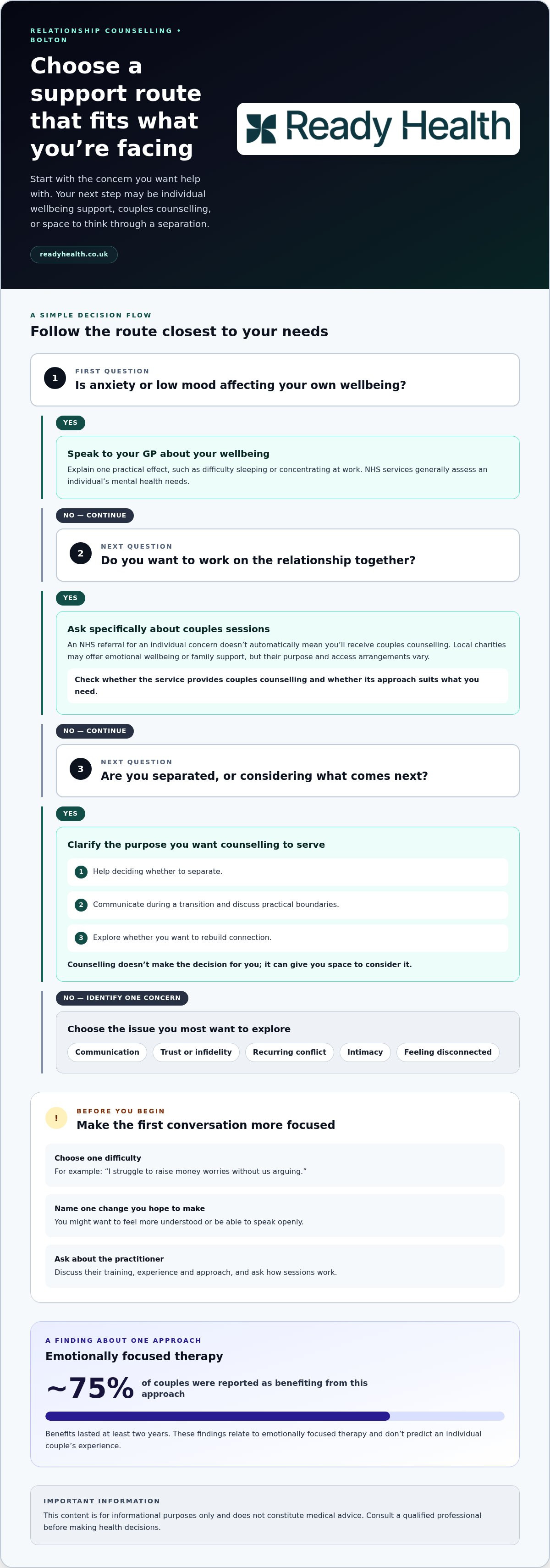
Intimacy concerns may include less affection, different levels of sexual desire or difficulty discussing boundaries. For example, you could explain that you miss spending time together without assuming your partner knows why. Relationship counselling services in Bolton can offer a structured setting to discuss what has changed and what feels comfortable. Emotionally focused therapy was effective for about 75 percent of couples, with benefits lasting at least two years. These findings relate to that approach and don’t predict an individual couple’s experience.
Before your first session, choose one difficulty and one change you hope to make. You might say, “I struggle to raise money worries without us arguing,” rather than listing old grievances. If tension at home affects your children, describe how disagreements disrupt family routines. This helps keep the conversation focused on your relationship and the changes you want to explore together, one manageable step at a time.
Counselling can help address relationship distress and build emotional awareness, communication, empathy, intimacy and overall relationship satisfaction. Consider which of these areas matters most to you, then describe what improvement would look like in everyday interactions. Naming a specific hope, such as feeling more understood or being able to speak openly, can give sessions a practical focus while leaving room for both partners’ perspectives.
Separation, divorce and loss of connection
Separation can bring grief, anger, relief or anxiety, sometimes all in one conversation. Start by identifying what you need from counselling: help deciding whether to separate, communicating during a transition or rebuilding connection. For example, you might each describe what a workable week would look like while living apart. This keeps the discussion focused on specific needs rather than blame. Counselling doesn’t make the decision for you; it gives you space to consider it together.
If you’re already separated, sessions can help you discuss practical boundaries and emotional concerns. You could agree how to communicate about shared responsibilities, then review whether that arrangement is working. If you have children, keep their routines and communication needs central to discussions. Counselling can help you consider how to explain changes calmly, without involving children in adult disagreements. If you’re considering divorce, use counselling to explore the relationship and seek separate advice for legal or financial questions.
Losing connection can feel like living alongside someone rather than sharing life with them. Try naming one change you’ve noticed, such as fewer conversations at dinner or less affection. Then describe its emotional effect: “I feel lonely when we stop talking after work.” This is more useful than assuming, “You don’t care.” Finding the words can be difficult, especially when anxiety or resentment has built over time. A counsellor can help structure that conversation.
Ask about a practitioner’s training, experience and approach before beginning counselling or psychotherapy. Psychotherapy means talking with a trained professional to explore emotional difficulties and patterns. A qualified practitioner should explain how sessions work and what their approach involves, helping you decide whether it suits your needs. Approaches vary, so discuss what you believe would help you move forward. You might say, “I want to understand what I need for myself,” even if your partner wants a different outcome. That difference is worth discussing openly.
Can couples access relationship counselling through the NHS or local charities in Bolton?
In Bolton, the right support route depends on whether you need help individually or as a couple. NHS services generally assess a person’s mental health needs, while relationship counselling focuses on how partners relate. If anxiety or low mood affects you, speak to your GP about your wellbeing. Explain one practical effect, such as difficulty sleeping or concentrating at work. This gives the conversation a clear starting point.
For support together, ask specifically whether a service provides couples sessions. An NHS referral for an individual concern doesn’t automatically mean you’ll receive couples counselling. For example, you might seek individual support for anxiety while also exploring relationship counselling services in Bolton for communication difficulties. Keeping those aims distinct can help you understand which type of support addresses each concern.
Local charities may offer another route, but their purpose and access arrangements vary. Some focus on emotional wellbeing or family support rather than couples therapy. Before approaching a charity, write down what you hope to address, such as recurring arguments or preparing for separation. Then ask whether both partners attend and what the first appointment involves. These questions help you assess whether the service matches your needs.
To explore relationship counselling services in Bolton, use these steps:
- Describe one difficulty, such as withdrawing during disagreements or clashing over parenting.
- Ask whether support is for individuals, couples or both, and how sessions begin.
- Discuss access arrangements and any charges before deciding.
- Consider whether you both feel able to speak openly in a joint setting.
If your partner doesn’t want to attend, individual counselling may give you space to reflect on your feelings and choices. It isn’t a substitute for couples work. Whether you approach the NHS or a charity, explain your priority plainly. For example, say, “We need help deciding whether to stay together,” rather than asking only for general relationship advice.
What alternatives are available if relationship counselling is unsuitable or there is domestic abuse?
Joint counselling may be unsuitable if one partner fears the other or cannot speak freely. Examples include threats, monitoring messages, controlling money, isolation, or physical and sexual harm. These behaviours are not simply communication problems. A shared session can increase pressure if one person feels unable to disagree safely.
If you recognise these signs, prioritise individual support rather than arranging a joint conversation. Speak privately with a trusted person, your GP or a specialist domestic abuse service. Explain what has happened, what you’re worried about and whether you share a home or children. A practitioner can help you consider support that centres your safety and choices.
If you’re in immediate danger, contact emergency services. If it’s safe, use a device your partner cannot access to seek help. You could also keep essential items and important information somewhere you can reach them. Avoid confronting someone about their behaviour if doing so could increase risk. A trusted person can help you plan a safer way to get support.
Relationship counselling may also be unsuitable for reasons unrelated to abuse. One partner might refuse to attend, or you might need individual help with anxiety, grief or low mood first. In those situations, consider individual counselling or speak with a GP about your mental wellbeing. If you’re unsure what kind of support fits, describe a specific concern, such as panic before difficult conversations or feeling unable to make decisions.
When abuse is present, the person causing harm remains responsible for their actions. You don’t need to prove that your experience is serious before seeking support. Write down what feels unsafe, who you can speak to privately and what help you want next. If a friend tells you about abuse, listen without blame and ask what practical support they would find useful. Respect their choices while helping them connect with specialist assistance.
At least 1 in 20 people have suffered sexual abuse. If this statistic feels relevant to your experience, you can seek private support without waiting until you feel ready to discuss it jointly. You may choose what to share and what next step feels safest for you.
Ready Health: Private GP Consultation (15 Minutes)
Ready Health offers a Private GP Consultation (15 Minutes) if relationship difficulties are affecting your wellbeing and you’d like to discuss your health. You can explain concerns such as persistent anxiety, poor sleep or low mood, and discuss what support may be appropriate. A GP consultation is not couples counselling, but it can provide a clinical conversation about your personal health needs.
Before your appointment, note the symptoms affecting you, when they began and how they influence daily life. You may also want to mention any support you’re already receiving. This can help you use the consultation to focus on your health and possible next steps.
If you’d like to discuss your wellbeing with Ready Health, book a GP consultation.
Choose a next step that feels manageable
Start by deciding what you want your next conversation to achieve. You might want help setting a personal boundary, preparing for a difficult discussion or understanding what support feels appropriate. A clear intention can make the first step feel more manageable.
Ready Health offers relationship counselling and GP consultations. Contact Ready Health to discuss counselling and explore a way forward that feels right for you.
This content is for informational purposes only and does not constitute medical advice. Consult a qualified professional before making health decisions.

Article by
Shamir Patel
Shamir Patel is a UK-based Clinical Pharmacist and Independent Prescriber with a specialist focus on ADHD and weight management.
He is the Registered CQC Manager at Ready Health Medical Clinic, where he leads the development and delivery of safe, patient-centred services across ADHD assessment and treatment, weight loss programmes, and general medical care.
With a career spanning nearly three decades since qualifying in 1995, Shamir brings extensive clinical and operational experience across both community pharmacy and private healthcare.
He also serves as Deputy Superintendent Pharmacist and Lead Prescriber at PillSorted. He oversees high-volume prescribing services. He focuses on GLP-1 weight loss treatments and clinical governance.
Shamir is a SCOPE-accredited obesity specialist and has a strong interest in improving access to evidence-based ADHD care. He is known for his structured, guideline-driven approach, aligning his clinical practice with NICE recommendations and regulatory standards set by the GPhC and CQC.
Alongside his clinical work, Shamir is actively involved in mentoring prescribing pharmacists, developing standard operating procedures, and contributing to service innovation within digital and community healthcare settings. His work reflects a commitment to safe prescribing, patient education, and improving outcomes through practical, accessible care.
Disclaimer
The information on this website is provided for general educational and informational purposes only and is not intended as medical advice, diagnosis, or treatment. Articles reflect general guidance and may not be suitable for your individual circumstances. You should always seek advice from a qualified healthcare professional before starting, stopping, or changing any treatment, medication, or healthcare plan. While we aim to keep our content accurate and up to date, Ready Health makes no guarantees about the completeness, accuracy, or suitability of the information provided. Reliance on any information on this site is entirely at your own risk. If you have concerns about your health, please book an appointment with a suitably qualified clinician. In an emergency, contact 999 or attend your nearest A&E department.


