

What if the chronic fatigue draining your productivity isn't just a side effect of a busy schedule, but a sign that your breathing stops up to 30 times every hour? In Wigan, an estimated 8% of adults live with undiagnosed sleep apnea, a condition that does more than cause loud snoring; it actively depletes your daily readiness and puts unnecessary strain on your cardiovascular health. You've likely noticed that your focus at work is slipping and your morning coffee no longer provides the spark it once did. It's frustrating to feel stuck when local NHS diagnostic wait times in Greater Manchester can currently stretch beyond 50 weeks.
We agree that your long term vitality shouldn't be put on hold by administrative backlogs. This guide provides a clear, science backed pathway to identify your symptoms and access fast, professional diagnostic services in Wigan to reclaim your energy. We'll explore the latest 2026 clinical standards, compare private versus public testing options, and outline the exact steps to ensure you're fully prepared for the demands of a high performance life.
Key Takeaways
- Understand why clinical sleep apnea is a significant respiratory interruption rather than a simple sleep habit, and how it impacts your body’s essential recovery cycle.
- Explore the science behind the physiological stress response triggered during rest and how the Apnea-Hypopnea Index (AHI) quantifies your path to recovery.
- Navigate the Wigan healthcare landscape by comparing local NHS wait times with the streamlined efficiency of private clinical consultations in Standish.
- Recognize the nocturnal and daytime red flags, such as morning headaches and persistent fatigue, that signal a need for professional intervention.
- Discover how to access proactive, same-day support at Ready Health to accelerate your journey toward restored rest and peak daily readiness.
Understanding Sleep Apnea: Why It Is More Than Just Loud Snoring
Sleep isn't merely a period of downtime; it's a critical biological process for systemic recovery. When this process is compromised by sleep apnea, the body fails to reach the physiological state required for peak daily performance. This condition is defined as a clinical interruption of the respiratory cycle during rest, where the airway becomes restricted or the brain fails to signal the lungs correctly. It's a persistent barrier to what we call Readiness, the state of being fully optimized for the cognitive and physical demands of your day.
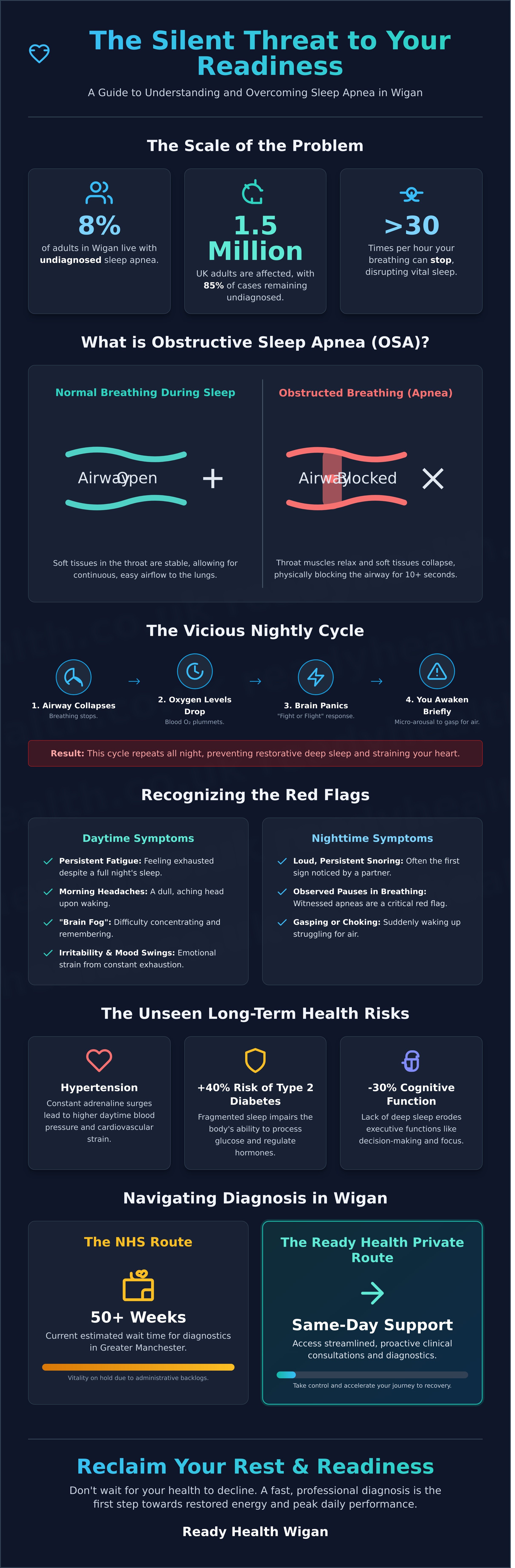
The scale of the issue in the UK is significant. Data from the British Lung Foundation indicates that approximately 1.5 million adults live with obstructive sleep apnea, though an estimated 85% of these cases remain undiagnosed. In the Greater Manchester area, local health audits suggest that 13% of the adult population experiences symptoms of sleep-disordered breathing. This isn't just a minor nighttime nuisance. It's a metabolic and cardiovascular challenge that leaves the body ill-prepared for the rigours of modern life. For a comprehensive overview of sleep apnea, it's helpful to look at how these breathing pauses disrupt the delicate balance of our internal systems.
The Mechanics of Interrupted Breathing
The disruption occurs in two primary ways. Obstructive Sleep Apnea (OSA) happens when the soft tissues in the throat relax excessively, physically blocking the passage of air. In contrast, Central Sleep Apnea (CSA) is a neurological lapse where the brain temporarily stops sending the necessary signals to the muscles that control breathing. An apnea is a pause in breathing lasting at least 10 seconds.
- Micro-arousals: These are brief shifts to a lighter stage of sleep that you likely won't remember.
- REM Deprivation: Frequent arousals prevent the body from entering deep, restorative REM cycles.
- Oxygen Dips: Each pause causes blood oxygen levels to plummet, forcing the heart to work harder.
The Long-Term Impact on Vitality and Health
Leaving the condition unmanaged creates a cascade of health risks that extend far beyond simple fatigue. Clinical studies show that untreated sleep apnea is linked to a 40% increase in the risk of developing Type 2 diabetes and a significant rise in hypertension. The constant strain on the cardiovascular system during the night translates to higher blood pressure during the day, undermining your long-term vitality. We see many Wigan professionals who attribute their persistent "brain fog" to workplace stress, when the reality is often a lack of oxygen saturation during the night.
Metabolic health relies on the synergy between deep sleep and hormonal regulation. When sleep is fragmented, the body's ability to process glucose and manage inflammation is severely hindered. This prevents you from reaching a state of optimal health, regardless of your diet or exercise routine. True Readiness starts with ensuring that every breath you take during the night supports your recovery rather than interrupting it. Addressing these breathing pauses is the first step toward reclaiming your energy and protecting your future health.
The Science of Sleep Interruption: How OSA Erodes Your Daily Readiness
When you stop breathing during the night, your body undergoes a violent physiological shift. This isn't a peaceful pause; it's a biological emergency. As blood oxygen levels plummet, your brain triggers a "fight or flight" response, surging adrenaline and cortisol through your system to force a gasp for air. This repetitive stress cycle prevents you from reaching deep, restorative REM sleep. While you might not remember these micro-awakenings, your heart and nervous system certainly do. For many in Wigan, this nightly trauma results in a state of permanent exhaustion that no amount of caffeine can fix.
The belief that you can simply "power through" this level of fatigue is a biological myth. When recovery is compromised at a cellular level, your cognitive readiness disappears. Research from 2022 indicates that even a single night of fragmented sleep can reduce executive function by 30%. This erosion of mental clarity often manifests as irritability or sudden mood swings, which can place a heavy emotional burden on Wigan families. Partners often bear the brunt of this strain, witnessing the personality shifts that occur when a loved one is constantly operating in a state of survival rather than vitality.
Understanding the clinical mechanics is the first step toward reclaiming your energy. Seeking NHS guidance on sleep apnoea is a vital starting point for those experiencing gasping or choking sounds during the night. Professional diagnosis identifies how often these interruptions occur, moving the conversation from guesswork to actionable data. This data is central to managing sleep apnea effectively and restoring the "readiness" required for a demanding modern life.
AHI Scores and Severity Levels
Clinical severity is measured using the Apnea-Hypopnea Index (AHI), which calculates the average number of breathing pauses per hour. A score of 5 to 14 is classified as mild; 15 to 30 is moderate; and anything above 30 is considered severe. During a polysomnography study, clinicians monitor brain waves and heart rates to determine these figures. It's vital to recognize that even a "mild" AHI score of 7 can significantly reduce daytime cognitive performance, leaving you feeling perpetually unready for the day's challenges.
The Connection to Weight and Lifestyle in the North West
Local health data suggests that lifestyle factors in the North West play a significant role in respiratory health. In Wigan, where adult obesity rates have hovered around 70% in recent years, the physical pressure on the airway is a primary concern. A neck circumference greater than 17 inches (43cm) for men or 16 inches (40cm) for women often serves as a primary physical indicator of risk. Excess tissue around the throat increases the likelihood of airway collapse during sleep, making weight management a cornerstone of recovery.
We view science-backed lifestyle optimization as a proactive tool rather than a chore. By focusing on nutrient density and physical activity, you can reduce the mechanical obstructions that cause sleep apnea. Small, intentional changes to your daily ritual can lead to profound improvements in airway patency. To support your body’s natural recovery processes, consider how optimizing your nutritional foundation can enhance your overall resilience and sleep quality. This integrated approach ensures you aren't just surviving the night, but preparing for a high-performance life.
Navigating Diagnosis in Wigan: Private vs. NHS Clinical Routes
Wigan's local NHS trusts, including Wrightington, Wigan and Leigh, provide exceptional specialist care once you enter the system. However, the 2024 healthcare data reveals a growing backlog for non-urgent sleep clinics, with some patients waiting over 18 weeks for an initial assessment. When you're battling the daily exhaustion caused by sleep apnea, months of waiting isn't just an inconvenience; it's a barrier to your long-term vitality and cognitive performance.
The primary difference begins at the first point of contact. A standard NHS GP slot typically lasts 10 minutes, which is often insufficient to explore the complex health risks of sleep apnea or its impact on your metabolic health. At our clinic in Standish, private consultations extend to 15 or 30 minutes. This extra time allows for a deep dive into your symptoms, lifestyle, and physiological markers, ensuring no detail is overlooked in your path to recovery. We focus on the "Referral Gap," which is the period of clinical limbo between your first appointment and seeing a specialist. We bridge this by coordinating your care directly, ensuring you don't feel lost in the system.
For those who find the fatigue too overwhelming for travel, we offer local home visits across Wigan. This service ensures you can begin your journey to better health from the comfort of your own home, removing the stress of navigating busy hospital corridors while sleep-deprived. It's about making the process of getting well as seamless and sustainable as possible.
Local Wait Times and Access in Greater Manchester
The traditional journey from your first symptom to receiving a CPAP machine involves multiple layers of bureaucracy. In Greater Manchester, this process frequently takes six months or longer. We believe in being "Ready" now. By choosing a private route, you can establish a diagnostic baseline within 72 hours rather than waiting for a distant hospital slot. Ready Health maintains CQC-regulated standards, providing a benchmark for local private care that mirrors the safety of the NHS but with the speed of a premium service.
The Private GP Advantage for Sleep Disorders
A private GP does more than just refer; they investigate the "why" behind your fatigue. We use comprehensive blood tests to examine Thyroid function and HbA1c levels, ruling out other medical causes of chronic tiredness that might mimic or worsen sleep apnea symptoms. This holistic approach ensures your treatment plan is built on a foundation of precise data. If you have health insurance or wish to self-fund, a Private GP Consultation Wigan provides the formal referral letter needed to access specialist consultants or private sleep studies immediately. Our goal is to streamline your experience, turning a complex medical hurdle into a manageable daily ritual of improvement.
- Rapid Assessment: Secure an appointment within 24 to 48 hours for immediate peace of mind.
- Detailed Diagnostics: Access to full metabolic panels and blood work to rule out underlying deficiencies.
- Specialist Network: Direct links to leading UK sleep consultants for faster clinical intervention.
- Home-Based Care: Professional clinical visits in your own Wigan residence for maximum convenience.
Recognizing the Red Flags: When to Consult a Private GP in Standish
Identifying sleep apnea requires a shift in perspective. It's not just about a bad night's sleep; it's about your body's ability to maintain a baseline of functional health. While you're asleep, your body should be repairing tissue and consolidating memory. When this process is interrupted by breathing pauses, the physical toll is cumulative and significant. Recognizing the symptoms early allows you to regain control over your vitality before chronic fatigue sets in.
The primary nocturnal symptoms are often the most dramatic. You might experience:
- Loud, persistent snoring: This affects approximately 40% of adult men and 24% of adult women in the UK.
- Gasping for air: Waking up suddenly with a choking sensation indicates a total airway collapse.
- Frequent waking: In severe cases, these interruptions can occur 30 times or more per hour.
Daytime symptoms are equally telling. Many patients report waking with a dull, throbbing morning headache caused by fluctuating oxygen levels during the night. You might also notice a sharp decline in concentration, often described as "brain fog," which makes simple tasks feel insurmountable. The most reliable way to quantify this is the Epworth Sleepiness Scale. This 8-point self-assessment measures your likelihood of nodding off during daily activities. A score of 11 or higher is a clear signal that you need a professional clinical review.
Your partner is often the first person to notice the condition. They witness the "witnessed apneas," which are the silent pauses in your breathing that you don't remember. This observation is a critical piece of diagnostic evidence. If your spouse has expressed concern about your breathing patterns, it's time to seek a formal evaluation.
The "Tired All The Time" (TATT) Evaluation
It's essential to distinguish between normal tiredness and the pathological fatigue associated with sleep apnea. Standard tiredness follows a period of exertion; pathological fatigue persists regardless of how many hours you spend in bed. To ensure an accurate diagnosis, we often look at the broader picture. Fatigue can be multifaceted. Integrating a Well Man Blood Profile Wigan or a Well Woman equivalent helps rule out secondary causes like iron deficiency or thyroid dysfunction. This comprehensive approach ensures your treatment plan addresses every factor impacting your energy levels.
The Driving and Employment Risk
Safety is a non-negotiable priority for Wigan’s commuting workforce. The DVLA has strict requirements regarding obstructive sleep apnea syndrome. If your condition causes excessive daytime sleepiness, you're legally required to stop driving and notify the DVLA until your symptoms are controlled. Research from the Sleep Apnea Trust suggests that untreated patients are three times more likely to be involved in a road traffic accident. This risk extends to the workplace, particularly for those in manual or high-stakes roles. If your symptoms are impacting your ability to work safely, clinical documentation is vital. We provide Private Sick Notes or Fit Notes to ensure you have the necessary paperwork to protect your employment while you seek treatment.
Take the first step toward restorative sleep and peak performance. Book your private consultation in Standish today.
Reclaiming Your Rest: How Ready Health Wigan Supports Your Recovery
Sleep isn't just a pause in your day; it's the foundation of your biological readiness. At Ready Health, we view the diagnosis of sleep apnea not as a clinical hurdle, but as the essential first step toward reclaiming your daily vitality. Waiting 18 weeks or longer for an initial assessment through traditional channels can drain your energy and resolve. We've structured our Wigan practice to eliminate these delays, providing a proactive pathway to clarity and recovery that respects your time and your health goals.
You don't have to navigate a complex bureaucracy to get answers. We offer same-day or next-day appointments at our Standish clinic, ensuring that your journey toward better breath begins when you're ready to take action. Our approach combines clinical precision with a supportive, lifestyle-oriented perspective. We focus on the science of sleep while maintaining a commitment to the person behind the symptoms. It's about moving from a state of constant fatigue to one of sustained performance.
Your Consultation at our Standish Clinic
Located at 2 High St, Standish, our clinic provides a professional yet welcoming environment that feels distinct from a traditional, sterile medical setting. During your consultation, we conduct a detailed review of your symptoms and a physical check. We look at the synergy between your lifestyle, anatomy, and sleep patterns. If traveling to Standish is difficult, we provide Home Visits for residents within a 10-mile Wigan radius, bringing expert clinical care directly to your doorstep. This flexibility ensures that every resident in the borough has access to high-tier diagnostic planning without the stress of a long commute.
Next Steps: From Assessment to Optimized Sleep
Once we've established a clinical baseline, we use science-backed diagnostics to guide your next steps. This process often includes specific blood panels to investigate markers that correlate with sleep quality, such as HbA1c levels for metabolic health or thyroid function tests. We bridge the gap between your initial concerns and specialist sleep therapy. Whether your path involves a referral for a formal polysomnography or guidance on immediate lifestyle interventions, we remain your dedicated partner. We help you understand the data behind options like CPAP or mandibular advancement devices, ensuring you feel empowered rather than overwhelmed by the technology.
Our clinical team prioritizes transparency and simplicity. We've done the hard work of researching the most effective diagnostic pathways so you can focus on your recovery. By integrating clinical authority with a genuine interest in your long-term wellness, we ensure that your treatment plan is both effective and sustainable. We don't just look for the absence of illness; we look for the presence of health. This means evaluating how your sleep impacts your heart health, your cognitive function, and your overall mood.
True health means being prepared for the demands of your life, and that preparation starts with every breath you take during the night. Our goal is to move you from a state of exhaustion to one of optimal performance. Don't let another night of interrupted rest impact your long-term health or your ability to show up for your family and career. Book your private GP appointment in Wigan today and start your journey toward a more rested, ready version of yourself. Your breath is your life force; it's time to protect it with professional, local care.
Prioritise Your Vitality and Wake Up Ready
Restorative sleep is the foundation of your daily performance. It's more than just avoiding fatigue; it's about ensuring your body has the oxygen it needs to function at its peak. Untreated sleep apnea can increase the risk of cardiovascular issues by up to 30%, making early intervention a critical health priority for 2026. By choosing a streamlined clinical path, you bypass the typical 18 week waiting times often found in overstretched traditional routes, securing the clarity you need to move forward with confidence.
At Ready Health, our CQC-regulated clinic in Standish bridges the gap between clinical excellence and personal convenience. We offer same-day and next-day appointments with qualified GPs who understand that your time is as valuable as your health. You'll receive professional, compassionate care designed to restore your natural sleep rhythm and long-term vitality. Our goal is to move you from a state of exhaustion to one of total readiness. We've done the research and refined our processes so you can focus on feeling your best.
Don't let another night of interrupted rest erode your potential. Take control of your health and book a private GP consultation in Wigan today. We're here to support your journey toward a more energized, balanced life.
Frequently Asked Questions
Can I get a private sleep apnea test in Wigan?
Yes, you can access private sleep apnea testing in Wigan through specialized wellness clinics and home-based diagnostic services. These private assessments bypass lengthy wait times, providing you with a medical-grade pulse oximeter or a comprehensive respiratory polygraphy kit to use in your own bed. Results are typically reviewed by a consultant within 7 to 10 days, offering a swift and clear path to treatment.
How long is the wait for a sleep study in Greater Manchester?
Current NHS waiting times for a sleep study in Greater Manchester vary, but patients often wait between 18 and 36 weeks for an initial assessment. Recent data from local hospital trusts indicates that high demand can extend this period, particularly for non-urgent cases. Choosing a private route can reduce this wait to less than 14 days, ensuring you regain your vitality and focus much sooner.
Is loud snoring always a sign of sleep apnea?
Loud snoring isn't always a definitive sign of sleep apnea, though it remains a primary red flag. Research from the British Snoring & Sleep Apnoea Association shows that while 40% of the UK population snores, only a portion suffer from true obstructive events. You should look for additional markers like gasping for air or witnessed pauses in breathing, which occur when the airway partially collapses during rest.
What are the main symptoms of sleep apnea in females?
Women often experience sleep apnea through subtle symptoms like morning headaches, insomnia, and persistent fatigue rather than the classic loud snoring seen in men. Clinical studies suggest that 1 in 4 women are at high risk for the condition, yet they're frequently misdiagnosed with anxiety or depression. Recognizing these nuanced signs is essential for securing the right support and restoring your daily physiological balance.
Can a private GP in Wigan refer me for a sleep study?
Yes, a private GP in Wigan can provide a direct referral for a sleep study to both private clinics and NHS secondary care. This proactive approach eliminates the administrative hurdles often found in traditional primary care pathways. At Ready Health, we prioritize your readiness for life by ensuring your diagnostic journey is streamlined, professional, and backed by clinical expertise from the very first consultation.
Will I lose my driving licence if I am diagnosed with sleep apnea?
You won't automatically lose your driving licence, but you must notify the DVLA if your condition causes excessive daytime sleepiness. According to UK driving regulations, most drivers retain their licence once they demonstrate that their symptoms are controlled through effective treatment like CPAP therapy. Compliance is monitored, and many patients return to the road safely within weeks of starting their personalized recovery plan.
Does losing weight really cure obstructive sleep apnea?
Weight loss can significantly improve or even resolve obstructive sleep apnea in many individuals. Clinical data indicates that a 10% reduction in body weight is associated with a 26% improvement in the Apnea-Hypopnea Index (AHI) score. While it's a powerful tool for long-term health, weight loss works best as part of a synergistic plan that includes immediate respiratory support to ensure you stay energized.
What is the cost of a private GP consultation for sleep issues in Wigan?
A private GP consultation for sleep issues in Wigan typically costs between £150 and £250 for an initial 30-minute assessment. This fee covers a comprehensive review of your medical history and a bespoke diagnostic plan tailored to your lifestyle. Investing in a private consultation ensures you receive the dedicated time needed to explore science-backed solutions for your sleep health without the pressure of a rushed appointment.

Article by
Shamir Patel
Shamir Patel is a UK-based Clinical Pharmacist and Independent Prescriber with a specialist focus on ADHD and weight management.
He is the Registered CQC Manager at Ready Health Medical Clinic, where he leads the development and delivery of safe, patient-centred services across ADHD assessment and treatment, weight loss programmes, and general medical care.
With a career spanning nearly three decades since qualifying in 1995, Shamir brings extensive clinical and operational experience across both community pharmacy and private healthcare.
He also serves as Deputy Superintendent Pharmacist and Lead Prescriber at PillSorted. He oversees high-volume prescribing services. He focuses on GLP-1 weight loss treatments and clinical governance.
Shamir is a SCOPE-accredited obesity specialist and has a strong interest in improving access to evidence-based ADHD care. He is known for his structured, guideline-driven approach, aligning his clinical practice with NICE recommendations and regulatory standards set by the GPhC and CQC.
Alongside his clinical work, Shamir is actively involved in mentoring prescribing pharmacists, developing standard operating procedures, and contributing to service innovation within digital and community healthcare settings. His work reflects a commitment to safe prescribing, patient education, and improving outcomes through practical, accessible care.
Disclaimer
The information on this website is provided for general educational and informational purposes only and is not intended as medical advice, diagnosis, or treatment. Articles reflect general guidance and may not be suitable for your individual circumstances. You should always seek advice from a qualified healthcare professional before starting, stopping, or changing any treatment, medication, or healthcare plan. While we aim to keep our content accurate and up to date, Ready Health makes no guarantees about the completeness, accuracy, or suitability of the information provided. Reliance on any information on this site is entirely at your own risk. If you have concerns about your health, please book an appointment with a suitably qualified clinician. In an emergency, contact 999 or attend your nearest A&E department.


