

Last Tuesday, a resident in Standish shared that they hadn't slept past 4:00 AM for 14 consecutive nights because of a persistent, itchy throat and nasal congestion. You've likely felt that same exhaustion. It's easy to feel frustrated when hayfever symptoms disrupt your daily ritual and leave you feeling less than optimal during the peak of the Wigan summer.
The NHS reports that 20% of UK residents experience seasonal allergies, yet many struggle to find a treatment plan that actually works. We'll show you how to distinguish these triggers from a lingering cold and provide a science-backed roadmap to regaining your vitality. You will learn about local pollen patterns and the professional clinical options available to ensure you stay prepared for every outdoor challenge.
This article is for informational purposes only and does not constitute medical advice. Please consult a qualified healthcare professional before making any health decisions.
Key Takeaways
- Learn to accurately identify common hayfever symptoms and understand how your immune system responds to environmental allergens in the Wigan area.
- Discover how to differentiate between seasonal allergies and a standard cold by monitoring symptom duration and mucus consistency.
- Identify local high-risk pollen hotspots, such as Haigh Woodland Park, and understand the regional calendar for tree and grass pollen.
- Master practical barrier methods and lifestyle adjustments, such as using petroleum jelly and wraparound sunglasses, to reduce your daily allergen exposure.
- Explore the benefits of seeking professional clinical support at our Standish clinic for personalised, rapid-access allergy management.
Common Hayfever Symptoms: More Than Just a Runny Nose
Hayfever, or allergic rhinitis, affects approximately 25% of the UK population every year. It isn't just a seasonal nuisance; it's a specific immune overreaction where your body misidentifies harmless environmental allergens, such as grass or tree pollen, as a biological threat. Recognising your unique hayfever symptoms is the first step toward reclaiming your vitality during the high-pollen months in Wigan.
Allergic conjunctivitis often accompanies the condition, leaving your eyes red, watery, or uncomfortably puffy. You might also experience frequent sneezing fits and a persistent cough as your respiratory system attempts to expel the irritating particles. A blocked or runny nose is a hallmark sign, but you may also notice secondary issues like a temporary loss of smell or an earache caused by Eustachian tube congestion. Many patients also report a dull, heavy pain around the temples or forehead, which mirrors the sensation of a tension headache.
The Physical Toll of Seasonal Allergies
The impact of hayfever extends far beyond a few sneezes. Poor sleep quality is a common consequence of nasal congestion, often resulting in daytime fatigue and heightened irritability. You might notice the appearance of "allergic shiners," which are dark, swollen circles under the eyes caused by restricted blood flow in the facial sinuses. This physical strain can disrupt your daily ritual and lower your overall productivity. Itching is another pervasive issue, often felt deep in the throat, the roof of the mouth, or even inside the ears.
When Symptoms Become Severe
For some, hayfever can trigger more complex reactions like pollen food syndrome. This affects roughly 2% of the adult population and causes your lips or mouth to tingle or swell after eating certain raw fruits, such as apples or cherries, that share similar proteins with pollen. If you live with asthma, you may find that high pollen counts significantly worsen your wheezing or breathlessness. It is wise to seek a professional clinical review if your hayfever symptoms don't respond to standard treatments or if they begin to limit your ability to enjoy an active outdoor lifestyle.
Hayfever or a Cold? How to Spot the Difference
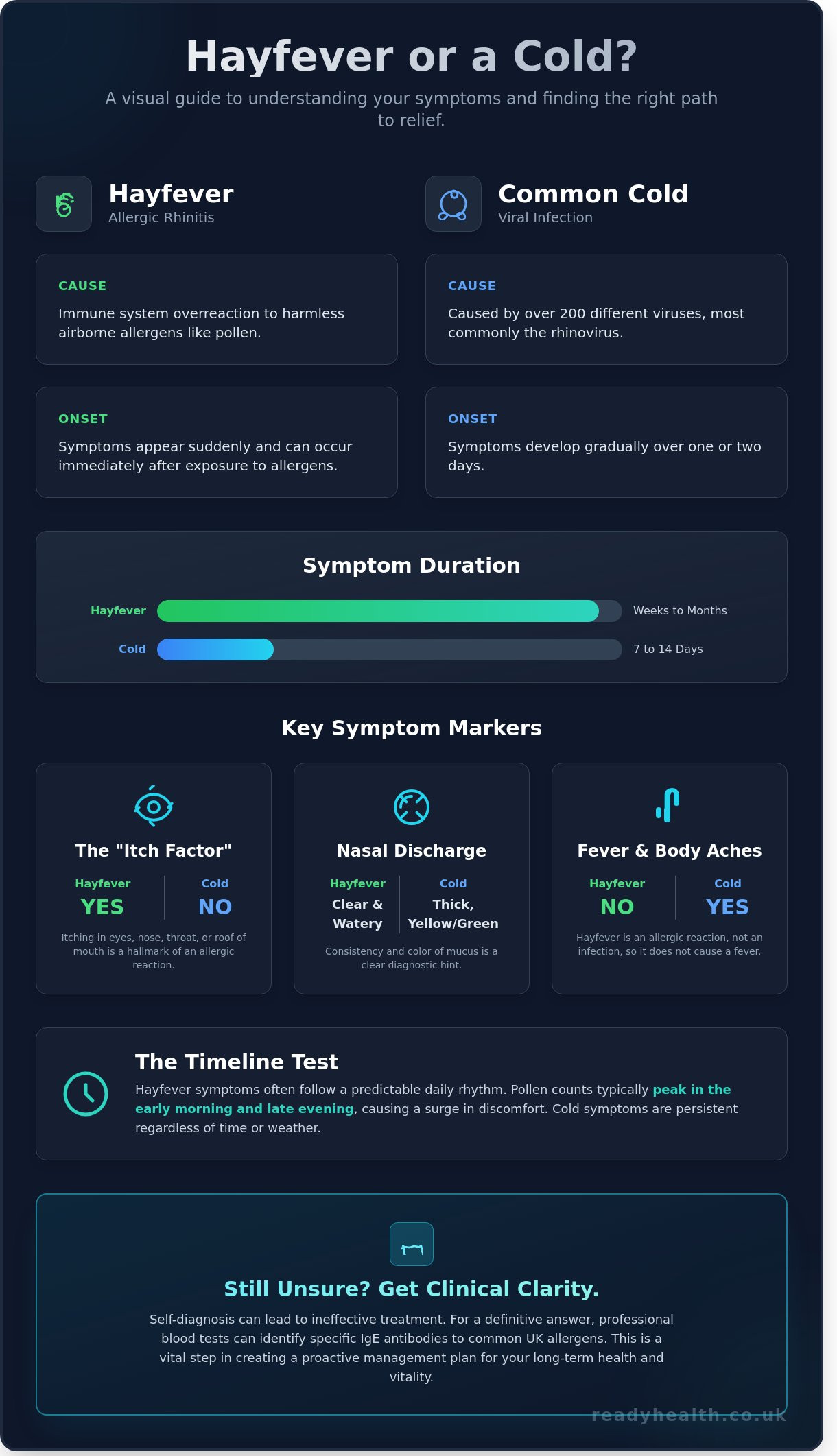
Distinguishing between a common cold and hayfever symptoms can be challenging because both conditions share a similar profile of congestion and sneezing. However, understanding the subtle clinical markers allows you to choose the most effective path towards relief. While a viral cold typically runs its course within 7 to 14 days, seasonal allergies persist as long as you are exposed to environmental triggers.
The consistency of nasal discharge provides a clear diagnostic hint. Hayfever usually produces a thin, watery fluid that remains clear throughout the reaction. In contrast, a cold often results in thicker mucus that may turn yellow or green as your body responds to the virus. You should also look for the "itch factor." Itching in the eyes, throat, or roof of the mouth is a hallmark of an allergic response; colds don't itch.
- Duration: Colds last 1 to 2 weeks; hayfever lasts for the duration of the pollen season.
- Fever: Hayfever does not cause a high temperature or body aches.
- Itching: Allergic reactions almost always involve intense itching in the nose or eyes.
The Timeline Test
Your symptoms often follow a predictable daily rhythm if they are allergy-based. Pollen counts in Wigan typically peak during the early morning and late evening, leading to a noticeable surge in discomfort during these windows. If your sneezing fits happen regardless of the weather, location, or time of day, a virus is the more likely culprit. We recommend tracking your experiences over a 14-day period to identify these specific environmental patterns.
Clinical Diagnostics for Certainty
Self-diagnosis can lead to unnecessary or ineffective medication use. For those seeking definitive answers, our blood test packages can identify specific IgE antibodies to common UK allergens like grass, tree pollen, or dust mites. Professional phlebotomy services in Standish ensure the testing process is seamless and accurate. Gaining this clinical clarity is a vital step in creating a proactive management plan that supports your long-term vitality. You can book a consultation with our team to discuss your hayfever symptoms and explore personalised treatment options.
This article is for informational purposes only and does not constitute medical advice. Please consult a qualified healthcare professional before making any health decisions.
The Impact of Local Pollen in Wigan and Standish
Wigan’s unique blend of industrial heritage and vast green spaces creates a complex environment for allergy sufferers. If you find your hayfever symptoms peaking during a walk along the Leeds-Liverpool Canal, it isn't a coincidence. The water’s edge often hosts high concentrations of nettle and dock pollen. Lancashire’s characteristic damp, humid climate also plays a role. Moisture in the air can cause pollen grains to swell and burst, releasing smaller, more irritant particles that remain trapped at ground level where you breathe them in.
Wigan town centre often experiences the urban heat island effect. Concrete surfaces and buildings absorb heat during the day and radiate it back at night. This process prevents pollen from settling, keeping it airborne for longer periods than in rural areas. You might notice your symptoms feel more intense near the Grand Arcade or Wallgate than in the more open outskirts of the borough. This trapped heat can also make the air feel heavier, potentially exacerbating respiratory discomfort.
Wigan’s Specific Allergen Profile
The local landscape dictates your specific triggers. In Standish, the abundance of Silver Birch, Oak, and Plane trees means tree pollen season often starts early, typically around March. Research from the National Pollen and Aerobiology Research Unit suggests tree pollen affects about 25% of UK hayfever sufferers. As we move into June, the focus shifts to agricultural grass pollen. Prevailing westerly winds from the Irish Sea can carry these allergens from the Lancashire plains directly into the borough, creating a high-exposure environment even on days that feel relatively still.
Managing the Local Environment
Strategic planning can significantly reduce your exposure. Haigh Woodland Park is a local gem, but its dense tree canopy makes it a high-risk zone during peak counts. Pollen levels generally peak between 5:00 am and 10:00 am, and again in the late evening as the air cools. If you're a Wigan commuter, keep your car windows closed on the A49 and ensure your cabin pollen filter was replaced within the last 12 months. Localised data is your best tool for managing hayfever symptoms daily. We recommend checking the Met Office's North West England forecast, which provides specific daily counts for the Wigan area.
- Avoid Haigh Woodland Park during the early morning peak counts.
- Keep car windows closed when driving through Standish or the town centre.
- Shower and change clothes immediately after spending time outdoors in local parks.
- Monitor the North West regional pollen forecast for daily alerts.
Practical Steps for Hayfever Relief and Prevention
Managing your hayfever symptoms starts with reducing your total pollen load through physical barriers. A simple yet effective technique involves applying a thin layer of petroleum jelly around the base of your nostrils. This creates a functional trap that captures pollen grains before you inhale them, which may help lower the severity of your internal allergic response.
When you're out walking through the greener areas of Shevington or Orrell, protection is essential. Wraparound sunglasses are a practical tool to shield your eyes from airborne allergens that trigger itching and redness. Once you return home, make it a daily ritual to shower and change your clothes immediately. Pollen is incredibly sticky; removing it from your hair and skin prevents you from spreading these triggers across your furniture and bedding.
Your indoor environment should remain a sanctuary for recovery. Keep your windows firmly shut during days with high pollen counts, particularly in the early morning when levels are often at their peak. Most trees and grasses release their pollen as the sun rises, typically between 05:00 and 10:00. By keeping your home sealed during these hours, you significantly reduce the concentration of allergens in your living space.
Home and Lifestyle Adjustments
Investing in a vacuum cleaner equipped with a HEPA filter can make a measurable difference to your indoor air quality. These filters are designed to trap 99.97% of dust and pollen particles, preventing them from being recirculated into the air you breathe. It's also wise to avoid drying your laundry outside on high-count days. Wet fabric acts like a magnet for floating spores, which you then bring directly into your bedroom.
Don't forget the impact of your pets on your hayfever symptoms. Dogs and cats often carry high volumes of pollen in their fur after spending time in long grass. Regularly wiping down your pet's coat with a damp cloth after a walk helps maintain a low-allergen environment for everyone in the household. This proactive approach ensures your home remains a place of vitality rather than a source of irritation.
Over-the-Counter vs. Prescription Support
Many people find initial relief using non-drowsy antihistamines or steroid nasal sprays available at local pharmacies. These medications work by blocking histamine or reducing inflammation in the nasal passages. However, if your hayfever symptoms remain disruptive despite these efforts, you might require more targeted clinical intervention to regain your balance.
A private GP appointment allows for a detailed review of your history and the prescription of higher-strength treatments tailored to your needs. For those who find standard medications ineffective, medication response DNA testing can provide scientific insights into how your body metabolises specific drugs. This science-backed data ensures we choose the most effective treatment path for your unique biology, helping you stay ready for the season ahead.
This article is for informational purposes only and does not constitute medical advice. Please consult a qualified healthcare professional before making any health decisions.
Clinical Solutions for Hayfever at Ready Health
Ready Health in Standish serves as a dedicated hub for those seeking rapid relief from persistent hayfever symptoms. We've designed our private GP service to remove the hurdles often found in traditional primary care. You'll benefit from extended appointment times, typically lasting 30 minutes, allowing our clinicians to conduct a deep dive into your medical history. There are no waitlists to join; we focus on immediate access so you can return to your daily routine without the fog of seasonal allergies.
Our approach is holistic and evidence-based. We don't just treat the surface issues. We aim to understand the underlying mechanics of your allergic response. For individuals with severe symptoms that fail to respond to over-the-counter options, we offer a specialised hayfever injection service. This clinical intervention is carefully managed to ensure safety and efficacy for those whose quality of life is significantly impacted by pollen. It's a high-performance solution for those who need to remain sharp and focused throughout the spring and summer months.
Advanced Allergy Care in Standish
Our clinicians start by identifying your specific triggers. We use these insights to build a bespoke treatment programme that might include prescription-strength medications or targeted lifestyle adjustments. To further support your vitality, we offer vitamin injections. These can help optimise your immune system's resilience, ensuring your body is better equipped to handle environmental stressors during the peak of the season. Our clinic is conveniently located for residents across Wigan, Chorley, and Skelmersdale, providing a local solution for professional allergy management.
Take Control of Your Readiness
Don't wait for your hayfever symptoms to become unmanageable before seeking help. Being proactive allows you to stay ahead of the pollen count rather than constantly playing catch-up with your health. We make the process simple with same-day or next-day consultations often available. You can reclaim your summer and feel fully prepared for the outdoors. Book your consultation at Ready Health today to start your journey toward seasonal clarity and long-term wellness.
This article is for informational purposes only and does not constitute medical advice. Please consult a qualified healthcare professional before making any health decisions.
Take Control of Your Seasonal Wellbeing
Managing persistent hayfever symptoms requires a proactive strategy that goes beyond basic over-the-counter options. By monitoring local Wigan pollen counts, which typically peak between 5 am and 10 am, you can better time your outdoor activities to maintain your daily ritual. Understanding the specific triggers in the Standish landscape allows you to move from reactive relief to a state of clinical readiness.
Our CQC-regulated clinic provides the expert guidance needed to navigate these seasonal challenges. With same-day appointments available, our expert local clinicians offer science-backed solutions tailored to your unique physiology. We prioritise your long-term vitality, ensuring you have the tools to remain focused and energised throughout the spring and summer months.
Book a Private GP Consultation in Standish today to start your journey toward optimal balance. You don't have to let allergies dictate your lifestyle; we're here to help you feel prepared for every season.
This article is for informational purposes only and does not constitute medical advice. Please consult a qualified healthcare professional before making any health decisions.
Frequently Asked Questions
How can I tell if my child has hayfever or just a cold?
Check for itchy, watery eyes and a clear nasal discharge to distinguish between the two. While a common cold typically resolves within 7 to 10 days, hayfever symptoms persist for as long as the pollen count remains high. If your child doesn't have a fever but experiences frequent sneezing and an itchy throat, it's likely an allergic response rather than a viral infection.
Is it possible to develop hayfever for the first time as an adult in Wigan?
You can certainly develop new allergies at any age. Data from Allergy UK indicates that approximately 20% of sufferers experience their first symptoms well into adulthood. Moving to a new area like Wigan can expose your immune system to different environmental triggers, leading to a late-onset reaction. Our clinicians frequently support patients in their 30s and 40s who are navigating these seasonal challenges for the first time.
What is the best time of day to avoid pollen in the Standish area?
Stay indoors between 5:00 am and 10:00 am when plants release the majority of their pollen. Levels also peak again after 6:00 pm as the evening air cools and pollen grains descend back toward ground level. If you're planning a walk around Ashfield Park, midday is often the safest window as counts tend to be at their lowest point during the afternoon sun.
Can hayfever symptoms cause long-term damage to my health?
Untreated allergies rarely cause permanent damage but can lead to secondary complications like chronic sinusitis. Research shows that 80% of people with asthma find that hayfever symptoms make their respiratory condition significantly more difficult to manage. Proactive care ensures your immune system remains optimal and prepared, preventing seasonal inflammation from impacting your long-term vitality.
Do private hayfever injections really work for severe symptoms?
Clinical evidence suggests that corticosteroid injections provide a science-backed solution for those who don't respond to standard antihistamines. A single dose can often manage severe reactions for the duration of the high-pollen season, which typically lasts around 12 weeks. We prioritise a thorough assessment at our Standish clinic to ensure this treatment is the most effective and safe choice for your specific health journey.
How do I know which specific pollen is triggering my allergies?
The timing of your reaction is the most reliable indicator of your specific trigger. Tree pollen is most prevalent from March to May, while grass pollen typically peaks between June and July. For a precise diagnosis, we offer specific IgE blood tests that identify exactly which allergens are affecting you. This data-driven approach allows us to create a tailored management plan so you're always ready for the outdoors.
This article is for informational purposes only and does not constitute medical advice. Please consult a qualified healthcare professional before making any health decisions.

Article by
Shamir Patel
Shamir Patel is a UK-based Clinical Pharmacist and Independent Prescriber with a specialist focus on ADHD and weight management.
He is the Registered CQC Manager at Ready Health Medical Clinic, where he leads the development and delivery of safe, patient-centred services across ADHD assessment and treatment, weight loss programmes, and general medical care.
With a career spanning nearly three decades since qualifying in 1995, Shamir brings extensive clinical and operational experience across both community pharmacy and private healthcare.
He also serves as Deputy Superintendent Pharmacist and Lead Prescriber at PillSorted. He oversees high-volume prescribing services. He focuses on GLP-1 weight loss treatments and clinical governance.
Shamir is a SCOPE-accredited obesity specialist and has a strong interest in improving access to evidence-based ADHD care. He is known for his structured, guideline-driven approach, aligning his clinical practice with NICE recommendations and regulatory standards set by the GPhC and CQC.
Alongside his clinical work, Shamir is actively involved in mentoring prescribing pharmacists, developing standard operating procedures, and contributing to service innovation within digital and community healthcare settings. His work reflects a commitment to safe prescribing, patient education, and improving outcomes through practical, accessible care.
Disclaimer
The information on this website is provided for general educational and informational purposes only and is not intended as medical advice, diagnosis, or treatment. Articles reflect general guidance and may not be suitable for your individual circumstances. You should always seek advice from a qualified healthcare professional before starting, stopping, or changing any treatment, medication, or healthcare plan. While we aim to keep our content accurate and up to date, Ready Health makes no guarantees about the completeness, accuracy, or suitability of the information provided. Reliance on any information on this site is entirely at your own risk. If you have concerns about your health, please book an appointment with a suitably qualified clinician. In an emergency, contact 999 or attend your nearest A&E department.


