

A structured course of hypnotherapy for phobias in Preston may involve three sessions: relaxation, exploring a thought or event linked to the fear, then practising a different response to its trigger. You remain conscious and in control during hypnosis, so you can take part without handing over your choices. This guide covers common fears it may address, what can shape a session plan, and how to assess a practitioner’s training and approach.
Key Takeaways
- Recognise how phobias can affect everyday choices and which fears may be explored in hypnotherapy.
- Understand why session plans can vary, and what the three-session approach described in the article involves.
- Know what awareness and personal control during hypnosis may feel like.
- Learn what to consider when assessing a UK hypnotherapist’s training and professional registration.
Common fears and phobias
Phobias can affect everyday decisions, from choosing a route to planning a journey. Around 10 million British adults live with some kind of phobia. A fear may become limiting when it feels intense or leads you to avoid situations repeatedly, such as turning down social plans or changing travel arrangements.
Examples include fears of spiders, dogs, heights, flying, enclosed spaces, injections or public transport. You might avoid a lift because of claustrophobia or decline a flight because of a fear of flying. The trigger differs from person to person, as does its effect on work, relationships and daily routines.
A phobia may follow a stressful or traumatic event, or be learned from a family member. For example, a frightening encounter with a dog could become associated with later anxiety around dogs. Avoidance can strengthen a phobia over time, because it leaves fewer opportunities to experience the trigger differently.
Therapy, including hypnotherapy, may help you explore thoughts and responses associated with a fear. The Psychology Team says hypnotherapy can help change unhelpful thoughts and beliefs linked with phobias, and encourage calmer, more productive responses. It may be considered for a specific trigger, such as speaking in public or travelling by train.
Before treatment, ask the practitioner to explain any risks relevant to your situation. Agree how you can pause or stop an exercise, and ask what happens if you choose to do so. These questions clarify your options before you decide whether to begin.
To prepare for a discussion about hypnotherapy for phobias in Preston, note the situations you avoid and how they affect you. Record a specific example, such as missing an appointment because of a fear of injections. You can also note what you hope to do differently. These details give you a practical starting point for explaining your concerns and goals.
Estimated treatment sessions for different phobias
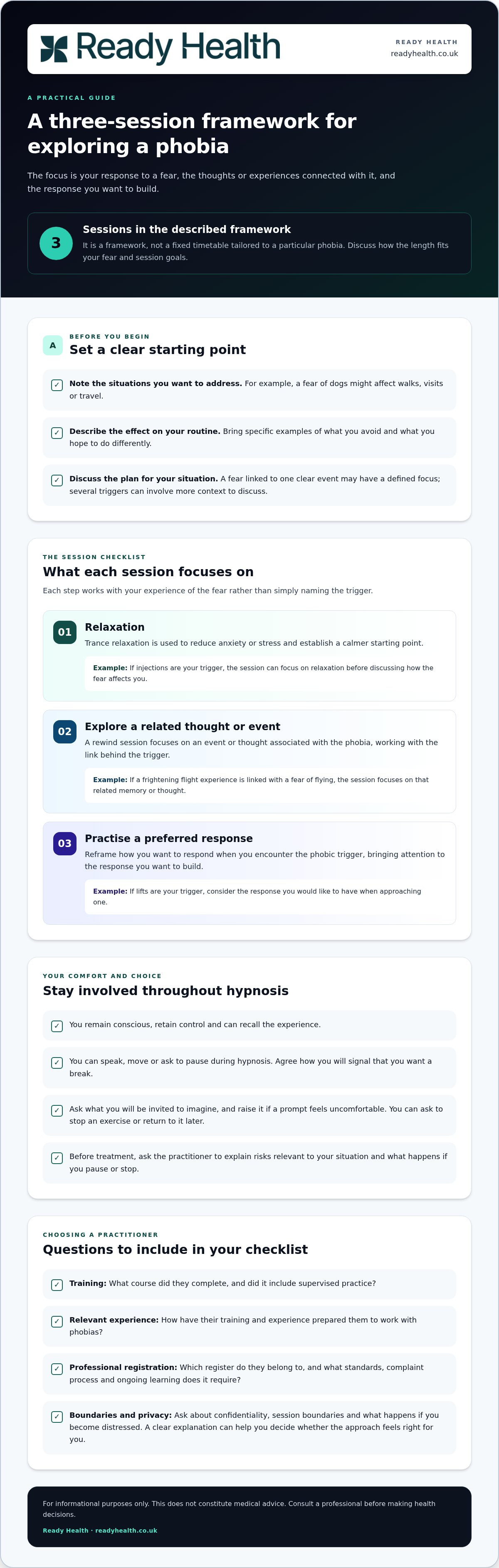
A structured plan for phobia treatment uses three sessions, whatever the trigger. This is a framework, not a fixed timetable tailored to spiders, flying or enclosed spaces. The work focuses on your response to the fear and the experiences or thoughts connected with it.
Session 1 uses trance relaxation to reduce anxiety or stress. For a fear of injections, for example, this session can focus on relaxation before discussing how the trigger affects you. It establishes a calmer starting point for the later work.
Session 2 uses a rewind session focused on an event or thought related to the phobia. If a frightening flight experience is linked with fear of flying, the session focuses on that related memory or thought. The aim is to work with the association behind the trigger, rather than simply naming the fear.
Session 3 involves reframing how you want to respond to the previous phobic trigger. Someone with a fear of lifts might consider the response they want when approaching one. This step brings attention to a preferred response, rather than rehearsing avoidance.
Different fears can involve different triggers and personal histories. A fear linked to one clear event may give the sessions a defined focus. A fear connected with several situations, such as travelling by train and entering crowded stations, involves more context to discuss. The plan centres on the trigger, its impact and the response you want to build.
Before treatment, write down the situations you want to address. For example, note whether a fear of dogs affects walks, visits or travel. Bring these examples to the first session, then review your responses to those triggers as the work progresses. This gives you practical points to discuss and helps clarify whether the three-session framework fits your goals. Discuss treatment length in relation to your specific fear and the focus of the sessions.
Awareness and control during hypnosis
Hypnosis involves focused attention, not the loss of awareness shown in stage performances. You remain conscious, retain control and can recall the experience.
Awareness During Hypnosis
You may find your attention settling on the therapist’s words or an imagined scene, while remaining aware of the room and your own thoughts. For example, while imagining a feared situation, you can notice whether the exercise feels manageable and tell the therapist what you’re experiencing.
Before starting, ask how the therapist will guide the exercise and what you’ll be invited to imagine. A clear explanation can help you decide whether the approach feels right for you. If a prompt feels uncomfortable, say so rather than trying to continue silently.
Maintaining Control During Hypnosis
You can speak, move or ask to pause during hypnosis. Agreeing how to signal that you want a break can help, especially if discussing a fear brings up anxiety. The therapist should explain the process and respect your boundaries as the session develops.
Consider what you need to feel comfortable taking part. You might prefer to discuss a prompt before trying it, or ask to stop an exercise and return to it later. These choices let you stay involved while deciding what you’re ready to explore.
Ask about the practitioner’s training, experience with phobias and professional registration. You can also ask how their approach fits your concern, such as fear of flying or injections. A clear answer should help you understand their experience and the limits of their role, rather than relying on a job title alone.
Use an introductory conversation to raise concerns about privacy, session boundaries or becoming distressed. Notice whether the practitioner answers in plain language and gives you time to consider the information. Feeling able to ask questions is a practical part of deciding whether to proceed.
What credentials or professional registration should a UK hypnotherapist have?
Before choosing a hypnotherapist, look beyond the job title and ask about their training. For example, ask what course they completed, whether it included supervised practice, and how it prepared them to work with phobias. Clear answers help you understand the practitioner’s experience and approach.
Professional registration is another point to explore. Ask which register the practitioner belongs to and what standards its members are expected to follow. Check how the register handles complaints and whether it requires ongoing learning. Registration can offer useful information, but it doesn’t replace a conversation about the practitioner’s specific experience with fears such as flying or enclosed spaces.
Use an initial discussion to understand how the practitioner would work with your situation. You could ask:
- How do you assess the fear and its effect on my daily life?
- What happens if I feel distressed during an exercise?
- How do you agree session goals and review progress?
- What other support might be appropriate if hypnotherapy doesn’t meet my needs?
Pay attention to whether the answers are specific and understandable. For instance, a practitioner discussing fear of dogs should explain how they would approach that trigger, rather than promise a particular result. You should also feel able to ask questions, pause an exercise or raise concerns without pressure.
Check that the practitioner explains confidentiality, session arrangements and any limits to their role before you begin. These details help you understand what to expect and how your information will be handled. If you have other health concerns or take medication, share relevant details with an appropriate healthcare professional so your support can be considered in context.
Ready Health offers hypnotherapy as part of its mental health and psychology services. If you want to discuss whether it may suit your phobia and circumstances, explore hypnotherapy support.
Ready Health: Private GP Consultation (15 Minutes)
Ready Health’s Private GP Consultation (15 Minutes) gives you time to discuss how a phobia affects your health and daily life. You can describe specific triggers, such as avoiding injections or feeling anxious about travelling, and explain what support you’re considering.
A GP consultation may be a useful next step if you want to discuss your concerns, talk about your health more broadly or understand possible support options. Bring a few notes about situations you avoid and the questions you want answered. This can help keep the conversation focused on what matters to you.
The consultation is not a promise of a particular outcome. It gives you an opportunity to discuss your circumstances with a GP and consider a suitable next step. To arrange a conversation, visit readyhealth.co.uk.
Choose a next step that feels manageable
Progress can begin with a clear conversation about the change you want to make. Consider what you hope to do more comfortably, whether that means attending an appointment, travelling or taking part in an activity you currently avoid. Naming a practical goal can help you explain what support you’re looking for.
If you’re considering hypnotherapy for phobias in Preston, Ready Health offers hypnotherapy through its mental health and psychology services. Discuss your concerns and explore whether this approach feels appropriate for your situation. You don’t need to have every answer before starting that conversation.
Contact Ready Health to discuss hypnotherapy and identify a suitable next step. Taking time to understand your options is a positive move towards feeling more prepared.
This content is for informational purposes only and does not constitute medical advice. Consult a qualified healthcare professional before making decisions about your health.
Frequently Asked Questions
Can everyone be hypnotised?
Not everyone responds to hypnosis in the same way, and nobody should be pressured to participate. Your willingness to engage and comfort with the process matter. Before starting, tell the practitioner if you feel unsure or have concerns about losing control. Ask them to explain the approach and agree how to pause an exercise if you want to stop.
How does hypnotherapy help me overcome my phobia?
Hypnotherapy may help you explore your thoughts and reactions around a feared situation, then practise a response that better supports your goals. For example, if anxiety stops you attending a routine appointment, you could discuss the trigger and what would help you feel more prepared. Progress varies, so focus on changes that matter in your daily life.
How does hypnotherapy work?
In a session, a therapist guides your attention using spoken prompts and relaxation. You may be invited to imagine a situation or consider thoughts connected with your fear. This is not stage-show hypnosis: you remain aware and can respond. Before beginning, ask what the exercise involves and how the therapist will adapt it if you feel uncomfortable.
What’s the next step in setting myself free of my phobia?
Start by choosing one situation you want to approach differently, then write down what makes it difficult and what you hope to manage. Discuss those notes with a practitioner and ask how they would structure support. Ready Health provides hypnotherapy through its mental health and psychology services, where you can discuss your concerns and possible next steps.
What phobias do Preston hypnotherapists commonly treat?
Hypnotherapists may work with specific fears, such as fear of flying, animals, enclosed spaces, heights or injections. The trigger and its impact are personal, so describe the situations you avoid rather than relying only on a label. For instance, explain whether anxiety affects a journey, an appointment or a particular place. This helps frame a useful discussion about your goals.
How many sessions of hypnotherapy are typically needed for a phobia?
A structured approach to phobias uses three sessions: relaxation, exploring a related event or thought, then reframing your response to the trigger. This is a treatment framework, not a universal timetable for every person or fear. The focus depends on your trigger, its history and what you want to change. Discuss how progress will be reviewed as sessions continue.

Article by
Shamir Patel
Shamir Patel is a UK-based Clinical Pharmacist and Independent Prescriber with a specialist focus on ADHD and weight management.
He is the Registered CQC Manager at Ready Health Medical Clinic, where he leads the development and delivery of safe, patient-centred services across ADHD assessment and treatment, weight loss programmes, and general medical care.
With a career spanning nearly three decades since qualifying in 1995, Shamir brings extensive clinical and operational experience across both community pharmacy and private healthcare.
He also serves as Deputy Superintendent Pharmacist and Lead Prescriber at PillSorted. He oversees high-volume prescribing services. He focuses on GLP-1 weight loss treatments and clinical governance.
Shamir is a SCOPE-accredited obesity specialist and has a strong interest in improving access to evidence-based ADHD care. He is known for his structured, guideline-driven approach, aligning his clinical practice with NICE recommendations and regulatory standards set by the GPhC and CQC.
Alongside his clinical work, Shamir is actively involved in mentoring prescribing pharmacists, developing standard operating procedures, and contributing to service innovation within digital and community healthcare settings. His work reflects a commitment to safe prescribing, patient education, and improving outcomes through practical, accessible care.
Disclaimer
The information on this website is provided for general educational and informational purposes only and is not intended as medical advice, diagnosis, or treatment. Articles reflect general guidance and may not be suitable for your individual circumstances. You should always seek advice from a qualified healthcare professional before starting, stopping, or changing any treatment, medication, or healthcare plan. While we aim to keep our content accurate and up to date, Ready Health makes no guarantees about the completeness, accuracy, or suitability of the information provided. Reliance on any information on this site is entirely at your own risk. If you have concerns about your health, please book an appointment with a suitably qualified clinician. In an emergency, contact 999 or attend your nearest A&E department.


