

Eligibility for private Mounjaro treatment may include a BMI of 30 or above, or a BMI of 27 or above alongside weight-related health risks. If you’re considering a Mounjaro clinic in Chorley, an assessment can help establish whether treatment is suitable for you.
It’s understandable to want clear answers before starting a prescription medicine. Mounjaro contains tirzepatide, and treatment involves more than getting a prescription: your health, eligibility and safety monitoring all matter.
This guide explains how Mounjaro works, the eligibility criteria, and how private assessment and prescribing fit together. You’ll also learn what monitoring may involve, so you can make a more informed decision about the process and ongoing care.
Key Takeaways
- Understand how tirzepatide works and why treatment is considered alongside wider weight-management support.
- Learn which BMI thresholds and weight-related health factors may be considered when assessing eligibility.
- See what information a clinician may review before deciding whether a prescription is suitable.
- Find out how follow-up and safety monitoring can support you during treatment.
- Explore what to discuss at a private GP consultation if you’re considering your next step.
Who is Eligible for Mounjaro?
For private treatment, eligibility may include a BMI of 30 or above, or 27 or above with weight-related health risks. In Chorley, NHS eligibility follows national criteria and depends on BMI, health conditions and the current treatment pathway.
For a clinical explanation of Mounjaro, watch this video:
Eligibility and BMI thresholds
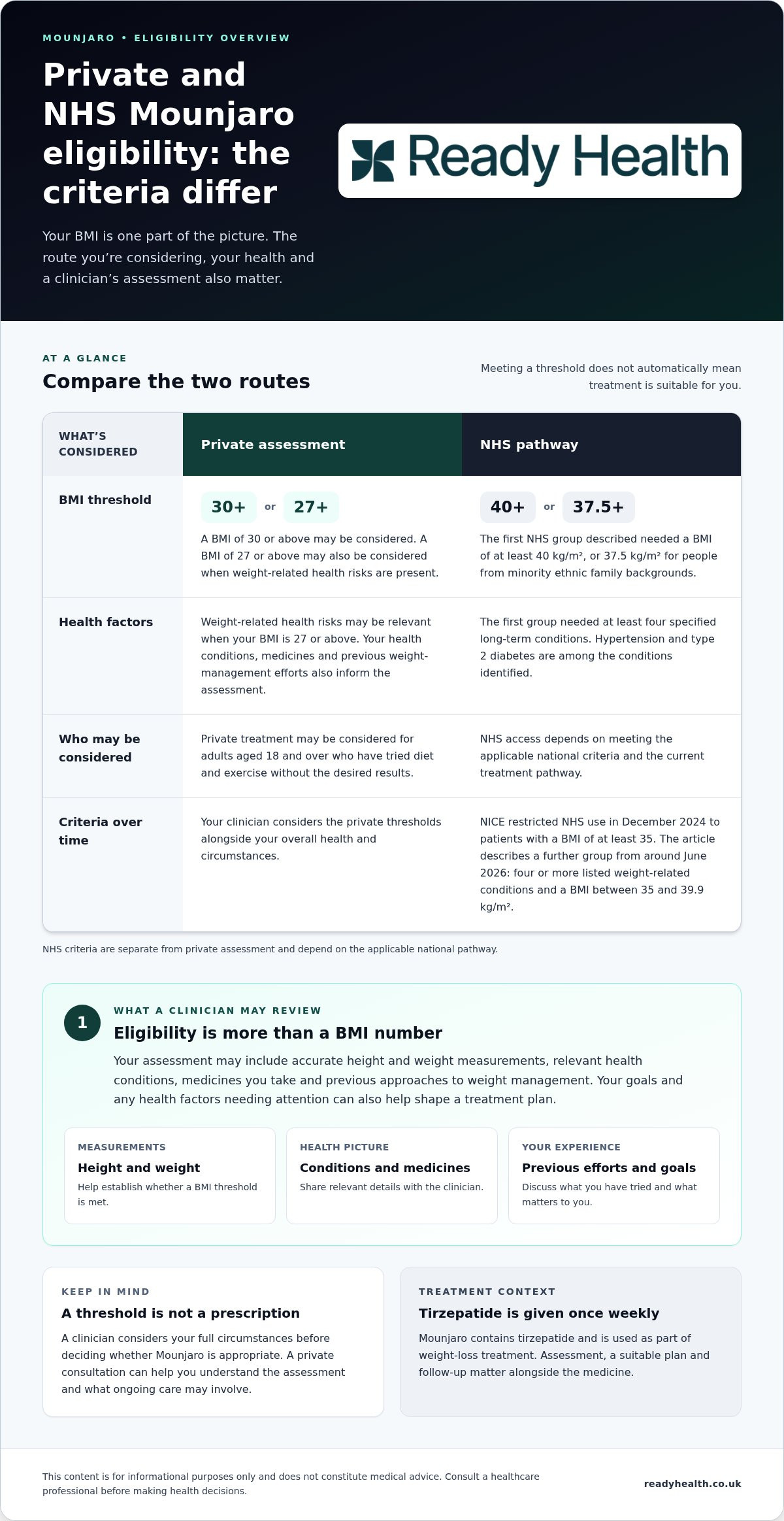
Private Mounjaro treatment may be considered for adults aged 18 and over who have tried diet and exercise without the desired results. A BMI of 30 or above is one threshold; a BMI of 27 or above may also qualify when weight-related health risks are present.
BMI compares your weight with your height, but it isn’t the only consideration. A clinician also needs to understand relevant health conditions and your previous weight-management efforts. Meeting a threshold doesn’t automatically mean the medicine is appropriate for you; those details inform the overall assessment.
Assessment and treatment planning
A useful assessment starts with accurate height and weight measurements and a clear account of your health history. Tell the clinician about weight-related conditions, previous approaches to weight management and medicines you currently take. This information helps determine whether you meet a BMI threshold and whether treatment suits your circumstances.
Your treatment plan should reflect the full assessment, not BMI alone. Discuss your goals, why you’re considering medication and any health factors that need attention. A private consultation gives you space to ask practical questions and understand what ongoing care may involve before deciding on a next step.
National and private eligibility criteria
NHS access has separate national criteria. The first group eligible for NHS Mounjaro weight management needed a BMI of at least 40 kg/m², or 37.5 kg/m² for people from minority ethnic family backgrounds, and at least four specified long-term conditions. Hypertension and type 2 diabetes are among the conditions identified.
From around June 2026, according to NICE, people may be eligible with four or more listed weight-related conditions and a BMI between 35 kg/m² and 39.9 kg/m². NICE restricted NHS use of Mounjaro in December 2024 to patients with a BMI of at least 35. These national criteria differ from private assessment: privately, a BMI of 30 or above, or 27 or above with weight-related health risks, may be considered. NHS access in Chorley depends on meeting the applicable national criteria and pathway.
Mounjaro (tirzepatide) weight-loss treatment
Mounjaro is a once-weekly injection containing tirzepatide, used as part of weight-loss treatment. In Chorley, you can access it through private weight-management clinics or an eligible NHS pathway, following clinical assessment.
CQC status and prescriber credentials relate to individual providers, so there isn’t one answer for every Mounjaro clinic in Chorley. Look for a thorough clinical assessment and a treatment plan that considers your health, medicines and follow-up needs.
Weight-loss results and clinical evidence
Clinical results offer context, not a personal forecast. In a 72-week trial, adults with obesity using tirzepatide lost an average of 20.2% of their body weight. Other clinical-study results report losses of up to 22.5% over 72 weeks, showing how outcomes can differ across study groups.
Head-to-head trial results reported average weight loss of 13.7% with semaglutide, compared with higher results for tirzepatide. These figures describe study participants and treatment periods, not a guaranteed result for you. Your progress can depend on your health, treatment plan and lifestyle support.
Choosing a qualified local clinic
When looking for local care, focus on how the clinic assesses you, who makes prescribing decisions and how follow-up is arranged. CQC registration applies to the provider, while a prescriber’s qualifications relate to the individual clinician. Neither factor alone shows whether Mounjaro suits your circumstances.
Ask about the clinical process: what health information is reviewed, how your plan is discussed and how concerns are handled during treatment. A clinic providing weight-management support—much like the medically supervised approach seen at Dr. Harris Medical Weight Loss—should explain assessment and ongoing care clearly, rather than present the injection as a standalone solution.
Switching from another weight-loss medicine requires a clinician’s review. Bring the medicine name, your current dose and when you last took it to the appointment. This helps the prescriber consider your treatment history and plan a suitable next step, rather than assuming that medicines can be combined or exchanged without review.
Weight-management support also includes habits that sit alongside medication. You can discuss meal patterns, activity, treatment goals and practical barriers during your appointment. These details help make a plan relevant to everyday life, while follow-up gives you a chance to review progress and raise concerns.
If you’re considering treatment in Chorley, a private GP consultation can help you discuss your health and weight-management options with a clinician.
Reported results vary: tirzepatide achieved up to 15.7% weight loss in adults with obesity or overweight and type 2 diabetes, and research demonstrated 47% greater relative weight loss with tirzepatide compared with Wegovy. Clinical-trial participants using Mounjaro or Wegovy with lifestyle changes lost an average of 15-20% of total body weight over several months.
Most patients experience noticeable changes in the first 4-6 weeks of the weight-loss programme. Patients in clinical studies lost around 26% of their body weight in 84 weeks; patient Jenny lost over 3 stone while receiving treatment. These are reported outcomes, not personal predictions.
Consultation and prescription process
A Mounjaro prescription follows a clinical assessment, not simply an online form. Prepare for an in-person or online consultation by gathering your health history, current medicines and weight-management goals.
The appointment gives the prescriber time to assess your information and discuss whether treatment is suitable. A prescription is considered only after that review, and approval is not automatic.
A typical process includes these steps:
- Complete the health questionnaire. Give accurate information about your medical history, current medicines and previous weight-loss treatment.
- Attend a consultation. Discuss your health, goals and questions with the prescriber, either in person or remotely.
- Review the proposed plan. If treatment is appropriate, discuss how the prescription and follow-up will work before proceeding.
Some private pathways report approval within 24 hours for most patients. Phone consultations to confirm a treatment plan usually happen on the same or next working day after the questionnaire is submitted. These timings describe a reported process, not a guaranteed appointment or prescription date.
An in-clinic appointment allows a direct conversation with the clinician, while an online consultation can be practical if travel is difficult. Either format still requires a proper review of your information. Have a list of medicines ready, including insulin or other diabetes medication, so the prescriber can consider your treatment safely.
During the consultation, explain what you’ve already tried and what you hope to change. Note whether previous approaches affected your weight, appetite or daily routine. Mention relevant diagnoses and recent changes to your health. Clear details help the clinician understand your situation and focus the discussion on your needs.
If you’re using another weight-loss medicine, state its name, dose and when you last took it. Don’t assume you can combine treatments or switch without guidance. The prescriber needs this history to consider a suitable plan and avoid decisions based on incomplete information.
Online care doesn’t end with the video or telephone appointment. Ask how follow-up is arranged, who to contact with concerns and what happens if your circumstances change. Before accepting a prescription, make sure you understand the next steps, how progress will be reviewed and what information to report.
Use the appointment to clarify practical points, such as how the prescription is issued and how subsequent reviews fit into your care. Keep written notes of the plan and any instructions discussed. This record can help you follow the agreed process and raise specific questions at your next appointment.
GP-led assessment and monitoring
Use Mounjaro once weekly as prescribed, and follow the instructions supplied with your pen. Store pens refrigerated between 2°C and 8°C, or at room temperature for no more than 21 days.
Follow-up should review your weight, appetite, treatment response and relevant health factors, including blood sugar. Keep your clinician informed about changes and questions throughout treatment.
Tirzepatide is the active medicine in Mounjaro. A GP-led assessment considers your health history, current medicines and weight-management goals before treatment starts. This gives the clinician a fuller picture than weight alone and helps shape a plan that can be reviewed over time.
Before your appointment, prepare a concise record of your medicines and relevant diagnoses. Include insulin or other treatment affecting blood sugar, if you use it. Note changes in appetite, eating patterns or weight that you want to discuss. Specific examples help make the conversation practical.
Dosing follows a gradual schedule. Most patients begin with 2.5 mg for weeks 1-4; the dose is typically increased every four weeks, up to a maximum of 15 mg. Your prescriber sets the plan and reviews how you are responding before any change.
Mounjaro is given as a once-weekly injection. Keep to the schedule in your prescription and use the pen according to its instructions. Each pen contains four doses, enough for 28 days of weekly injections. If you’re unsure about a step, ask your prescriber before changing how you use it.
Storage matters between doses. Keep pens refrigerated between 2°C and 8°C. They can typically be kept at room temperature for no more than 21 days. Plan ahead if you travel, and follow the product instructions for handling and storage.
At follow-up, bring your current dose and a record of any changes you’ve noticed. Explain whether appetite changes affect your meals or daily routine. Your GP can review progress, discuss concerns and decide whether the treatment plan needs adjusting. Blood sugar is also relevant, particularly if you use insulin or have diabetes treatment.
Keep communication clear between appointments. Tell your clinician about new medicines, changes in your health or difficulty following the injection schedule. These details can affect decisions about ongoing treatment. Don’t alter your prescribed dose without discussing it with the prescriber first.
Regular reviews connect the medicine’s use with your wider health goals. Track practical details, such as injection day, dose and questions for your next appointment. This routine gives you and your clinician a consistent basis for discussing your response to treatment and planning follow-up.
Side effects and safety
Before starting Mounjaro, discuss possible side effects and safety considerations with the prescriber. Agree how you’ll record changes, report concerns and review treatment as part of your weight-management plan.
Side effects can affect people differently, so don’t assume another patient’s experience will match yours. Ask the prescriber which effects need prompt attention and what to do if you feel unwell. Clear instructions help you respond appropriately rather than making unsupervised changes.
What to discuss before treatment
Give the clinician a complete account of your health, including diabetes, current medicines and previous weight-loss treatments. Mention any health changes and concerns that could affect treatment. This context helps the prescriber consider potential risks alongside your goals.
Ask how Mounjaro could fit with your existing care. If you use medicine for diabetes, make sure the prescriber knows its name and how you take it. Agree who will review your treatment and how to raise concerns between appointments.
Tracking side effects and progress
Keep a brief record after each injection. Note the injection date, any symptoms, when they began and whether they affected eating, drinking or daily activities. Bring these notes to follow-up appointments so the clinician can assess patterns and consider whether your plan needs review.
Changes in appetite or weight can also inform the discussion. Record what you notice without changing your dose to speed progress. A measured record gives the prescriber useful details, especially if symptoms begin after a dose change or disrupt your routine.
Contact your prescriber about new or persistent symptoms rather than waiting for your next planned review. Describe what has changed, when it started and how it affects you. If symptoms feel severe, seek urgent medical help. Follow the instructions your clinician gives for your circumstances.
Safety during ongoing weight management
Clinical studies assess treatment effects and safety, but their findings can’t predict exactly how you’ll respond. Keep follow-up appointments and tell the clinician about new medicines, a diabetes diagnosis or other health changes. These updates help inform decisions throughout treatment.
Don’t share Mounjaro with another person or use medicine prescribed for someone else. Keep your treatment instructions accessible and use only the prescribed dose. If you miss an injection or are unsure what to do, contact your prescriber for advice instead of improvising.
Safety is an ongoing conversation, not a one-off check. If you’re considering treatment or need to discuss concerns, book a consultation to review your options with a clinician.
Ready Health: Private GP Consultation (15 Minutes)
Ready Health’s Private GP Consultation (15 Minutes) gives you time to discuss your questions about Mounjaro and weight management. Bring a list of your current medicines, relevant health conditions and previous weight-loss approaches to help make the conversation focused.
A GP can review the information you share and discuss appropriate next steps. The consultation is a chance to raise questions about eligibility, prescribing decisions and ongoing care, without assuming medication will suit everyone.
If you need more time to discuss several health concerns, a Private GP Consultation (30 Minutes) is also available. Choose the appointment that best suits what you’d like to cover.
To discuss your options, you’re welcome to book a private GP consultation with Ready Health.
Take a considered next step
Deciding whether Mounjaro fits your health needs is personal. A conversation with a GP can help you identify important questions, discuss your priorities and understand what a safe next step could involve. If you’re looking for a Mounjaro clinic in Chorley, focus on care that considers your medical history and ongoing wellbeing.
Ready Health offers Private GP Consultation (15 Minutes) and Private GP Consultation (30 Minutes), giving you options for discussing your concerns. A Well Woman Blood Profile is also available if you want to discuss relevant blood testing as part of your wider health picture. Which appointment suits you depends on what you want to cover.
Contact Ready Health to discuss Mounjaro and explore whether a GP consultation could support your next step.
This content is for informational purposes only and does not constitute medical advice. Consult a qualified healthcare professional before making health decisions. Taking time to make an informed choice is a positive step towards your wellbeing.
Frequently Asked Questions
What is Mounjaro and how does it work?
Mounjaro is the brand name for tirzepatide, a prescription medicine used in weight management. Before discussing it with a clinician, consider what you want to understand: how treatment could fit your routine, what support you’d need and how you’d review progress. Write down your questions so you can use the appointment to explore what matters to you.
How do I get started?
Start by deciding what you want help with and what would make treatment manageable in daily life. Note work patterns, caring responsibilities or travel that could affect your routine. Bring those points and your questions to a clinical discussion. This helps you assess whether the proposed approach is practical, rather than focusing only on the medicine.
What results can you expect?
There isn’t one result that applies to everyone. Consider what progress would mean beyond a change in body weight, such as feeling more comfortable with everyday activities or building consistent habits. Choose personal measures that matter to you and discuss how to review them with your clinician. This keeps expectations individual and helps you focus on meaningful changes over time.
What is the process for booking a Mounjaro consultation and prescription in Chorley?
Book a private GP appointment to discuss whether a prescription is appropriate. Completing a booking doesn’t mean you’ll receive a prescription. Ask how the clinical decision will be explained and what your options are if medication isn’t recommended. For NHS treatment in Chorley, access follows national eligibility criteria and the relevant NHS pathway.
What are the common side effects and serious risks of Mounjaro?
Mounjaro can have side effects and risks, so ask the prescriber to explain the relevant information before treatment. Write down which symptoms would concern you, who to contact and what to do if you feel unwell. Don’t rely on another person’s experience to judge your own risk. Discuss your health circumstances directly with a qualified clinician.
This content is for informational purposes only and does not constitute medical advice. Consult a qualified healthcare professional before making health decisions.
Contact Ready Health to discuss Mounjaro or explore the available services.

Article by
Shamir Patel
Shamir Patel is a UK-based Clinical Pharmacist and Independent Prescriber with a specialist focus on ADHD and weight management.
He is the Registered CQC Manager at Ready Health Medical Clinic, where he leads the development and delivery of safe, patient-centred services across ADHD assessment and treatment, weight loss programmes, and general medical care.
With a career spanning nearly three decades since qualifying in 1995, Shamir brings extensive clinical and operational experience across both community pharmacy and private healthcare.
He also serves as Deputy Superintendent Pharmacist and Lead Prescriber at PillSorted. He oversees high-volume prescribing services. He focuses on GLP-1 weight loss treatments and clinical governance.
Shamir is a SCOPE-accredited obesity specialist and has a strong interest in improving access to evidence-based ADHD care. He is known for his structured, guideline-driven approach, aligning his clinical practice with NICE recommendations and regulatory standards set by the GPhC and CQC.
Alongside his clinical work, Shamir is actively involved in mentoring prescribing pharmacists, developing standard operating procedures, and contributing to service innovation within digital and community healthcare settings. His work reflects a commitment to safe prescribing, patient education, and improving outcomes through practical, accessible care.
Disclaimer
The information on this website is provided for general educational and informational purposes only and is not intended as medical advice, diagnosis, or treatment. Articles reflect general guidance and may not be suitable for your individual circumstances. You should always seek advice from a qualified healthcare professional before starting, stopping, or changing any treatment, medication, or healthcare plan. While we aim to keep our content accurate and up to date, Ready Health makes no guarantees about the completeness, accuracy, or suitability of the information provided. Reliance on any information on this site is entirely at your own risk. If you have concerns about your health, please book an appointment with a suitably qualified clinician. In an emergency, contact 999 or attend your nearest A&E department.


