

Could the changes you’ve noticed be linked to low testosterone, or might something else be affecting your health? If you’re considering testosterone replacement therapy Chorley, symptoms such as low energy, reduced sex drive or changes in mood are a reason to seek advice, but they don’t confirm a diagnosis. A considered decision starts with clinical assessment, not symptoms alone or one test result.
It’s understandable to want clarity before booking, especially if you’re unsure what an assessment or blood tests may involve. This guide explains what a clinician may ask, how symptoms and test results can be considered together, and what to discuss about potential benefits, risks and ongoing monitoring. It also includes questions to help you prepare for an appointment and information about Ready Health, a CQC-regulated private clinic in Standish, Wigan, serving Chorley and listing men’s health testosterone replacement therapy among its services.
Key Takeaways
- Consider what else could be affecting your energy, mood or sexual wellbeing before assuming low testosterone is the cause.
- Prepare to discuss your symptoms and health history with a clinician, and ask which investigations may be appropriate for you.
- Weigh possible benefits, uncertainties and risks alongside alternatives. TRT is not a general remedy for ageing or tiredness.
- Ask what follow-up and ongoing review could involve before making a treatment decision.
- If you’re exploring testosterone replacement therapy Chorley, ask Ready Health about its TRT service and the care pathway available to you.
Considering testosterone replacement therapy in Chorley? Start with the right questions
Changes in energy, mood or sexual wellbeing can be frustrating, but they can have several possible explanations. If you’re looking into testosterone replacement therapy Chorley, start by asking what might be causing your symptoms and what an assessment could involve. This is more useful than assuming a specific cause or treatment before speaking with a clinician.
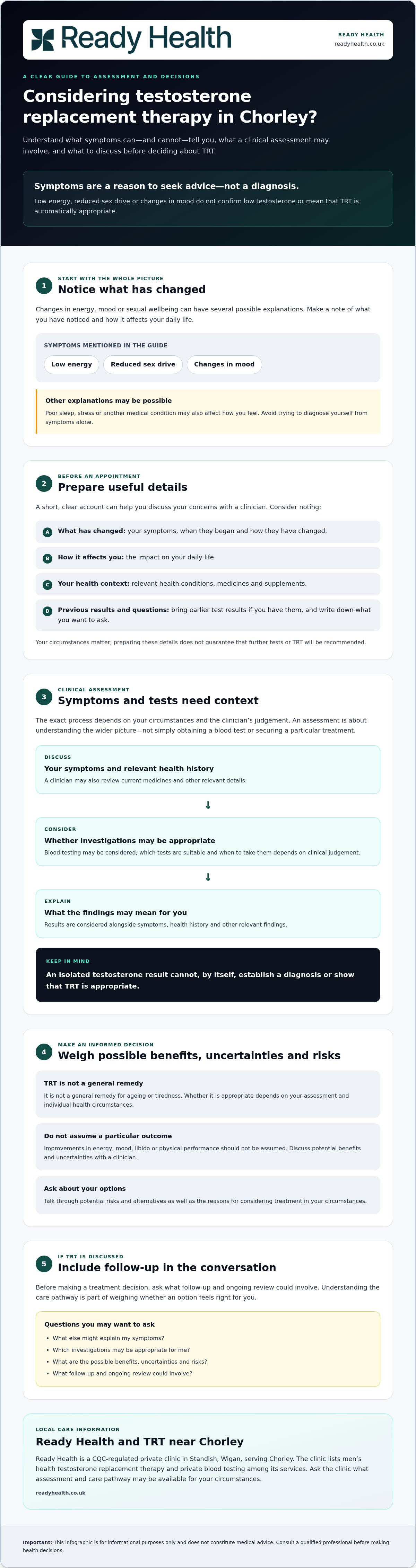
Symptoms alone don’t confirm low testosterone or mean that TRT is automatically appropriate. A clinical assessment involves discussing your symptoms and health with a qualified clinician, who may consider investigations based on your circumstances. It is not simply a blood test or a route to a particular treatment. The aim is to understand the wider picture and discuss appropriate options.
What is testosterone replacement therapy?
Testosterone replacement therapy, or TRT, aims to replace testosterone when a clinician considers it appropriate. The term androgen replacement therapy describes treatment involving hormones such as testosterone, but a general overview cannot determine whether it’s suitable for you.
Your symptoms, assessment findings and individual health circumstances all matter. A clinician can discuss potential benefits and uncertainties with you. Improvements in energy, mood, libido or physical performance should not be assumed.
Could your symptoms have other explanations?
Yes. Tiredness, low mood or a change in sexual interest may have different explanations, including poor sleep, stress or another medical condition. Because similar symptoms can have different causes, note what has changed, when it began and how it affects your daily life. This gives you practical information to share at an appointment.
If changes persist or concern you, speak with a qualified clinician rather than trying to diagnose yourself. Ready Health lists men’s health TRT among its services. Read more about its testosterone replacement therapy service and ask what an assessment would involve in your case.
Useful questions include: What else might explain these symptoms? What information or investigations could help clarify the picture? If TRT is discussed, how will the clinician explain its possible benefits, risks and follow-up? Asking these questions helps you take an informed next step without assuming that treatment is the answer.
How a clinician assesses low testosterone before discussing TRT
A careful assessment puts your symptoms and any test results into context. The exact process depends on your circumstances and the clinician’s judgement, so don’t assume everyone needs the same investigations or follows the same pathway.
A clinician may ask what you’ve noticed, review relevant health history and current medicines, consider whether investigations are appropriate, then explain what the findings may mean. To make the discussion more focused, prepare a short account of your concerns and any questions you want answered. An assessment is about understanding the whole picture, not simply obtaining a blood test or securing a particular treatment.
What to prepare for an initial consultation
Before your appointment, consider noting your symptoms, when they began, how they have changed and how they affect your daily life. Write down relevant health conditions and medicines or supplements you take. If you have previous test results, bring them or ask whether they can be reviewed.
This information can support a clearer conversation, but it doesn’t guarantee that further tests or TRT will be recommended. Be open about what you’re experiencing, even if some details feel personal. If you’re unsure what to bring, ask the clinic before booking or attending.
Why blood tests and clinical context both matter
A clinician may consider blood testing as part of an assessment, but which tests are suitable, when to take them and how to interpret them depend on clinical judgement. A result needs to be considered alongside your symptoms, health history and other relevant findings. An isolated testosterone result, without the person’s symptoms, circumstances and clinical interpretation, cannot by itself establish a diagnosis or show that TRT is appropriate.
Ready Health lists private blood testing among its services, but its specific TRT assessment and testing pathway should be confirmed with the clinic. Read about its private blood testing services and ask whether any testing may be appropriate for you.
As you discuss next steps, ask how the clinician will explain the findings and what options may be suitable. For background on weighing potential benefits and risks, Mayo Clinic provides an overview of testosterone therapy. Your own decision should be based on advice that reflects your health and circumstances.
If you’re considering testosterone replacement therapy Chorley, you can explore booking a consultation with Ready Health to discuss what an initial conversation may involve.
Is TRT the right choice? Compare potential benefits, risks and alternatives
TRT isn’t a general remedy for ageing, tiredness or improving wellbeing. A clinician may consider it when an assessment indicates it could be appropriate, but the decision should reflect your health, priorities and the possible harms. There’s no guarantee of a particular result.
Use this comparison to guide your conversation, not to diagnose yourself. The American Urological Association’s guideline offers a professional reference on testosterone deficiency, but it’s US guidance. Ask your clinician which current UK guidance informs your assessment and treatment discussion.
| Area | What to discuss |
|---|---|
| Potential benefits | If low testosterone is confirmed and TRT is considered suitable, ask which symptoms treatment may help and what improvement could realistically mean for you. |
| Uncertainty | Symptoms can have other causes, and an individual response can’t be promised. Ask what remains unclear in your assessment. |
| Risks and personal factors | Ask about possible side effects, health factors that could affect suitability, and how TRT may relate to your fertility plans. Your clinician can explain what applies to your circumstances. |
| Monitoring and alternatives | Discuss how your health and progress would be reviewed if treatment is considered. Ask whether addressing another identified cause or taking a different approach may be appropriate. |
Questions to ask before choosing treatment
Before deciding, ask what your assessment suggests, what it can’t yet establish and why TRT is or isn’t being considered. Find out which benefits are realistic, what side effects or other concerns to discuss, and how follow-up would work. Understanding the review plan matters as much as understanding the initial decision.
Talk through alternatives as well. If sleep, stress, another health issue or a medicine may be contributing to your symptoms, ask whether addressing that factor could be a reasonable next step.
Why a quick-fix promise should give you pause
Good clinical care makes room for uncertainty. Be cautious of claims that TRT produces universal results or is automatically right for anyone experiencing low energy or age-related changes. You should be able to ask questions and receive a clear explanation of possible harms, follow-up and any costs before making a decision.
If you’re exploring testosterone replacement therapy Chorley, Ready Health lists men’s health TRT as a service. Ask the clinic about booking a consultation to discuss your questions with a clinician.
What to expect from TRT care, follow-up and ongoing decisions
Assessment, a treatment decision and follow-up are separate parts of care. An initial discussion helps a clinician understand your concerns and consider whether further assessment is appropriate. After reviewing relevant information, they can discuss whether TRT may suit you. A conversation or test alone doesn’t commit you to treatment.
If treatment is considered, make sure you understand the proposed approach and what ongoing care would involve before deciding. Ready Health lists men’s health TRT as a service, but confirm its specific assessment, prescribing and monitoring arrangements directly with the clinic.
What to clarify about follow-up
Follow-up needs can vary according to your health and the clinician’s advice, so don’t assume there is one schedule for everyone. Ask how and when your symptoms and any relevant results would be reviewed, and who will explain what they mean.
You may also want to clarify:
- What monitoring might involve, and how the clinician will decide what is appropriate for you.
- Who to contact if you have questions between reviews, and how to arrange follow-up.
- How you and the clinician will assess whether the approach is helping, or whether the plan needs to be reconsidered.
These are points to discuss, not a set protocol. Your clinician should explain monitoring requirements with reference to your circumstances and current guidance.
When to pause and seek clinical advice
If you’re receiving treatment and notice new or concerning symptoms, contact a qualified healthcare professional for advice. Don’t change or stop a treatment based only on general information. Ask the clinician responsible for your care what to do. If you believe a concern is urgent, use an appropriate urgent healthcare service.
Good follow-up gives you space to raise concerns and revisit decisions. If anything about the plan, possible risks, review arrangements or costs isn’t clear, ask for an explanation before proceeding. You should know whom to contact and what the next step is, whether treatment is recommended or not.
If you’re considering testosterone replacement therapy Chorley, Ready Health is a private-care option based in Standish, Wigan, serving Chorley. Ask the clinic about a consultation to discuss your questions, without assuming TRT will be recommended.
Finding testosterone replacement therapy near Chorley with Ready Health
If you’re looking into testosterone replacement therapy Chorley, find out what a local clinic can confirm and what you’ll need to discuss with a clinician. Ready Health is a CQC-regulated private clinic based in Standish, Wigan. Chorley is among its listed service areas, and the clinic lists men’s health TRT as an offering.
Read more about the testosterone replacement therapy service. The clinic’s specific assessment, testing, prescribing and follow-up arrangements aren’t detailed here, so check them directly rather than assuming a particular pathway or treatment is available.
What to confirm before booking
A clear conversation before you book can help you understand what to expect. Ask who would assess you and what the first appointment includes. Find out whether tests may be considered, how results and follow-up are handled, and what the current fees are.
If you already have blood test results, ask whether the clinician can review them and whether further investigations may be appropriate. The right tests and how they’re interpreted depend on your circumstances, so avoid arranging tests or drawing conclusions based on general information alone.
- Who will discuss your symptoms and assess whether further evaluation may be needed?
- What should you bring, such as a list of medicines or previous results?
- How will you be told about any recommended next steps, follow-up and fees?
These questions can help you make an informed choice. They don’t guarantee that TRT will be suitable or recommended.
Take a considered next step
Booking an assessment is an opportunity to discuss your concerns and understand possible next steps. It isn’t a commitment to start TRT. You can ask questions, consider the clinician’s advice and decide what feels right for you.
If you’d like to talk through your concerns, book a consultation with Ready Health and confirm the appointment details and care pathway directly with the clinic.
Disclaimer: This content is for informational purposes only and does not constitute medical advice. Consult a qualified healthcare professional before making decisions about your health.
Take an informed next step for your health
If you’re considering testosterone replacement therapy Chorley, remember that symptoms alone don’t establish whether TRT is suitable. A clinician can discuss your concerns, consider relevant assessment and explain potential benefits, risks and alternatives in the context of your health. If treatment is considered, ask how follow-up would be arranged and what it may involve.
Ready Health is a CQC-regulated private clinic based in Standish, Wigan, and lists Chorley among its service areas. Men’s health testosterone replacement therapy is among its listed services, though you should confirm the assessment and care pathway directly with the clinic.
This content is for informational purposes only and does not constitute medical advice. Consult a qualified healthcare professional before making decisions about your health.
Frequently Asked Questions
Is testosterone replacement therapy suitable for everyone with low energy?
No. Low energy alone doesn’t confirm low testosterone or mean TRT is suitable. Tiredness can have several possible causes, including poor sleep, stress or other health concerns. A clinician can discuss your symptoms and health history, then advise whether further assessment may be appropriate. Ask what else could explain the changes you’ve noticed before deciding whether to explore treatment.
How is low testosterone assessed before TRT?
A clinician will usually start by discussing your symptoms and relevant health history, then consider whether investigations, such as blood tests, may be appropriate. Results need to be interpreted alongside your symptoms and circumstances, not viewed in isolation. The exact tests and timing depend on clinical judgement. Ask how the clinician will explain the findings and what they may mean for your options.
Can I access testosterone replacement therapy near Chorley?
You can explore local care, but check the clinic’s location and arrangements before booking. Ready Health is based in Standish, Wigan, and lists Chorley among its service areas. Its other listed areas include Shevington, Standish Lower Ground, Boar’s Head, Wrightington, Appley Bridge, Skelmersdale, Orrell, Ashton-in-Makerfield, Bolton, Leigh, Preston, Southport and St Helens. Confirm directly whether its service suits your needs.
How long does it take to find out whether TRT may be appropriate?
There isn’t a reliable timeframe that applies to everyone. It may depend on the information available at your first appointment, whether further assessment or testing is considered appropriate, and when results can be reviewed. Ask the clinic what to expect from its process and when you may hear about next steps. Ready Health’s specific TRT pathway and appointment availability should be confirmed directly.
What should I ask a clinician before starting TRT?
Ask what your assessment suggests, what remains uncertain and why TRT may or may not suit you. Discuss possible benefits, side effects, alternatives and how your progress would be reviewed if treatment is considered. You may also want to ask who to contact with concerns, what follow-up involves and what costs apply. Clear answers can help you make an informed decision without feeling rushed.
Does Ready Health provide testosterone replacement therapy in Chorley?
Ready Health lists men’s health testosterone replacement therapy among its services and Chorley as a service area. The clinic is based in Standish, Wigan, so don’t assume there is a clinic location in Chorley. Ask Ready Health directly about who may assess you, appointment arrangements and the assessment and follow-up pathway before booking.
Do I need blood tests before discussing TRT?
You can discuss your symptoms with a clinician before knowing whether blood tests are needed. A clinician may consider testing as part of an assessment, but the choice of tests, timing and interpretation depend on your circumstances and clinical judgement. If you have previous results, ask whether they can be reviewed. Check directly with Ready Health about its TRT assessment and testing arrangements.
This content is for informational purposes only and does not constitute medical advice.
Book a consultation with Ready Health to discuss your men’s health concerns. An assessment doesn’t commit you to starting TRT, and you can confirm the appointment details and care pathway directly with the clinic.

Article by
Shamir Patel
Shamir Patel is a UK-based Clinical Pharmacist and Independent Prescriber with a specialist focus on ADHD and weight management.
He is the Registered CQC Manager at Ready Health Medical Clinic, where he leads the development and delivery of safe, patient-centred services across ADHD assessment and treatment, weight loss programmes, and general medical care.
With a career spanning nearly three decades since qualifying in 1995, Shamir brings extensive clinical and operational experience across both community pharmacy and private healthcare.
He also serves as Deputy Superintendent Pharmacist and Lead Prescriber at PillSorted. He oversees high-volume prescribing services. He focuses on GLP-1 weight loss treatments and clinical governance.
Shamir is a SCOPE-accredited obesity specialist and has a strong interest in improving access to evidence-based ADHD care. He is known for his structured, guideline-driven approach, aligning his clinical practice with NICE recommendations and regulatory standards set by the GPhC and CQC.
Alongside his clinical work, Shamir is actively involved in mentoring prescribing pharmacists, developing standard operating procedures, and contributing to service innovation within digital and community healthcare settings. His work reflects a commitment to safe prescribing, patient education, and improving outcomes through practical, accessible care.
Disclaimer
The information on this website is provided for general educational and informational purposes only and is not intended as medical advice, diagnosis, or treatment. Articles reflect general guidance and may not be suitable for your individual circumstances. You should always seek advice from a qualified healthcare professional before starting, stopping, or changing any treatment, medication, or healthcare plan. While we aim to keep our content accurate and up to date, Ready Health makes no guarantees about the completeness, accuracy, or suitability of the information provided. Reliance on any information on this site is entirely at your own risk. If you have concerns about your health, please book an appointment with a suitably qualified clinician. In an emergency, contact 999 or attend your nearest A&E department.


