

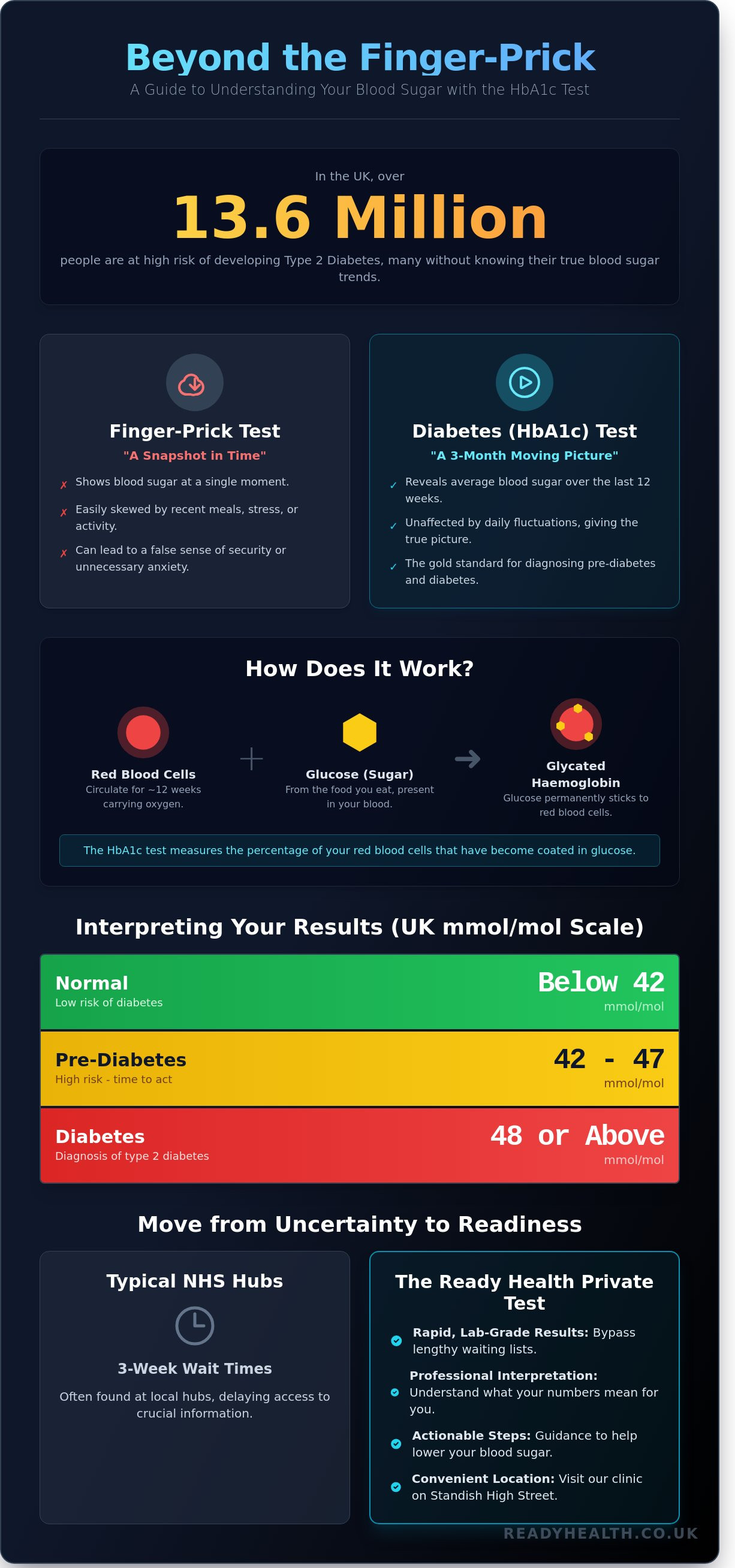
Over 13.6 million people in the UK are currently at high risk of developing type 2 diabetes, yet many remain unaware of their actual blood sugar trends. You might feel anxious about your long-term health or frustrated by the three-week wait times often found at local NHS hubs. It's common to feel confused by the difference between a quick finger-prick and a clinical Diabetes (HbA1c) Test, especially when you're looking for answers that impact your future vitality and daily energy levels.
We promise to provide you with rapid, laboratory-grade results that offer a clear window into your health over the past 12 weeks. Our Standish-based team ensures you don't just receive a number; you gain a professional interpretation of your levels alongside actionable steps to lower your blood sugar effectively. This article previews how our private testing service in Wigan delivers the precision and expert support you need to move from uncertainty to a state of total readiness for your health journey.
Key Takeaways
- Understand how an HbA1c test provides a comprehensive three-month window into your blood sugar levels, offering more clarity than a standard finger-prick check.
- Discover the vital link between glucose management and long-term organ health, ensuring your body remains in a state of "metabolic readiness" for life’s demands.
- Learn how to bypass lengthy waiting lists by accessing a private Diabetes (HbA1c) Test at our professional clinic on Standish High Street.
- Gain confidence in interpreting your results with our clear breakdown of the UK’s mmol/mol scale, identifying the thresholds for pre-diabetic and diabetic ranges.
- Explore a proactive approach to wellness that prioritises early detection and expert guidance to help you maintain optimal vitality and prevent future health complications.
Understanding the Diabetes (HbA1c) Test: Beyond the Finger-Prick
Managing your health requires more than just a momentary glimpse into your physiology. While traditional finger-prick tests provide an immediate blood sugar reading, the Diabetes (HbA1c) Test offers a comprehensive look at your internal environment over a sustained period. This diagnostic tool captures a retrospective view of your blood sugar levels, helping you understand how your body has processed glucose over the preceding 12 weeks.
To better understand this concept, watch this helpful video from Diabetes UK:
What exactly is glycated haemoglobin?
Glycated haemoglobin occurs when glucose in your bloodstream attaches itself to the haemoglobin in your red blood cells. Think of your red blood cells as tiny, circulating sponges. As they move through your system, they soak up the sugar present in your plasma. If your blood sugar levels are consistently high, the "sponge" becomes more saturated with glucose. This chemical bond is permanent for the life of the cell, making it a reliable marker for clinicians.
Understanding What is Glycated Hemoglobin (HbA1c) helps clarify why this measurement is so vital. Red blood cells typically circulate for about 120 days before being replaced by the body. Because the glucose stays attached throughout this cycle, the test provides a weighted average of your blood sugar levels. You don't need to fast for this appointment; your recent breakfast won't skew the results because the test looks at the long-term trend rather than your immediate state.
The difference between HbA1c and daily glucose monitoring
A standard finger-prick test is a "still photo" of your health. It shows exactly what is happening at 9:00 AM on a Tuesday, but it can be influenced by a stressful morning or a carbohydrate-heavy meal. In contrast, the Diabetes (HbA1c) Test acts like a "moving picture" or a three-month film. It smooths out those daily peaks and troughs to reveal the underlying reality of your metabolic health.
Clinicians in Wigan increasingly rely on this data for long-term health planning. Daily fluctuations don't alter the final percentage, which means the result remains accurate even if you've had a particularly busy or indulgent week. Research suggests that this stability makes it the gold standard for identifying pre-diabetes and Type 2 diabetes. By measuring the percentage of haemoglobin that has been glycated, we can identify risks long before physical symptoms appear, allowing for proactive lifestyle adjustments.
This clarity is essential for anyone looking to optimise their vitality. Relying solely on daily checks might lead to a false sense of security or unnecessary anxiety. The HbA1c result provides a definitive benchmark, ensuring you're prepared to make informed decisions about your nutrition and daily rituals. It's a precise, science-backed method that moves you away from guesswork and toward a state of total readiness for the demands of modern life.
This article is for informational purposes only and does not constitute medical advice. Please consult a qualified healthcare professional before making any health decisions.
Why Your HbA1c Levels Matter for Long-Term Vitality
Maintaining optimal blood sugar levels is a cornerstone of systemic health. When glucose remains elevated, it triggers a cascade of inflammation that can compromise your heart, kidneys, and vision over time. A Diabetes (HbA1c) Test provides a three-month average of your blood sugar, offering a far more accurate picture of your internal environment than a single snapshot. Understanding Why the HbA1c Test Matters helps you recognise that this isn't just a diagnostic tool; it's a map for your long-term vitality.
We view health through the lens of metabolic readiness. This means your body possesses the physiological flexibility to handle life’s physical and mental stresses without crashing. High sugar levels act like grit in a high-performance engine, causing friction and wear that you might not feel immediately. For those over 40 or with a BMI above 25, regular monitoring becomes essential. Statistics from Diabetes UK indicate that over 850,000 people are currently living with undiagnosed type 2 diabetes; early detection is the only way to ensure you aren't part of that figure.
The "Silent" symptoms of high blood sugar
Many people live with elevated glucose for years without realising it. You might experience persistent fatigue, an unquenchable thirst, or notice that small cuts take longer to heal. These indicators are frequently dismissed as the natural result of getting older or a busy work week. Catching these subtle shifts early is vital. Integrating a check into a comprehensive Well Man Blood Profile or Well Woman check ensures you aren't leaving your future health to chance.
Proactive prevention vs. reactive treatment
Choosing a Diabetes (HbA1c) Test represents a shift from reactive medicine to proactive empowerment. There's a critical tipping point between pre-diabetes and type 2 diabetes where your body can still recalibrate. Research suggests that lifestyle interventions at this stage can lead to a total reversal of pre-diabetic markers. By identifying your levels before they reach a clinical threshold, you can implement daily rituals that support insulin sensitivity. This proactive approach transforms blood sugar management from a medical chore into a strategy for longevity.
Our team at Ready Health focuses on providing the data you need to stay prepared. You can view our full range of health assessments to see how we help you maintain your edge and stay optimized for the demands of modern life.
Accessing a Private Diabetes Test in Wigan: Speed and Convenience
Waiting for a routine blood appointment in Wigan can be a test of patience you simply don't need. Local NHS phlebotomy services often face high demand, leading to wait times of 14 days or more for a standard slot. When you're concerned about your blood sugar levels, every day spent waiting feels like a missed opportunity for clarity. Our clinic on Standish High Street removes these administrative hurdles, offering a streamlined path to your Diabetes (HbA1c) Test. We've designed our service to fit into your life, providing ample local parking so your visit is stress-free and efficient.
Bypassing the Wigan GP wait times
You shouldn't have to navigate complex booking systems or wait weeks for a referral to understand your health. We provide same-day or next-day appointments for residents across Orrell, Shevington, and Chorley, ensuring your health remains a priority. You don't need a GP referral to access our professional phlebotomy services. This direct access empowers you to take control of your wellness journey immediately. While traditional clinics might leave you waiting a week for feedback, our lab partnerships ensure your results are usually ready within 48 hours. This rapid turnaround allows you to make informed lifestyle adjustments without unnecessary delay.
The clinical advantage of venous blood samples
Accuracy is the foundation of any meaningful health assessment. While "at-home" finger-prick kits offer a level of convenience, they often lack the precision required for a definitive Diabetes (HbA1c) Test. Samples taken directly from the vein are the clinical gold standard. This method provides a larger, more stable volume of blood, reducing the risk of contamination from tissue fluid. A Hemoglobin A1C (HbA1c) test performed via venous draw ensures your three-month average reflects your true physiological state.
Our Standish clinic provides a comfortable, CQC-regulated environment that prioritises your safety and peace of mind. We recognise that many people feel anxious about needles, which is why our practitioners use a compassionate, steady-handed approach. We take the time to ensure you're relaxed before proceeding, making the experience as seamless as possible. By choosing a professional draw over a DIY kit, you benefit from:
- Higher sample integrity with lower risks of laboratory rejection.
- Direct oversight from trained clinicians who can answer your immediate questions.
- A sterile, clinical setting that adheres to the highest UK health standards.
- Faster processing times because your sample is dispatched directly to our partner labs.
Your health is about being prepared for what comes next. By choosing a private route in Wigan, you opt for a service that values your time as much as your vitality. We focus on providing a premium, science-backed experience that bridges the gap between clinical necessity and lifestyle convenience. This proactive approach ensures you're not just another name on a waiting list, but a partner in your own long-term health strategy.
Interpreting Your Results: What the Numbers Mean
Understanding your Diabetes (HbA1c) Test results is about more than just reading a figure on a page. UK laboratories report these findings in millimoles per mole (mmol/mol), a measurement that reflects your average blood glucose levels over the preceding 90 days. It's a reliable indicator of your long-term metabolic efficiency and overall vitality.
Your body is constantly processing glucose, and the HbA1c level shows how much of that sugar has bonded to your red blood cells. Because red blood cells live for about three months, the test provides a stable average rather than a fleeting snapshot. This makes it an essential tool for identifying trends before they become chronic issues.
The HbA1c range chart
| HbA1c Level (mmol/mol) | Clinical Classification |
|---|---|
| Below 42 mmol/mol | Normal |
| 42 to 47 mmol/mol | Pre-diabetes |
| 48 mmol/mol or above | Diabetes |
Pre-diabetes represents a critical window for intervention where proactive lifestyle changes can often reverse the trend and prevent a full diagnosis. While a result of 41 mmol/mol is technically within the normal range, optimal health usually sits well below this threshold, often between 30 and 38 mmol/mol. Aiming for these lower figures ensures your body remains resilient and fully prepared for the demands of daily life.
Clinical guidelines recognise that a single high reading doesn't always confirm a permanent condition. Factors such as recent illness, specific medications, or certain types of anaemia can influence the outcome of your Diabetes (HbA1c) Test. If your result is 48 mmol/mol or higher, your practitioner will likely suggest a second test to ensure accuracy before confirming a diagnosis.
Your personal target might also look different based on your unique circumstances. For someone over the age of 70 or those living with existing health conditions, a slightly higher target, perhaps 53 or 58 mmol/mol, might be recommended to avoid the risks of low blood sugar. We focus on what's right for your specific biology rather than a one size fits all approach.
Next steps after your results
Once you've received your data, the most effective move is to book a consultation with a private GP in Wigan. They'll help you see the bigger picture of your metabolic health. It's common to find that high HbA1c levels correlate with other markers, such as elevated LDL cholesterol or high triglycerides, which can impact your cardiovascular health.
If your results suggest that intervention is required, you don't have to rely on guesswork. Our medication response DNA testing can identify how your body is likely to process specific treatments. This scientific approach helps you find the most effective path to balance without the frustration of trial and error.
For those seeking structured support that can be accessed from anywhere, digital health platforms offer specialised guidance. Telehealth services providing medical weight loss programs can be a crucial component in managing and reversing pre-diabetic indicators; you can find out more to see how these programs work.
Taking control of your numbers is the first step toward a more vibrant, energetic future. Explore our range of health checks to start your journey today.
This article is for informational purposes only and does not constitute medical advice. Please consult a qualified healthcare professional before making any health decisions.
Your Journey to Health Readiness at Ready Health Standish
Ready Health Standish serves as your dedicated local partner for proactive wellness, moving away from the reactive nature of traditional medicine. Our clinic in the heart of Wigan offers a sophisticated space where clinical excellence meets a supportive, lifestyle-focused atmosphere. You won't find the cold, clinical feel of a standard hospital here; instead, we've created an environment that encourages calm and confidence. We provide the essential tools you need to understand your body's unique data, starting with the foundational Diabetes (HbA1c) Test. By choosing a local specialist, you ensure that your health journey is supported by expert clinical advice and a clear, actionable path toward long-term vitality.
Comprehensive health checks for Wigan residents
Your health isn't a series of isolated events; it's a connected system that requires a holistic view. While the Diabetes (HbA1c) Test provides a vital 90-day snapshot of your average blood sugar levels, it's most effective when integrated into our broader blood test packages. These 2024 screening profiles examine multiple biomarkers, including cholesterol and kidney function, to give you a 360-degree view of your internal environment. The 2023 Health Survey for England indicates that roughly 7% of adults live with diagnosed or undiagnosed diabetes. In Wigan, this means thousands of residents are at risk without knowing their status.
If your results indicate a higher risk for cardiovascular complications, we provide seamless access to cardiology services with Dr Dhawan. This ensures that a concerning result doesn't lead to confusion, but to a structured clinical plan with a specialist consultant. For those committed to ongoing monitoring, our membership model offers a sustainable way to track your progress. Regular testing helps you see the direct impact of lifestyle changes, allowing you to optimise your habits based on hard data rather than guesswork.
How to book your test today
We've removed the administrative friction often associated with private healthcare to ensure you can prioritise your wellbeing. Our booking process is designed to be as efficient as your daily routine, allowing you to take control of your health data in four simple steps:
- Select your test: Visit our website to choose the HbA1c test or a comprehensive health package.
- Choose your time: Pick a convenient slot at our Standish clinic that fits your personal schedule.
- Attend your appointment: Visit our welcoming facility for a quick, professional blood draw.
- Receive your results: Access your data via our secure portal, featuring clear explanations from our clinical team.
True readiness means being prepared for the physical and mental demands of a busy life. Whether you're managing a family or a demanding career, knowing your blood sugar levels allows you to make informed choices today that prevent chronic complications tomorrow. We believe that health is a state of being fully prepared for whatever life throws at you. Don't leave your future vitality to chance. Book your appointment online today or visit us in Standish to begin your journey toward total health readiness.
This article is for informational purposes only and does not constitute medical advice. Please consult a qualified healthcare professional before making any health decisions.
Prioritise Your Future Vitality in Standish
Understanding your blood sugar levels shouldn't be a source of stress or a long-term waiting game. A Diabetes (HbA1c) Test offers a clear, three-month window into your metabolic health, moving beyond the temporary snapshots provided by standard finger-prick checks. At our CQC-regulated clinic in Standish, we've streamlined the entire process to ensure you aren't left waiting for answers. You'll receive your results from our accredited partner laboratory within a 48 to 72 hour window, providing the precise data you need to make informed lifestyle adjustments.
Our clinical team provides the expert interpretation necessary to turn these numbers into a practical roadmap for your wellbeing. We focus on long-term vitality rather than quick fixes, helping you recognise patterns that impact your daily energy and health readiness. By choosing a private screening, you're taking a proactive step toward a more resilient version of yourself. We're here to support you at every stage of this journey, from the initial blood draw to the final clinical review.
Book your Private Diabetes (HbA1c) Test in Wigan today and gain the clarity you deserve.
This article is for informational purposes only and does not constitute medical advice. Please consult a qualified healthcare professional before making any health decisions.
Frequently Asked Questions
How much does a private diabetes (HbA1c) test cost in Wigan?
A private Diabetes (HbA1c) test at our Standish clinic is an accessible investment in your long-term vitality. We prioritise transparent pricing, so you'll always know the exact cost before your appointment. Unlike basic home kits, our fee includes a professional blood draw by an experienced practitioner. This ensures your sample is collected correctly, providing a more reliable foundation for your health journey than DIY alternatives.
Do I need to fast before my HbA1c blood test?
You don't need to fast before your blood test. Because the HbA1c measures your average blood sugar levels over the last 8 to 12 weeks, a single meal won't skew the data. This makes it a practical choice for busy Wigan residents. You can visit our clinic at any time of day without the stress of skipping breakfast or scheduling restricted early morning slots.
How quickly will I get my diabetes test results?
Most patients receive their detailed HbA1c report within 2 to 3 working days. While NHS results often take 7 days or longer to navigate hospital systems, our direct laboratory links ensure a rapid turnaround. This speed helps you find peace of mind or begin necessary lifestyle adjustments sooner. We deliver your results clearly, so you're always ready to take the next step.
Can a private HbA1c test recognise pre-diabetes?
Yes, a private Diabetes (HbA1c) test is the primary tool used to identify pre-diabetes. If your result falls between 42 and 47 mmol/mol, it indicates your blood sugar is higher than the optimal range. We view this as a proactive warning light. It's a vital opportunity to implement small daily rituals that can prevent the transition to type 2 diabetes before it starts.
Is a venous blood test better than a finger-prick home kit?
A venous blood sample taken from the arm is significantly more accurate than a finger-prick home kit. Research indicates that finger-prick samples can be contaminated by tissue fluid or improper technique, which may lead to inconsistent readings. By choosing our CQC-regulated clinic in Standish, you ensure your sample is handled by professionals. This precision gives you the most robust data to manage your health effectively.
What should I do if my HbA1c result is high?
If your result is high, the first step is to stay calm; pre-diabetes and type 2 diabetes are often manageable through structured lifestyle changes. We recommend booking a consultation with one of our private GPs in Wigan to create a personalised plan. This might include specific dietary adjustments or new exercise routines. Our team is here to ensure you remain "Ready" for life's challenges with expert, science-backed guidance.
Article by
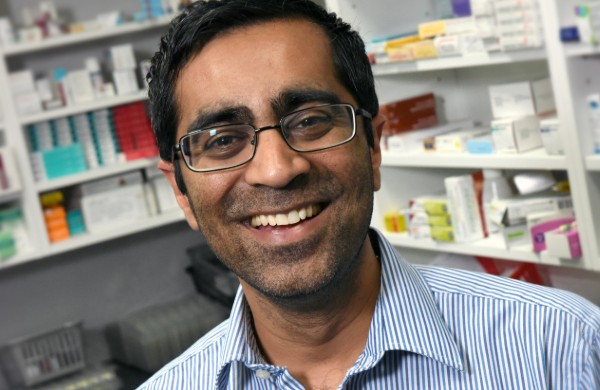
Shamir Patel
Shamir Patel is a UK-based Clinical Pharmacist and Independent Prescriber with a specialist focus on ADHD and weight management.
He is the Registered CQC Manager at Ready Health Medical Clinic, where he leads the development and delivery of safe, patient-centred services across ADHD assessment and treatment, weight loss programmes, and general medical care.
With a career spanning nearly three decades since qualifying in 1995, Shamir brings extensive clinical and operational experience across both community pharmacy and private healthcare.
He also serves as Deputy Superintendent Pharmacist and Lead Prescriber at PillSorted. He oversees high-volume prescribing services. He focuses on GLP-1 weight loss treatments and clinical governance.
Shamir is a SCOPE-accredited obesity specialist and has a strong interest in improving access to evidence-based ADHD care. He is known for his structured, guideline-driven approach, aligning his clinical practice with NICE recommendations and regulatory standards set by the GPhC and CQC.
Alongside his clinical work, Shamir is actively involved in mentoring prescribing pharmacists, developing standard operating procedures, and contributing to service innovation within digital and community healthcare settings. His work reflects a commitment to safe prescribing, patient education, and improving outcomes through practical, accessible care.
Disclaimer
The information on this website is provided for general educational and informational purposes only and is not intended as medical advice, diagnosis, or treatment. Articles reflect general guidance and may not be suitable for your individual circumstances. You should always seek advice from a qualified healthcare professional before starting, stopping, or changing any treatment, medication, or healthcare plan. While we aim to keep our content accurate and up to date, Ready Health makes no guarantees about the completeness, accuracy, or suitability of the information provided. Reliance on any information on this site is entirely at your own risk. If you have concerns about your health, please book an appointment with a suitably qualified clinician. In an emergency, contact 999 or attend your nearest A&E department.


